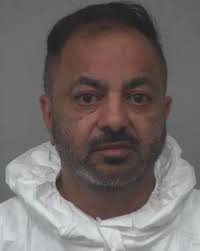
Dillon Siebert and the 2020 Denver Family Arson Murders
Overview of the Crime
Dillon Siebert was one of three Colorado teenagers responsible for an intentionally set house fire that killed five members of a Senegalese immigrant family in Denver on August 5, 2020. Siebert was only 14 years old when he participated in the attack with Kevin Bui and Gavin Seymour. The victims included three adults, a toddler and an infant who had no connection to the teenagers or the robbery that allegedly motivated the crime.
The fire was set at a family residence located at 5312 Truckee Street in Denver’s Green Valley Ranch neighborhood. Prosecutors said the teenagers mistakenly targeted the house after Bui used a phone-tracking application to search for an iPhone that had been stolen from him. Bui believed the device had been traced to the property, but the people living there were not responsible for taking his phone. Despite having no verified evidence connecting the residents to the theft, the teenagers carried out a planned act of revenge against the home.
The Mistaken Revenge Plot
According to investigators, Kevin Bui had been robbed of his phone and other property during the summer of 2020. He attempted to locate the missing phone through an electronic tracking application. The location information pointed him toward the general area of the Truckee Street residence, and he incorrectly concluded that the people inside the house were involved in the robbery.
Bui recruited Gavin Seymour and Dillon Siebert to accompany him. Evidence presented during the investigation indicated that preparations were made before the attack. The teenagers obtained masks and gasoline and searched for information connected to the address. Bui was later described by prosecutors as the organizer and primary instigator, while Siebert was characterized as having a lesser role in planning the crime. Nevertheless, Siebert knowingly accompanied the others to the residence and participated in the criminal operation that resulted in five deaths.
The August 5, 2020 Attack
During the early morning hours of August 5, 2020, the three masked teenagers traveled to the Truckee Street home. Surveillance recordings showed figures wearing dark clothing and masks near the property shortly before the fire erupted. Investigators determined that the house had been deliberately ignited with gasoline while its residents were sleeping.
The flames spread rapidly through the home, filling the rooms and stairways with heat and dense smoke. Members of the family awakened to a structure already consumed by fire. Djibril Diol attempted to escape with his wife, Adja, and their young daughter, Khadija. The three reached the first floor but were unable to make it through the burning house to safety. Their bodies were later found near the front portion of the residence.
Hassan Diol and her infant daughter, Hawa Beye, were also trapped and killed. Three other residents escaped by jumping from second-story windows. The survivors suffered serious injuries, including broken bones and spinal injuries, but lived. The destruction of the residence and the deaths of an entire group of close relatives devastated Denver’s Senegalese community.
Victims of the Truckee Street Fire
- Djibril “Djiby” Diol, 29 — Killed on August 5, 2020, at the family residence on Truckee Street in Denver, Colorado. Diol was a civil engineer who worked on major transportation projects in the Denver area. He was remembered as a devoted family member who hoped to use his engineering experience to help build roads in Senegal.
- Adja Diol, 23 — Killed on August 5, 2020, inside the Denver home. She was Djibril Diol’s wife and the mother of Khadija Diol.
- Khadija Diol, 22 months old — Killed on August 5, 2020, with her parents. She was only weeks away from her second birthday.
- Hassan Diol, 25 — Killed on August 5, 2020, at the Truckee Street residence. She was Djibril Diol’s sister and the mother of Hawa Beye.
- Hawa Beye, approximately 6 months old — Killed on August 5, 2020, with her mother, Hassan Diol. Her father, Amadou Beye, had not yet been able to meet his infant daughter in person before her death.
Survivors of the Fire
Three members of the household survived by escaping through upper-floor windows. They included Amadou Sow, his wife, Hawa Ka, and their young daughter. Their escape caused significant physical injuries. Reports indicated that Sow suffered a fractured foot, while Ka sustained spinal fractures. Although they survived, they lost five relatives and their home in a single deliberate attack.
The survivors and other relatives later described the lasting emotional consequences of the murders. Family members spoke in court about depression, sleeplessness and the overwhelming absence left by the deaths. Amadou Beye, who lost Hassan Diol and Hawa Beye, said the murders destroyed the life and future he had expected to share with his family.
Initial Fear of a Hate Crime
Because all five victims were members of Senegalese immigrant families, authorities initially considered whether the attack could have been motivated by racial, ethnic or religious hatred. The deaths caused fear throughout Denver’s African and Senegalese communities. Some residents installed additional security cameras because they worried that other immigrant families might also be targeted.
The eventual discovery of the stolen-phone motive did not reduce the severity or senselessness of the crime. The Diol and Beye families were entirely innocent. The attackers had mistakenly associated the residence with an unrelated robbery and then used fire against a house filled with sleeping adults and children.
The Investigation
The suspects concealed their identities with masks, and the available surveillance footage did not immediately reveal who they were. For several months, investigators had few useful leads. The recordings showed three people arriving near the residence and leaving as the fire developed, but the clothing and face coverings prevented direct identification.
Detectives eventually examined internet and electronic evidence associated with the address. Police obtained a controversial warrant seeking information about accounts that had searched online for variations of the Truckee Street address during the period before the fire. The information produced through that process helped investigators focus on Bui and then connect Seymour and Siebert to the crime.
Additional evidence included online communications, location information and searches related to the residence. Authorities alleged that Bui had repeatedly searched for the address before the attack. The investigation also uncovered communications about the robbery and the missing phone. After months of investigative work, all three teenagers were arrested on January 27, 2021.
Charges Against Dillon Siebert
Siebert’s age made his prosecution different from that of the two older participants. He was 14 at the time of the murders, while Bui and Seymour were both 16. Siebert was initially charged in the juvenile justice system, although a portion of his case was later handled in adult court as part of a negotiated resolution.
In December 2022, Siebert pleaded guilty to second-degree murder. Prosecutors and his defense attorneys described the agreement as an attempt to balance several factors: the catastrophic consequences of the fire, Siebert’s participation, his young age, his lesser role in organizing the attack, his expressions of remorse and the possibility that he could be rehabilitated.
Sentencing and Custody
On February 1, 2023, Dillon Siebert was sentenced to a combined total of 10 years in custody. A juvenile court judge ordered him to serve three years in juvenile detention. In a separate adult-court proceeding, he received an additional seven-year sentence in Colorado’s Youthful Offender System, a structured correctional program designed for young defendants convicted of serious crimes.
The agreement included serious consequences if Siebert failed to complete the youthful-offender sentence. Prosecutors stated that a violation could result in the imposition of a much longer adult prison term of approximately 26 years. The sentence was sharply criticized by members of the victims’ families and the Senegalese community, who believed that 10 years was inadequate for an act that killed five innocent people.
Statements at Sentencing
During the sentencing proceedings, relatives described the enormous damage caused by the attack. Amadou Beye appeared wearing clothing bearing photographs of his wife and daughter. He told the court that he struggled daily with the loss of Hassan and Hawa and required medication to sleep. Other relatives spoke about the loss of Djibril Diol, who had been a trusted adviser, provider and respected member of the community.
Siebert apologized to the victims’ relatives and acknowledged that his actions had caused irreversible suffering. His defense attorney portrayed him as an impressionable follower who had experienced bullying and social isolation. The defense argued that he had been influenced by the two older teenagers. The court nevertheless recognized that Siebert had voluntarily participated in conduct that created an obvious risk of death to every person sleeping inside the house.
The Cases Against Kevin Bui and Gavin Seymour
Gavin Seymour later pleaded guilty to one count of second-degree murder. In March 2024, he was sentenced to 40 years in prison. During his sentencing, Seymour expressed remorse and said he wished he could prevent the crime from occurring. Prosecutors emphasized that he had taken part in a calculated arson attack against an occupied residence.
Kevin Bui, identified as the ringleader, pleaded guilty in May 2024 to two counts of second-degree murder. Under his agreement, dozens of other charges, including first-degree murder, attempted murder, burglary and arson counts, were dismissed. In July 2024, Bui was sentenced to 60 years in prison.
Controversy Over the Digital Search Warrant
The investigation became nationally significant because of the method police used to identify the suspects. Rather than requesting the search history of a person already under suspicion, investigators asked Google to identify accounts that had searched for the victims’ address during a specified period. Such a warrant is sometimes called a reverse-keyword warrant.
Defense attorneys argued that the search was an unconstitutional digital dragnet because it collected information about people who had not previously been identified as suspects. In 2023, the Colorado Supreme Court permitted the evidence to be used in the case, although the court expressed concerns about the warrant and limited its decision to the particular circumstances of the investigation.
Legacy of the Murders
The murders of Djibril Diol, Adja Diol, Khadija Diol, Hassan Diol and Hawa Beye remain one of Denver’s most devastating modern crimes. Five people, including two extremely young children, died because three teenagers acted on an unverified assumption about the location of a stolen phone. The residents were not the robbers, had no known connection to the theft and were given no opportunity to defend themselves from the attackers’ mistaken accusation.
Dillon Siebert was the youngest participant and received the least severe sentence, but his guilty plea established his criminal responsibility for the deadly attack. The case demonstrates how retaliation, group influence and reckless reliance on imprecise electronic tracking can escalate into irreversible violence. It also left surviving relatives and an immigrant community confronting losses that no criminal sentence could repair.