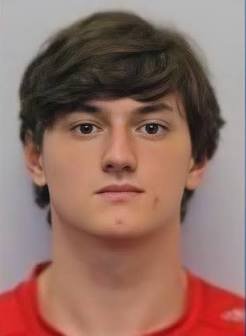
Alban Leacock and the 1983 Hotel Belleclaire Mass Murder
Overview
Trevor Alban Leacock, commonly identified in contemporary reports as Alban Leacock, was a 41-year-old porter and handyman employed at the Hotel Belleclaire on Manhattan’s Upper West Side. On February 3, 1983, Leacock opened fire inside the aging residential hotel, killing four people and attacking additional occupants. The dead included his 25-year-old wife, a 12-year-old girl, a hotel employee or resident, and the hotel’s manager.
The killings occurred at the Hotel Belleclaire, located at 2175 Broadway near West 77th Street in Manhattan, New York City. Although the building had originally opened as an elegant apartment hotel, by the early 1980s it operated largely as a single-room-occupancy residence with permanent tenants, hotel workers and transient guests living under the same roof.
The First Shootings
The violence began during the early morning hours of Thursday, February 3, 1983. Police accounts placed the initial shootings inside the three-room seventh-floor apartment where Leacock lived with his wife, Christine Leacock. Some early reports stated that the first shots were fired at approximately 4:30 a.m., while another preliminary account placed the discovery or reporting of the wider shooting later that morning.
Inside or near the apartment, Leacock shot his wife and other people who were present. Christine Leacock was killed, as was 12-year-old Desiree Winfield. David Williams was also fatally shot during the attack. Initial news reports did not immediately provide consistent ages or complete identities for every victim, but later victim records identified Williams as 50 years old.
The exact circumstances that brought the victims together inside the apartment were not fully explained in the surviving public accounts. Investigators established that Leacock deliberately used a firearm against several people in close quarters before moving through other parts of the hotel. The confined apartment and narrow interior corridors left those inside with little opportunity to escape once the shooting began.
The Shooting Spreads Through the Hotel
After the initial killings, Leacock continued firing elsewhere in the Hotel Belleclaire. Jacob Zimmer, the 61-year-old hotel manager, was shot and killed. Contemporary coverage described Zimmer as the hotel’s owner or manager, reflecting his supervisory role in the building. His death brought the number of people killed to four.
A woman was also seriously wounded during the shooting spree. Contemporary reports did not consistently publish her name. The later criminal judgment against Leacock included two counts of attempted second-degree murder and one count of second-degree assault, confirming that the gunfire was directed at additional victims who survived.
One of the most unusual incidents involved 78-year-old hotel clerk Alex Gittens. Leacock fired at Gittens, but the bullet struck a wallet carried in the clerk’s breast pocket. The wallet absorbed the impact and prevented the bullet from penetrating his body. Gittens reportedly did not realize what had happened until hours later, when he removed the wallet and the bullet fell from it. Although physically spared from a potentially fatal wound, he had been directly placed in the path of Leacock’s gunfire.
Victims Killed
- Christine Leacock, 25 — Killed on February 3, 1983, inside the Hotel Belleclaire at 2175 Broadway in Manhattan, New York. She was Alban Leacock’s wife and was among the first people shot in the seventh-floor apartment.
- David Williams, 50 — Killed on February 3, 1983, at the Hotel Belleclaire in Manhattan. Early breaking-news reports gave incomplete or conflicting information about the age of one adult male victim, but later victim records identify him as David Williams, age 50.
- Desiree Winfield, 12 — Killed on February 3, 1983, at the Hotel Belleclaire in Manhattan. She was shot during the initial violence associated with Leacock’s seventh-floor living quarters.
- Jacob Zimmer, 61 — Killed on February 3, 1983, at the Hotel Belleclaire in Manhattan. Zimmer was identified as the hotel’s manager and was described in some contemporary reports as the hotel owner.
Surviving Victims
- Unidentified adult woman — Seriously wounded by gunfire on February 3, 1983, inside the Hotel Belleclaire. Her name was not consistently included in available contemporary reports.
- Alex Gittens, 78 — A hotel clerk who was fired upon during the attack. A wallet in his breast pocket stopped the bullet, preventing a penetrating gunshot wound.
Arrest and Investigation
Police responded to the Hotel Belleclaire after reports of gunfire and multiple casualties inside the building. Officers identified Leacock as the suspected gunman and took him into custody. The scene extended beyond a single room, requiring investigators to examine the seventh-floor apartment and other areas where victims had been shot or threatened.
Early police statements did not establish a clear motive for the massacre. Because Christine Leacock was among the first victims and the attack began in the apartment she shared with her husband, investigators examined the couple’s relationship and the circumstances inside their home. However, the surviving public reports did not present a definitive explanation for why Leacock also turned the gun on a child, hotel personnel and other occupants.
The number and placement of the victims demonstrated that the crime was not confined to a single domestic confrontation. Leacock continued using the weapon after killing his wife, directing gunfire at people with different relationships to him and to the hotel. The result was a mass shooting that moved from a private residence into a shared residential workplace.
Trial and Convictions
Leacock was prosecuted in the Supreme Court of New York County. He received a non-jury trial before Justice Jeffrey Atlas. On November 30, 1983, he was convicted of one count of second-degree murder, three counts of first-degree manslaughter, two counts of attempted second-degree murder and one count of second-degree assault as an armed felony.
The separate homicide verdicts reflected distinctions made under New York law concerning Leacock’s intent and mental state in the deaths of the four victims. One killing resulted in a second-degree murder conviction, while the other three resulted in first-degree manslaughter convictions. The two attempted-murder convictions concerned surviving targets of the gunfire, while the assault conviction covered an additional armed attack.
For the murder conviction, Leacock initially received an indeterminate sentence of 20 years to life. He was sentenced to terms of 12½ to 25 years for each of the three manslaughter convictions, 10 to 20 years for each attempted-murder conviction and 2⅓ to seven years for the assault conviction. The trial court ordered the manslaughter sentences to run consecutively to the murder, attempted-murder and assault sentences, while several of the individual sentences were concurrent with one another.
Appeal and Resentencing
Leacock appealed his judgment and sentences. On December 2, 1986, the Appellate Division of the New York Supreme Court affirmed his convictions but determined that portions of the sentencing structure were legally improper. Both the defense and prosecution agreed that the sentences imposed for first-degree manslaughter and attempted second-degree murder had been calculated incorrectly under the applicable felony-sentencing provisions.
The appellate court vacated the sentences for the manslaughter and attempted-murder convictions and returned the case to the trial court for resentencing. The ruling did not overturn the findings that Leacock had killed four people, attempted to murder two others and committed an armed assault. His second-degree murder conviction and the underlying verdicts remained in force.
Aftermath
The February 3, 1983, massacre became one of the most serious violent incidents in the history of the Hotel Belleclaire. Four people of markedly different ages were killed inside a building that was simultaneously a home, workplace and temporary lodging facility. The youngest victim, Desiree Winfield, was only 12 years old, while Jacob Zimmer and David Williams were older adults connected to the hotel community.
Although the Hotel Belleclaire was later restored and returned to use as a prominent Upper West Side hotel, the 1983 shooting remains part of its darker history. Alban Leacock’s attack demonstrated how an initially private eruption of violence could rapidly expand into a mass killing, taking the lives of family members, residents and hotel personnel within the same building.