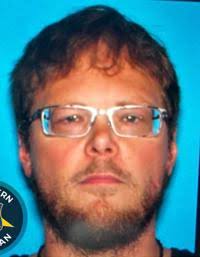
Charles L. Meach III – Russian Jack Springs Park Murders
Background and Early Criminal History
Charles Louman Meach III was born on October 1, 1947, in Traverse City, Michigan. He left home as a teenager and accumulated a record of arrests and minor offenses while drifting between different locations. By the early 1970s, he had reached Anchorage, Alaska, where his increasingly unstable behavior culminated in a fatal attack.
In 1973, Meach encountered 22-year-old grocery clerk Robert Johnson in Anchorage. Meach beat and kicked Johnson to death, reportedly later telling investigators that he attacked him because he found Johnson’s voice irritating. Mental-health specialists diagnosed Meach with paranoid schizophrenia. He was found not guilty by reason of insanity and committed to Atascadero State Hospital in California rather than being sent to prison.
Doctors eventually concluded that Meach’s mental illness was in remission. In 1980, he was returned to Alaska and placed under the supervision of the Alaska Psychiatric Institute in Anchorage. He was gradually allowed increased freedom, including day passes and employment outside the hospital. During 1981 and early 1982, he worked at several jobs and briefly attended the University of Alaska. Many people who encountered him were apparently not told about his previous homicide because medical privacy laws restricted the information the hospital could release.
The Events of May 3, 1982
On the evening of May 3, 1982, four teenage friends gathered near a tent in the wooded northern section of Russian Jack Springs Park in Anchorage. The group consisted of Joseph Dean Kimler, Vern Jay Sylvester, Sabrina Lynn Imlach and Rebecca Dawn Phillips. Contemporary reports indicated that the teenagers were celebrating Imlach’s birthday and intended to go to a movie.
Meach had been drinking and was away from the psychiatric institute under a limited-release arrangement. According to his later confession, he had become upset after discovering that one of his favorite shirts had been stolen. He decided to steal something from someone else and remembered seeing cassette tapes inside a tent at Russian Jack Springs Park.
Meach had obtained a revolver from a man on the street and had hidden the weapon. He retrieved the gun, traveled to the park on a recently purchased blue bicycle and approached the teenagers’ campsite. He began preparing to search the tent for cassette tapes but was discovered by Joseph Kimler.
Meach initially concealed the weapon. When Kimler turned away, Meach shot him in the back of the head. Vern Sylvester approached after hearing or noticing the disturbance, and Meach also shot him in the head. Sabrina Imlach and Rebecca Phillips arrived near the tent and encountered the gunman. Meach shot both girls in the head as they attempted to react or escape.
The victims were found at different points within the wooded area. Some were discovered near the tent, while others were located farther away, suggesting that members of the group had tried to flee. Two of the teenagers were pronounced dead at the scene. The other two were transported for emergency medical treatment but died from their injuries within hours.
Victims of the May 3, 1982 Murders
- Joseph Dean Kimler, 19 – Killed on May 3, 1982, near the group’s tent in Russian Jack Springs Park, Anchorage, Alaska. Meach said that he shot Kimler after Kimler discovered him attempting to steal cassette tapes.
- Vern Jay Sylvester, 19 – Killed on May 3, 1982, in Russian Jack Springs Park, Anchorage, Alaska. Sylvester approached after the first shooting and was shot in the head.
- Sabrina Lynn Imlach, 16 – Killed on May 3, 1982, in Russian Jack Springs Park, Anchorage, Alaska. She was celebrating her approaching seventeenth birthday with her friends when the attack occurred.
- Rebecca Dawn Phillips, 16 – Killed on May 3, 1982, in Russian Jack Springs Park, Anchorage, Alaska. She encountered Meach near the campsite and was fatally shot in the head.
Earlier Victim
- Robert Johnson, 22 – Beaten and kicked to death by Meach in 1973 in Anchorage, Alaska. Meach was found not guilty by reason of insanity and committed to a psychiatric hospital for the killing.
Discovery of the Crime
A woman walking through the park noticed bodies in the wooded area and alerted authorities. Witness information also indicated that a man had been seen near the location with a new blue bicycle. Investigators examined sales records from Anchorage bicycle stores and traced a recently purchased bicycle to Meach.
Detectives learned that Meach was living at the Alaska Psychiatric Institute and had previously killed a man. On May 6, 1982, three days after the park murders, police went to the institute to question him. When confronted with the bicycle evidence and questions about his movements, Meach confessed to killing the four teenagers.
Meach described traveling to the campsite to steal cassette tapes and shooting the teenagers after he was discovered. He admitted that he had consumed alcohol and acknowledged that he had violated the rules governing his release from the institute. He was arrested and charged with four counts of first-degree murder. His bail was initially set at hundreds of thousands of dollars and was later increased to several million dollars.
Trial and Insanity Defense
On June 15, 1982, Meach entered a plea of not guilty because of mental disease or defect. His defense closely resembled the insanity defense that had prevented his imprisonment for the 1973 killing. The case generated intense anger throughout Alaska because Meach had been allowed substantial freedom despite his history of lethal violence.
Prosecutors argued that Meach understood what he was doing, deliberately concealed his weapon and killed the victims to prevent them from identifying him. His decision to hide the gun, wait until Kimler turned away and shoot each person who approached the campsite was presented as evidence of purposeful conduct rather than an act committed without awareness of its wrongfulness.
The trial was moved to Fairbanks because of the enormous amount of publicity in Anchorage. In December 1982, a jury rejected Meach’s insanity defense and convicted him of four counts of first-degree murder. The verdict established that he was criminally responsible despite his documented psychiatric history.
Sentence
In February 1983, Meach received a sentence totaling 396 years in prison without the possibility of parole. The judge imposed consecutive terms for the four murders, effectively guaranteeing that Meach would spend the remainder of his life in custody. At the time, it was described as the longest criminal sentence ever imposed in Alaska.
The court emphasized the calculated nature of the killings and the extraordinary danger Meach posed to the public. His history showed that psychiatric confinement and supervised release had failed to prevent him from killing again. The punishment was intended both to recognize the loss of four young lives and to ensure that Meach could never again be released into the community.
Changes to Alaska Law
The Russian Jack Springs Park murders created a statewide controversy over the insanity defense and the release of people previously acquitted of violent crimes because of mental illness. Within days of Meach’s arrest, Governor Jay Hammond urged lawmakers to reconsider Alaska’s statutes governing mentally ill defendants.
In June 1982, Alaska adopted a new verdict of guilty but mentally ill. Under the revised system, a convicted person could receive psychiatric treatment while mentally ill but would remain subject to a criminal sentence. If the person’s condition improved, the individual could be transferred from a hospital to prison rather than released. The law also narrowed the circumstances under which a defendant could avoid criminal responsibility through an insanity defense.
The changes could not be applied retroactively to Meach because the park murders occurred before the new law took effect. Nevertheless, his case was the primary event that accelerated the legislation and permanently changed how Alaska handled defendants with severe mental disorders.
Death in Custody
Meach spent more than two decades incarcerated in Alaska. He was normally held at the Spring Creek Correctional Center in Seward but was temporarily transferred to the Cook Inlet correctional facility in Anchorage for medical treatment in December 2004.
Charles L. Meach III was found dead in his cell on December 9, 2004. Authorities reported that he died of natural causes. He was 57 years old and remained imprisoned under the 396-year sentence at the time of his death.
Legacy of the Case
The May 3, 1982, murders remain among the most notorious crimes in Anchorage history. Four teenagers spending an evening together in a public park were killed because they interrupted an attempted theft from their tent. The attack was especially disturbing because the killer had already taken a life and had been released from secure psychiatric confinement after doctors concluded that his illness was under control.
The deaths of Joseph Kimler, Vern Sylvester, Sabrina Imlach and Rebecca Phillips forced Alaska officials to confront serious weaknesses in the supervision of violent psychiatric patients. Their murders led to changes in state law, intensified scrutiny of the insanity defense and ensured that Meach would never again be permitted to live outside a secure institution.