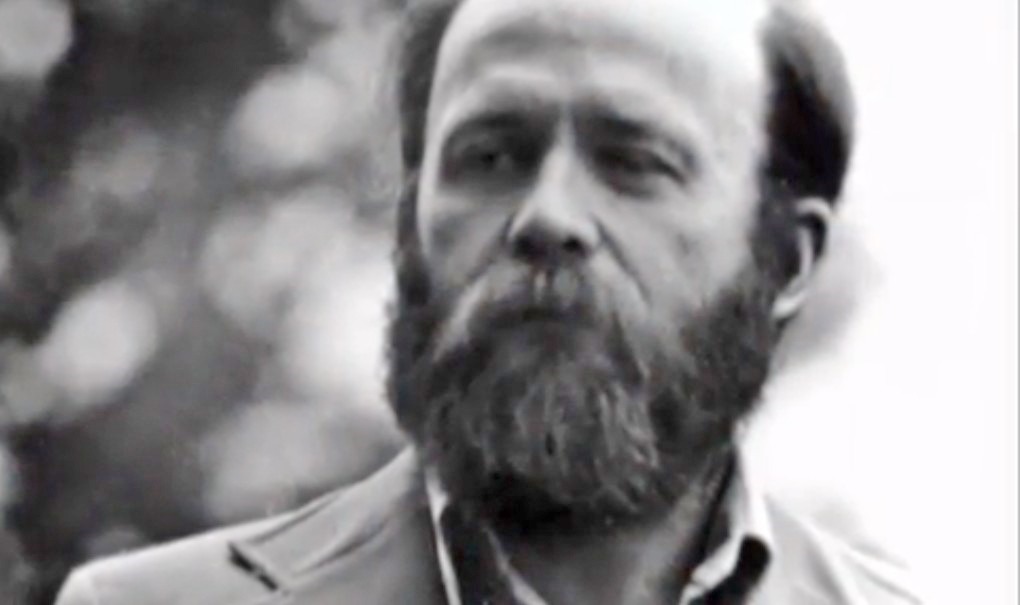
Doug Williams and the 2003 Lockheed Martin Workplace Massacre
Background
Douglas Paul “Doug” Williams was a longtime assembly-line employee at the Lockheed Martin aircraft-parts plant near Meridian, Mississippi. On July 8, 2003, Williams carried out a racially motivated workplace shooting that killed six coworkers and wounded eight others. He then died by suicide inside the factory. The attack lasted approximately ten minutes and became one of the deadliest workplace shootings in Mississippi history.
Williams had worked at the facility for nearly two decades. In the years before the massacre, several African American employees reportedly complained that he made racist remarks, issued threats, and behaved aggressively. Coworkers later described a pattern of intimidation that had created fear among some employees long before the shooting occurred.
Racist Threats and Workplace Conflicts
Investigations conducted after the killings revealed that Williams had repeatedly used racial slurs and allegedly threatened to kill African American coworkers. Thomas Willis, who would later become one of the murder victims, had reported Williams for making threatening and racially hostile statements as early as 2001. Other workers also said Williams spoke openly about committing violence and then killing himself.
Approximately one month before the shooting, Williams reportedly placed a white protective boot covering over his head in a manner resembling a Ku Klux Klan hood. Management ordered him to remove it, but he initially refused and demanded to know which employee had complained. He left work and remained absent for several days. When he returned, he was directed to participate in ethics, diversity, and anger-management training.
Williams was not permanently removed from the workplace. His continued employment despite the reported threats later became a central issue in lawsuits and public criticism of Lockheed Martin’s handling of the complaints.
The Morning of July 8, 2003
On Tuesday, July 8, 2003, Williams arrived at the Lockheed Martin facility in Lauderdale County, outside Meridian. That morning, he attended a mandatory ethics and diversity meeting in an annex building with approximately thirteen other employees. Some coworkers recalled that Williams appeared angry and agitated, while others said he initially behaved normally.
Williams remained in the meeting only briefly. After speaking with coworker Al Collier, he abruptly walked out and made a statement indicating that the others could handle the meeting without him. He reportedly told a supervisor that he would take matters into his own hands.
Williams went to his pickup truck, where he had brought several firearms and a supply of ammunition. He returned wearing a bandana and carrying a 12-gauge Winchester shotgun. He also possessed a Ruger Mini-14 .223-caliber semiautomatic rifle and wore ammunition across his chest. The rifle was carried during the attack but was not believed to have been fired.
The Shooting in the Annex
At approximately 9:30 a.m., Williams entered the annex and began shouting at the employees. He opened fire with the shotgun at close range. Mickey Lee Fitzgerald reportedly attempted to calm Williams but was fatally shot. Williams then fired toward other employees who were attempting to escape, hide, or take cover.
Samuel Edward Cockrell Jr. was killed inside the annex. Williams was believed to have suspected that Cockrell had complained about his conduct to management. DeLois Darden Bailey was critically wounded as she attempted to flee. She survived for one week before dying from her injuries on July 15, 2003.
Al Collier was wounded in the back and hand. Charles Scott was also shot. Plant manager Steve Cobb and employees Brad Bynum, Brenda Dubose, and Chuck McReynolds suffered wounds from gunfire, fragments, or ricocheting pellets.
Williams briefly left the annex before returning and continuing to search for employees. Witnesses reported that he called out for production manager Jack Johns, but Johns was not among those killed.
Attack Inside the Main Factory
Williams moved from the annex into the main manufacturing area. Coworker Pete Threatt confronted him and attempted to take the shotgun away. Williams pushed past Threatt and threatened to kill him if he did not move. Threatt then ran through the facility warning other workers to take cover.
Williams continued through the plant, approaching employees at their workstations and firing at close range. He fatally shot the Reverend Charles J. Miller, Thomas Willis, and Lynette S. McCall. Henry Odom and Randy Wright were wounded.
Five of the six employees who ultimately died were African American. Several of the people Williams targeted had previously complained about his racist behavior or were believed by Williams to have reported him to supervisors. These circumstances, along with his documented history of racist threats, led the massacre to be widely characterized as a racially motivated hate crime.
End of the Massacre
As the shooting continued, Shirley J. Price, Williams’s girlfriend and a fellow employee, confronted him and pleaded for him to stop. Williams then turned the shotgun on himself and fired into his torso. He died at the factory before he could be arrested or questioned.
Police and emergency personnel arrived to find victims scattered between the annex and the main plant. Six employees had been fatally wounded, eight others had suffered injuries, and Williams was dead. The total number of fatalities, including Williams, was seven.
Investigators recovered the shotgun and the unused semiautomatic rifle. Additional weapons were found in Williams’s vehicle, including a .45-caliber Ruger pistol, a .22 Magnum derringer, and a scoped .22-caliber rifle. The number of firearms and quantity of ammunition indicated that Williams had prepared for a sustained attack.
Murder Victims
- DeLois Darden Bailey, 53 — Critically wounded at the Lockheed Martin plant near Meridian, Mississippi, on July 8, 2003. She died from her injuries on July 15, 2003.
- Samuel Edward Cockrell Jr., 46 — A Meridian resident who was shot and killed in the annex of the Lockheed Martin facility on July 8, 2003.
- Mickey Lee Fitzgerald, 45 — A resident of Little Rock, Mississippi. He was reportedly attempting to calm Williams when he was fatally shot in the annex on July 8, 2003.
- Lynette S. McCall, 47 — A resident of Cuba, Alabama. She was shot and killed at her workstation inside the main factory on July 8, 2003.
- Reverend Charles J. Miller, 58 — A Meridian resident and minister who was fatally shot inside the main manufacturing area on July 8, 2003.
- Thomas Willis, 57 — A resident of Lisman, Alabama. Willis had previously reported Williams for racist intimidation and threats. He was shot and killed at the plant on July 8, 2003.
Wounded Survivors
- Brad Bynum, 29 — Wounded during the shooting in the annex.
- Steve Cobb, 46 — The plant manager, wounded by gunfire or ricocheting shotgun pellets.
- Al Collier, 49 — Shot in the back and right hand during the initial attack.
- Brenda Dubose, 55 — Injured by fragments or shotgun pellets that struck her head and hand.
- Chuck McReynolds, 62 — Wounded during the attack in the annex.
- Henry Odom, 57 — Shot after Williams entered the main factory.
- Charles Scott, 65 — Wounded during the shooting in the annex.
- Randy Wright, 55 — Shot inside the main manufacturing area.
Investigation of the Motive
Authorities initially stated that the exact motive had not been established. As witnesses were interviewed and Williams’s employment history was examined, extensive evidence of racial hostility emerged. African American workers described repeated threats, slurs, and intimidation. Williams was also reported to have maintained a personal division between African American employees whom he considered acceptable and those he disliked or believed had reported him.
Investigators learned that Williams had allegedly discussed killing African American coworkers and then taking his own life. His workplace computer login was also reported to contain a white-supremacist reference. Because five of the six people killed were African American and several had complained about his conduct, the massacre was increasingly understood as a targeted act of racist violence rather than an indiscriminate workplace attack.
Warning Signs and Criticism of Lockheed Martin
The revelations produced serious questions about whether the massacre could have been prevented. Employees and victims’ families argued that supervisors had received sufficient warnings about Williams’s threats and racial harassment. Although the company had investigated some complaints and ordered Williams to attend training, he had been allowed to remain employed and return to the same work environment as the employees he had allegedly threatened.
Lockheed Martin maintained that it had procedures for addressing workplace misconduct and violence. Families of victims nevertheless filed legal claims accusing the company of negligence and of failing to protect workers from a known danger. The lawsuits focused on what management knew about Williams’s behavior, how complaints had been handled, and why stronger disciplinary or security measures had not been taken.
Aftermath and Legacy
The Meridian-area community held funerals and memorial services for the six murdered employees. The victims were remembered as parents, spouses, friends, church members, and longtime workers whose lives had been taken while they were performing their jobs.
The Lockheed Martin massacre became an important case in discussions of workplace violence, racial harassment, threat assessment, and employer responsibility. It demonstrated that repeated threats and extremist behavior should not be dismissed as ordinary workplace conflict. The attack also showed how unresolved racial intimidation can escalate into targeted lethal violence.
Douglas Paul Williams died at the scene on July 8, 2003, leaving no opportunity for a criminal trial. The surviving employees and victims’ families were left to pursue answers through investigations and civil litigation. The massacre remains remembered not only for its death toll but also for the numerous warnings that reportedly preceded it.