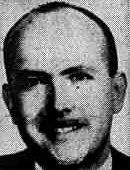
Alan Winterbourne and the 1993 Oxnard Unemployment Office Massacre
Overview
On December 2, 1993, Alan Winterbourne carried out a deadly shooting rampage in Ventura County, California, killing four people and wounding four others before he was fatally shot by police. The attack began inside a state unemployment office in Oxnard, continued during a police pursuit, and ended outside another unemployment office in Ventura. The entire sequence lasted less than twenty minutes.
Winterbourne was a 33-year-old unemployed computer systems engineer who had spent approximately eight years attempting to find steady work. He had reportedly contacted hundreds of companies and submitted more than 2,000 job applications. Winterbourne became convinced that his former employer, the Northrop Corporation, had damaged his career and was preventing him from obtaining another position. Rather than directing his anger at anyone personally connected to his employment problems, he attacked workers he had never met.
Background and Employment Problems
Winterbourne had studied computer technology and briefly worked as a computer systems engineer for Northrop Corporation after leaving college in 1985. His employment there ended after a relatively short period. He later claimed that he had encountered improper conduct within the company and believed that his knowledge of sensitive matters had resulted in him being secretly blacklisted.
During the following eight years, Winterbourne kept detailed records of his attempts to find employment. He saved advertisements, applications, rejection letters and correspondence with prospective employers. A notebook found among his belongings reportedly documented at least one employment contact each weekday from February 14, 1986, through the day of the shooting.
Friends and relatives knew that Winterbourne had become deeply frustrated by unemployment, but those closest to him did not expect him to become violent. On the morning of December 2, 1993, he spoke briefly with his mother without revealing what he was preparing to do.
Visit to the Ventura Newspaper
At approximately 11:15 a.m. on December 2, Winterbourne entered the offices of the Ventura County Star-Free Press in Ventura. He was dressed in a dark sports coat, gray trousers, a white shirt and a tie. He asked to speak with opinion-page editor Timm Herdt.
Winterbourne handed Herdt a large envelope containing documents associated with his employment history, his work at Northrop and his belief that he had been treated unfairly. He also left a box filled with job advertisements, applications and rejection letters. Winterbourne calmly told the editor that he would call later to discuss the material. Herdt placed the documents aside without immediately examining them.
Winterbourne then drove approximately ten minutes south to the California Employment Development Department office in Oxnard.
The Oxnard Employment Office Shooting
At approximately 11:41 a.m., Winterbourne entered the Employment Development Department office in Oxnard. About 50 members of the public were reportedly waiting in the lobby, while approximately three dozen employees worked behind the service counter.
Without announcing his intentions, Winterbourne approached the counter and produced a 12-gauge shotgun concealed beneath his jacket. He began firing toward the employees. People in the lobby dropped to the floor or attempted to find cover. Winterbourne appeared to concentrate his fire on workers behind the counter rather than on the unemployed residents waiting for assistance.
Richard Bateman, a 65-year-old retired businessman, was at the office representing a nonprofit organization that helped disabled adults find employment. Bateman was struck and fell near the service area. Winterbourne continued moving through the office and fired additional shots at him.
Phillip Villegas, a 43-year-old clerk who had originally begun working at the office as a volunteer, attempted to escape but was shot in the back. Anna Velasco, a 42-year-old employee, sought shelter beneath a desk. Winterbourne shot her twice at close range.
When the shotgun malfunctioned, Winterbourne produced a Smith & Wesson .44 Magnum revolver and continued firing. Four additional people were wounded during the attack. Their names were not consistently identified in public accounts.
Winterbourne then stopped shooting, climbed over the service counter and walked toward a side exit. He reportedly adjusted his clothing before leaving the building. Bateman, Villegas and Velasco were mortally wounded inside the office.
Gunfight and Police Pursuit
Four police officers were arriving as Winterbourne exited the unemployment office. He exchanged gunfire with the officers while running toward his tan 1978 Dodge Aspen. Winterbourne was reportedly struck in the shoulder and chest but remained capable of driving away.
A pursuit began through the agricultural area between Oxnard and Ventura. Winterbourne encountered traffic near the intersection of Victoria Avenue and Olivas Park Road. Oxnard Police Sergeant James O'Brien, a 35-year-old detective, stopped his unmarked police vehicle approximately 200 feet away and took cover behind the open driver's door.
Winterbourne exited his vehicle with a scoped Browning .300-caliber hunting rifle. He aimed toward O'Brien's police car and opened fire. One bullet passed through or struck equipment mounted near the police spotlight before hitting O'Brien in the head. O'Brien was killed at the scene.
Other officers temporarily limited their return fire because numerous motorists were trapped nearby. Winterbourne returned to his vehicle and continued driving toward Ventura.
Final Confrontation in Ventura
Winterbourne drove into the parking lot of another Employment Development Department office in Ventura. Approximately six police vehicles followed and blocked the available exits. Officers established positions around the parking lot as Winterbourne remained inside his car.
Winterbourne eventually emerged carrying a Ruger Mini-14 semiautomatic rifle equipped with a loaded 30-round magazine. He began moving toward an adjoining office building while still armed. Six officers opened fire, striking him multiple times. Winterbourne died at the scene.
Police recovered several firearms associated with the rampage, including the 12-gauge shotgun, the .44 Magnum revolver, the Browning hunting rifle and the Ruger Mini-14. Investigators concluded that Winterbourne had arrived prepared for a prolonged and heavily armed confrontation.
Victims Killed
- Richard Bateman, 65 — Killed on December 2, 1993, inside the California Employment Development Department office in Oxnard, California. Bateman was a retired businessman visiting on behalf of a nonprofit organization that assisted disabled adults with employment.
- Phillip Villegas, 43 — Killed on December 2, 1993, inside the Oxnard Employment Development Department office. Villegas was an agency clerk who had begun his work there as a volunteer.
- Anna Velasco, 42 — Killed on December 2, 1993, inside the Oxnard Employment Development Department office. Velasco was an agency employee and an active member of her church community.
- Sergeant James O'Brien, 35 — Killed on December 2, 1993, near Victoria Avenue and Olivas Park Road during the pursuit between Oxnard and Ventura. O'Brien was an Oxnard police detective, a decorated officer and the father of two children.
Other Casualties
- Four Employment Development Department workers — Wounded on December 2, 1993, during the shooting inside the Oxnard unemployment office. Their names were not consistently released in widely available accounts.
- Alan Winterbourne, 33 — Fatally shot by police on December 2, 1993, outside the Employment Development Department office in Ventura, California, after emerging from his vehicle with a semiautomatic rifle.
Motive and Documents Left Behind
After learning of the shootings and hearing reports of the police pursuit, Timm Herdt examined the materials Winterbourne had left at the newspaper. The documents provided an extensive record of Winterbourne's professional disappointments and his belief that former employers, government agencies and the employment system had prevented him from rebuilding his career.
The collection included employment evaluations, correspondence, unemployment-benefit records, letters concerning Northrop Corporation and documentation of thousands of unsuccessful job contacts. The materials did not identify Bateman, Villegas, Velasco or O'Brien as personal enemies. Investigators found no indication that Winterbourne knew any of the four people he killed.
The Oxnard unemployment office was apparently selected because Winterbourne associated the agency with years of rejection, financial difficulty and what he perceived as an uncaring bureaucracy. His victims were innocent employees and a visiting employment advocate who had no role in his previous job loss.
Community Response
The killings shocked Ventura County and were described at the time as the deadliest shooting rampage in the county's history. Government flags were lowered to half-staff, and memorial services were held for the victims. The deaths of three public-service workers and a police detective produced an extensive public response throughout Oxnard and Ventura.
Sergeant O'Brien was remembered for his police service and for confronting an armed attacker under dangerous conditions. Bateman was remembered for assisting people with disabilities. Villegas was described as a friendly and dedicated employee, while Velasco was remembered for her work, religious faith and service to the Spanish-speaking members of her congregation.
Aftermath and Legacy
Because Winterbourne was killed during the final confrontation, there was no criminal trial and no opportunity for investigators to question him about his precise intentions. His writings and employment records demonstrated intense resentment and despair, but they did not provide a rational explanation for his decision to murder strangers.
The attack became one of several highly publicized workplace and unemployment-related shootings in the United States during the late twentieth century. It raised questions about warning signs, access to firearms, workplace security and the psychological effects of prolonged isolation and unemployment.
Although Winterbourne's personal frustrations received considerable attention after the massacre, they did not justify or excuse his actions. On December 2, 1993, he deliberately transformed private grievances into public violence, killing Richard Bateman, Phillip Villegas, Anna Velasco and Sergeant James O'Brien. The lasting impact of the case rests not with the grievances of the gunman, but with the lives of the four victims and the families, coworkers and community members left behind.