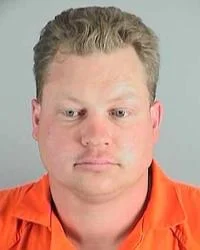
Darrell Brooks and the 2021 Waukesha Christmas Parade Massacre
Overview of the Crime
Darrell Edward Brooks Jr. committed a vehicular mass murder during the annual Christmas parade in downtown Waukesha, Wisconsin, on November 21, 2021. Brooks drove a red 2010 Ford Escape through barricades and entered the parade route while performers, families, children, musicians, dancers, and spectators filled the streets. He continued driving through the procession despite numerous opportunities to stop, killing six people and injuring more than sixty others.
The attack occurred shortly after 4:30 p.m. along Main Street in Waukesha. The parade was a major community celebration featuring school marching bands, dance groups, local organizations, decorated vehicles, and families walking together. Brooks transformed the crowded route into a scene of mass casualties by driving directly through groups of participants. Witnesses described the SUV moving rapidly down the street and striking people as others screamed and attempted to escape.
Events Before the Parade Attack
Earlier on November 21, Brooks had been involved in a domestic confrontation in Waukesha. Prosecutors said he argued with and assaulted a former girlfriend near Frame Park. Other people intervened, and police were called to investigate the disturbance. Brooks left the area in the Ford Escape before officers arrived.
Police initially encountered the SUV near the parade route as Brooks fled from the domestic incident. Instead of stopping when confronted by officers and barricades, he entered the restricted parade area. Investigators determined that the parade itself was not connected to the earlier dispute and that Brooks did not personally know the people he struck.
Entry onto the Parade Route
Brooks drove around or through traffic-control barriers and entered the parade route near White Rock Avenue and Main Street. Police officers immediately recognized the danger and shouted commands for him to stop. An officer struck the hood of the vehicle while attempting to get Brooks to halt, but Brooks continued forward.
As the SUV traveled west along Main Street, it approached groups of parade participants from behind. The vehicle passed floats and other vehicles before reaching areas occupied by people walking in the procession. Testimony and physical evidence presented during the trial showed that Brooks had clear views of the crowd and had repeated chances to brake, turn away, or stop the SUV.
The Attack on Parade Participants
Brooks accelerated through the parade and struck numerous people over several blocks. Witnesses reported that the SUV moved from side to side as it traveled through groups of participants. People were hit individually and in clusters, while others narrowly avoided the vehicle by running toward sidewalks, storefronts, or gaps between parade units.
Among the groups struck were members of the Milwaukee Dancing Grannies, a community dance organization composed primarily of older women. Several members were killed, and others were seriously injured. The SUV also struck members of the Waukesha South High School marching band and young participants associated with the Waukesha Blazers youth baseball organization.
Police officers stationed along the route continued ordering Brooks to stop. One officer fired shots toward the SUV in an effort to end the attack but stopped firing because the street was crowded with civilians. Brooks continued through the parade route before leaving the immediate downtown area.
Fatal Victims
- Virginia Sorenson, 79 – Sorenson was killed on November 21, 2021, while participating in the Christmas parade in downtown Waukesha. She was a longtime member of the Milwaukee Dancing Grannies and helped with the organization and coordination of the group.
- LeAnna Owen, 71 – Owen was killed on November 21, 2021, on the Waukesha parade route. She was a member of the Milwaukee Dancing Grannies and was participating in the group’s parade performance when Brooks drove through the procession.
- Tamara Durand, 52 – Durand was killed on November 21, 2021, during the Waukesha Christmas Parade. She was participating with the Milwaukee Dancing Grannies and had recently joined the group.
- Jane Kulich, 52 – Kulich was killed on November 21, 2021, while walking in the parade with representatives of Citizens Bank. She was a bank employee and a resident of the Waukesha area.
- Wilhelm Hospel, 81 – Hospel was killed on November 21, 2021, while accompanying the Milwaukee Dancing Grannies. His wife was a member of the group, and he regularly assisted its participants during events.
- Jackson Sparks, 8 – Jackson was struck while walking in the parade with the Waukesha Blazers youth baseball team. He suffered critical injuries and died at Children’s Wisconsin on November 23, 2021. His older brother was also injured but survived.
The Injured Survivors
More than sixty people were injured in the attack, including numerous children. Survivors suffered traumatic brain injuries, broken bones, internal injuries, severe lacerations, and lasting psychological trauma. Emergency personnel transported patients to several hospitals throughout southeastern Wisconsin, while bystanders and off-duty medical professionals provided immediate assistance at the scene.
Members of school bands and youth organizations were among those seriously hurt. Musical instruments, parade decorations, shoes, clothing, and personal belongings were scattered across the roadway. Families became separated in the confusion as police, firefighters, paramedics, nurses, and civilian volunteers attempted to identify and treat the wounded.
Escape and Arrest
After leaving the parade route, Brooks abandoned the damaged Ford Escape. Police found the vehicle nearby with visible evidence connecting it to the attack. Brooks continued on foot through a residential neighborhood and approached a local homeowner, claiming that he was homeless and asking to use a telephone.
The homeowner allowed Brooks inside briefly and provided him with a jacket. Police soon surrounded the area after receiving information about the fleeing driver. Brooks was taken into custody that evening. Officers recovered the key to the Ford Escape and other evidence linking him to the vehicle and the parade attack.
Charges Against Brooks
Brooks was initially charged with five counts of first-degree intentional homicide. A sixth homicide charge was added after Jackson Sparks died from his injuries. Prosecutors later filed dozens of additional charges covering the surviving victims, Brooks’s flight from the scene, and his conduct before the parade.
The final parade-related prosecution included six counts of first-degree intentional homicide, sixty-one counts of first-degree recklessly endangering safety, and six counts of hit-and-run causing death. Additional counts concerned bail violations and the domestic incident that preceded the attack.
Evidence of Intent
The prosecution argued that Brooks demonstrated intent through his actions over the length of the parade route. He drove past barricades, ignored police commands, struck the first groups of people, and continued driving through additional crowds rather than stopping. Prosecutors emphasized that the attack lasted long enough for Brooks to understand exactly what the vehicle was doing to the people in front of him.
Witnesses testified that there was no mechanical failure that forced the SUV forward. Vehicle examinations and event data showed that the brakes were functional. Evidence presented in court indicated that Brooks operated the steering wheel, accelerator, and brakes throughout the incident and remained in control of the SUV.
The state also argued that Brooks’s route and movements showed conscious decisions rather than an unavoidable accident. He was able to maneuver around some objects and vehicles while continuing directly into groups of people. The prosecution maintained that each opportunity to stop, followed by his decision to continue, supported the intentional-homicide charges.
Self-Representation and Trial
Brooks’s trial began in October 2022 in Waukesha County Circuit Court. Judge Jennifer Dorow permitted Brooks to represent himself after questioning him extensively about whether he understood the risks of proceeding without an attorney. Standby attorneys remained available, but Brooks personally questioned witnesses, raised objections, and addressed the jury.
The proceedings were repeatedly disrupted by Brooks’s refusal to follow courtroom rules. He interrupted the judge, argued over legal terminology, refused to answer direct questions, and advanced sovereign-citizen-style claims challenging the court’s authority. Judge Dorow removed him from the main courtroom on several occasions and placed him in an adjoining courtroom where he could observe the proceedings and communicate through audio and video equipment.
Despite the disruptions, the jury heard extensive evidence from police officers, investigators, medical personnel, parade participants, injured survivors, eyewitnesses, and vehicle specialists. Jurors also reviewed photographs, maps, physical evidence, recordings, and information recovered from the Ford Escape.
Conviction
On October 26, 2022, the jury found Brooks guilty on all seventy-six counts submitted for its consideration. The verdicts included six convictions for first-degree intentional homicide, one for each person killed. He was also convicted of sixty-one counts of first-degree recklessly endangering safety and six counts of hit-and-run causing death.
The jury deliberated for only a few hours before reaching unanimous verdicts. Brooks showed little visible reaction as the court clerk read the convictions. Families of the victims and surviving parade participants were present in the courtroom as the verdicts were announced.
Victim-Impact Statements
During the sentencing proceedings in November 2022, victims and relatives described the permanent consequences of the attack. Families spoke about losing parents, grandparents, spouses, siblings, friends, and children during what was supposed to be a joyful community celebration.
Survivors described continuing medical treatments, physical disabilities, nightmares, anxiety, and fear of crowded public events. Parents discussed children who remained traumatized by the sounds and images of the attack. Members of the Milwaukee Dancing Grannies spoke about the loss of friends who had brought companionship and happiness to the group.
The family of Jackson Sparks described the pain of losing an eight-year-old child and the injuries suffered by his brother. Other families explained that their final memories of loved ones were connected to the chaos of the parade route, hospital rooms, and emergency notifications.
Sentencing
On November 16, 2022, Judge Dorow sentenced Brooks to six consecutive terms of life imprisonment without the possibility of extended supervision. Each life sentence corresponded to one of the six people murdered during the parade.
For the sixty-one reckless-endangerment convictions involving injured survivors, Brooks received hundreds of additional years of imprisonment and extended supervision. He also received lengthy sentences for the hit-and-run convictions. The consecutive life terms ensured that Brooks would never be released from prison.
Judge Dorow described the attack as deliberate and devastating. She rejected arguments that Brooks’s mental-health history excused his actions, finding that he understood right from wrong and was responsible for his decisions. The court also ordered restitution for financial losses connected to the deaths, injuries, medical treatment, and other consequences of the massacre.
Aftermath in Waukesha
The massacre deeply affected Waukesha and surrounding communities. Memorials appeared throughout the city, and residents gathered for vigils honoring the dead and supporting the injured. The phrase “Waukesha Strong” became a symbol of community solidarity and recovery.
The city later reviewed security procedures for public events, including the placement of stronger barricades and restrictions on vehicle access. The Christmas parade eventually returned under enhanced security, with participants and spectators remembering the six victims and the many survivors.
The Milwaukee Dancing Grannies continued performing as a tribute to the members who were killed. Their appearances became acts of remembrance for Virginia Sorenson, LeAnna Owen, Tamara Durand, and Wilhelm Hospel, who had supported the group through his wife. Jane Kulich and Jackson Sparks were similarly honored by their families, schools, workplaces, athletic organizations, and the wider Waukesha community.
Legacy of the Case
The Waukesha Christmas Parade massacre became one of the deadliest vehicle-ramming attacks in modern United States history. The case demonstrated how an ordinary passenger vehicle could be used as a weapon against a crowded public event and led communities across the country to reconsider parade security.
Darrell Brooks’s convictions established his criminal responsibility for six murders and dozens of additional victims. The evidence showed that he entered a protected parade route, ignored repeated warnings, continued after striking the first victims, and fled rather than assisting the injured. His six consecutive life sentences reflected the individual life taken in each homicide and the extraordinary scale of the suffering he caused on November 21, 2021.