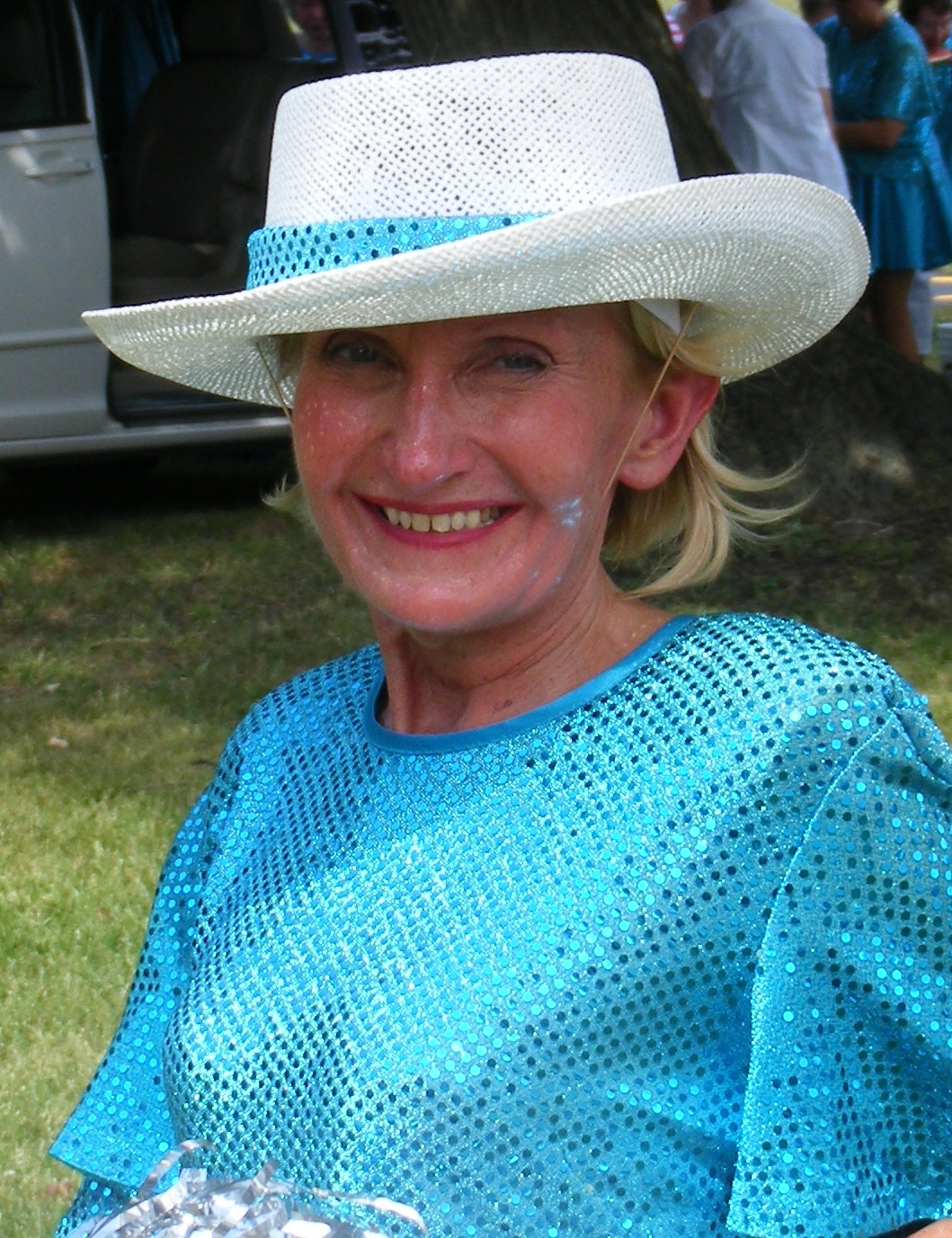
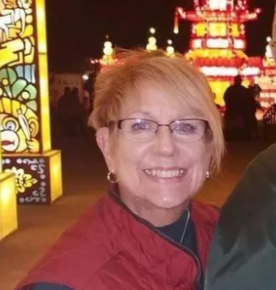
Jane D. Kulich, a 52-year-old White/Caucasian woman, was killed on November 21, 2021, while taking part in the annual Christmas parade in Waukesha, Wisconsin. Kulich worked for Citizens Bank and was walking with the bank’s parade group, alongside coworkers and children who were handing out candy as the procession moved through downtown. What had begun as an ordinary holiday celebration changed within moments when a red Ford Escape entered the closed parade route and began moving through
participants and spectators.
Witnesses walking with the Citizens Bank group later described seeing the SUV approaching from behind. Coworker Stefanie Bonesteel testified that she saw headlights coming directly toward her and then noticed someone from the bank group, identifiable by a red poncho, trying to get away. She saw the person rise above the roofline of the SUV after being struck. Another witness, Adam Bonesteel, testified that he saw Kulich land on the hood of the vehicle before she fell to the pavement and was run over. He estimated the SUV was traveling at roughly 30 miles per hour when it struck her.
The injuries Kulich suffered were catastrophic. Waukesha County Medical Examiner Dr. Lynda Biedrzycki later testified that Kulich sustained injuries from the initial impact with the vehicle, injuries from striking the ground, and crushing injuries after being run over by a tire. Her chest, pelvis and abdomen were severely injured, and the crushing force compressed her liver and diaphragm. The medical examiner testified that several of the injuries were so serious that individual areas of trauma could themselves have been fatal. Her death was attributed to multiple blunt-force injuries caused by the vehicle strike.
Kulich was remembered as much more than one of the people killed that afternoon. She was the wife of John Kulich, the mother of Taylor, Aliesha and Jacob, and a grandmother. Relatives described her as deeply devoted to her family, someone who regularly attended church and valued family traditions such as weekend game nights. Her niece described her as someone people could confide in without fear of being judged. Kulich had been participating in the parade as part of her job with Citizens Bank when she was killed.
Police identified Darrell Edward Brooks Jr. as the driver of the Ford Escape. Investigators determined that Brooks had been involved in a domestic disturbance shortly before entering the parade area, but Waukesha Police Chief Daniel Thompson emphasized that police were not pursuing Brooks when he drove onto the parade route. Authorities also said they found no evidence that Brooks knew any of the parade participants or that the attack was connected to terrorism. Brooks acted alone.
According to the criminal complaint, officers made repeated attempts to stop the SUV before and as it entered the parade. One detective stepped in front of the vehicle, pounded on its hood and repeatedly ordered the driver to stop. Another officer also yelled for the vehicle to stop. Brooks continued onto the route, driving past barricades and police vehicles. Witnesses described the SUV moving among parade participants as people desperately tried to escape its path. An officer eventually fired at the Ford Escape in an effort to stop the threat, but stopped shooting because of the danger that additional gunfire posed to the surrounding crowd.
Evidence presented during the later criminal trial was especially significant in establishing what happened to Kulich. Judge Jennifer Dorow, when discussing the evidence at sentencing, noted that testimony indicated Brooks used his brakes when Kulich was on the vehicle, causing her to come off it, after which the SUV ran over her. Prosecutors argued that Brooks had numerous opportunities to stop or turn away from the parade but instead continued driving through the route as participants and spectators were struck.
The Ford Escape eventually left the parade area. Brooks abandoned the SUV several blocks from where he was later found. Police took him into custody that night after locating him in a residential area near the parade route. Trial testimony established that the damaged red Ford Escape was found approximately two-and-a-half to three blocks from the location where Brooks was arrested.
Brooks was initially charged with five counts of first-degree intentional homicide for the deaths of Kulich, Virginia Sorenson, LeAnna Owen, Tamara Durand and Wilhelm Hospel. An additional homicide charge was added after eight-year-old Jackson Sparks died from injuries suffered in the attack. More than 60 other people were injured, resulting in dozens of additional criminal counts.
By the time the case went to trial in October 2022, Brooks faced 76 charges. They included six counts of first-degree intentional homicide, 61 counts of first-degree recklessly endangering safety, six counts of hit-and-run resulting in death, two counts of felony bail jumping and a battery charge connected to domestic abuse. Brooks chose to represent himself during the trial. Prosecutors presented eyewitness testimony, recordings of the parade, vehicle evidence, medical examiner testimony and evidence concerning his movements before and after the attack.
On October 26, 2022, the jury found Brooks guilty on all 76 counts, including the first-degree intentional homicide charge for Kulich's death. The verdict established criminal responsibility for an attack that prosecutors argued was deliberate, rather than an accidental loss of control of the SUV.
Kulich's family later addressed the court during the sentencing proceedings, describing the permanent impact of losing her. Her daughter Aliesha spoke about searching for her mother amid the chaos at the hospital and about the milestones her mother would never see, including graduation, marriage and other moments that had once been expected parts of their lives together.
On November 16, 2022, Judge Dorow sentenced Brooks to six consecutive life sentences without the possibility of release, one for each person he killed. He also received hundreds of additional years of imprisonment for the people injured and the other crimes for which he was convicted. The sentence for Kulich's killing was therefore one of six separate life terms that ensured Brooks would never be released from prison. Her death, which occurred during what was supposed to be a community holiday celebration, became part of one of the deadliest events in Waukesha's history and resulted in a completed prosecution, conviction and life-without-parole sentence for the man responsible.