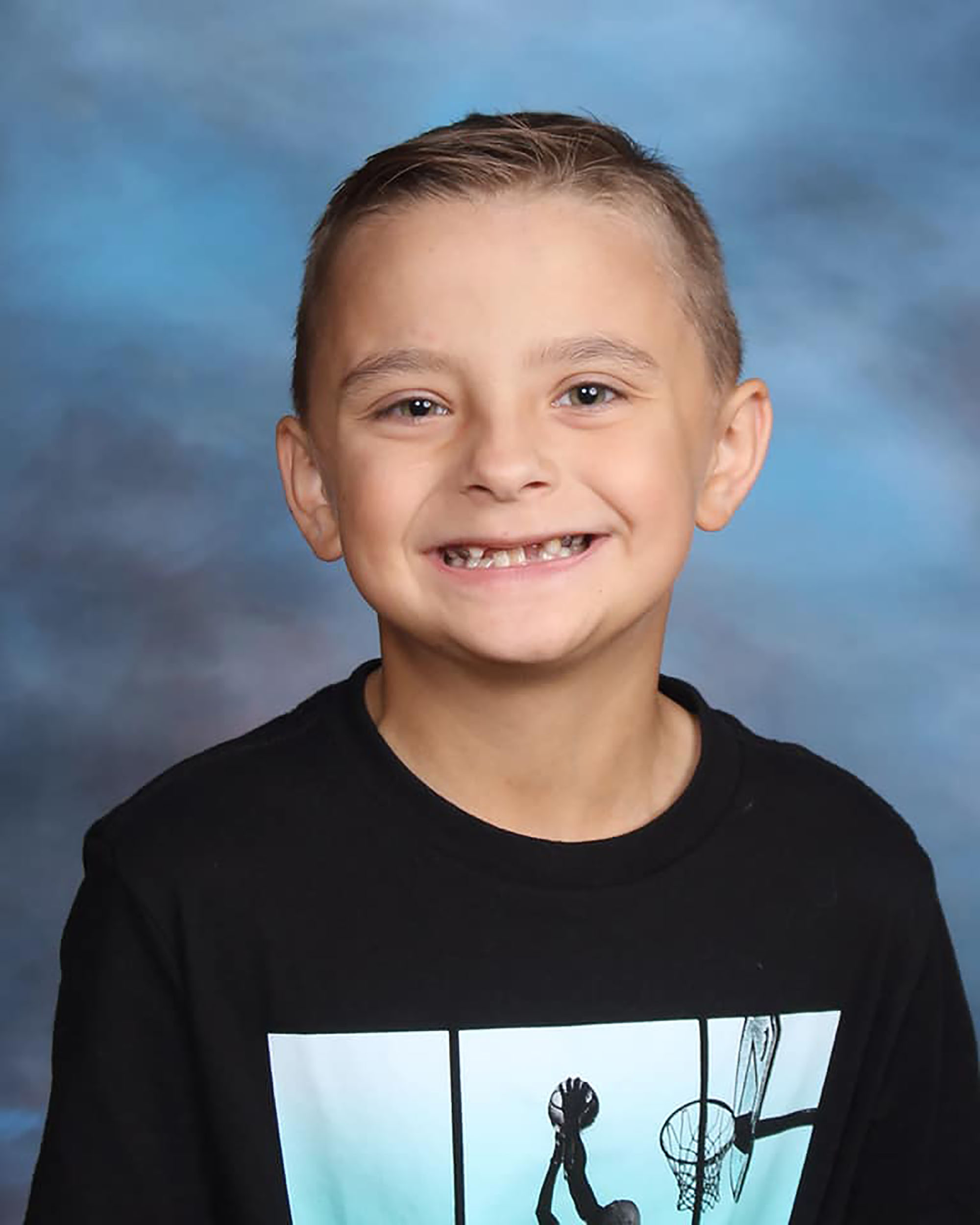
Jackson Sparks was an 8-year-old White/Caucasian male from Mukwonago, Wisconsin, whose life was cut short after he was struck during the Waukesha Christmas Parade on November 21, 2021. Jackson was participating in the parade with the Waukesha Blazers youth baseball organization, walking along the route with other players and his older brother, Tucker. What had begun as a holiday celebration crowded with families and children changed within moments when a red Ford Escape entered the closed parade route and began moving through groups of participants. Jackson and Tucker were among those struck as the vehicle passed through the Blazers group.
Witnesses later described the horrifying aftermath. Jeffrey Rogers, president of the Waukesha Blazers, testified that he found Jackson lying motionless on the roadway after the SUV passed through the group. Others saw someone performing CPR on him as emergency crews struggled to reach the many injured people scattered along the parade route. Jackson was taken for emergency medical treatment and ultimately transferred to Children's Wisconsin. His injuries were catastrophic, and he underwent a craniotomy in an effort to relieve pressure on his brain. Although the attack occurred on November 21, online reports and trial testimony establish that Jackson survived for approximately two days before dying from his injuries on November 23, 2021. His brother survived his injuries.
During the later criminal trial, Waukesha County Associate Medical Examiner Dr. Amy Sheil testified that Jackson died from complications of craniocerebral injuries caused by blunt-force trauma to the head. She testified that the fatal head injuries were consistent with being struck by an SUV weighing approximately 3,300 pounds. Evidence presented at trial showed that several members of the Blazers organization were struck after the SUV had already hit numerous people farther east along the parade route. A Wisconsin State Patrol reconstructionist calculated that the vehicle was traveling at an average speed of approximately 32 miles per hour during one portion of its path along Main Street.
Investigators identified Darrell Edward Brooks Jr. as the driver. Prosecutors said Brooks had been involved in a confrontation with his former girlfriend near Frame Park shortly before the parade attack. After leaving that area, he drove toward the parade route. According to the criminal complaint and later testimony, officers repeatedly attempted to stop the SUV. One detective stepped in front of the vehicle, pounded on its hood and yelled for the driver to stop, while another officer also ordered the vehicle to stop. Brooks continued forward. Authorities said that at one point he slowed or braked but then entered the crowd and accelerated. Witnesses described the vehicle weaving through the parade, and prosecutors argued that Brooks continued driving even after striking people.
The SUV eventually left the parade route and was abandoned nearby. Prosecutors presented evidence that Brooks fled on foot and later approached a nearby residence, telling the homeowner that he was homeless and waiting for an Uber. Police located and arrested him that night. Investigators also connected the abandoned SUV to Brooks through evidence found inside the vehicle and determined that it was registered to his mother. Jackson became the sixth person to die from the attack, joining Virginia Sorenson, LeAnna Owen, Tamara Durand, Jane Kulich and Wilhelm Hospel. More than 60 other people suffered physical injuries.
Brooks was initially charged with intentional homicide in connection with the deaths, and the case eventually proceeded to trial on 76 counts. Those charges included six counts of first-degree intentional homicide with use of a dangerous weapon, six counts of hit-and-run involving death, 61 counts of first-degree recklessly endangering safety with use of a dangerous weapon, two counts of felony bail jumping and one count of battery involving domestic abuse. One of the intentional-homicide counts specifically represented Jackson's death. Brooks pleaded not guilty and later represented himself during the highly publicized jury trial before Waukesha County Circuit Judge Jennifer Dorow.
During the October 2022 trial, prosecutors reconstructed Brooks' path through downtown Waukesha using eyewitness testimony, police officers, surveillance footage, citizen recordings, vehicle evidence and accident-reconstruction testimony. Jurors heard from people who had watched the SUV strike parade participants, from survivors, and from medical examiners who described the injuries suffered by those who died. The prosecution argued that even if Brooks had initially entered the parade route while attempting to leave the earlier confrontation, his continued driving after repeatedly striking people, ignoring police commands and proceeding through additional groups demonstrated intentional conduct. Brooks challenged the state's evidence and questioned witnesses himself, but the jury rejected his defense.
On October 26, 2022, the jury found Brooks guilty on all 76 counts, including the first-degree intentional homicide charge arising from Jackson's death. On November 16, Judge Dorow imposed six consecutive life sentences without the possibility of extended supervision, one for each person killed. Brooks also received hundreds of additional years of imprisonment for the reckless-endangerment, bail-jumping and other convictions. The sentences ensured that he would spend the remainder of his life in prison.
Jackson's death became one of the most painful symbols of the Waukesha parade tragedy. His love of baseball remained central to the way his family and community remembered him. Hundreds gathered for his funeral at Brooklife Church in Mukwonago, baseball players attended in uniform, and the "Jerseys for Jackson" movement encouraged people across the country to wear baseball jerseys in his memory. A memorial bench bearing his name and jersey number was later placed near a baseball field in Mukwonago, ensuring that a child who had gone to Waukesha simply to take part in a holiday parade with his team would continue to be remembered through the sport he loved.