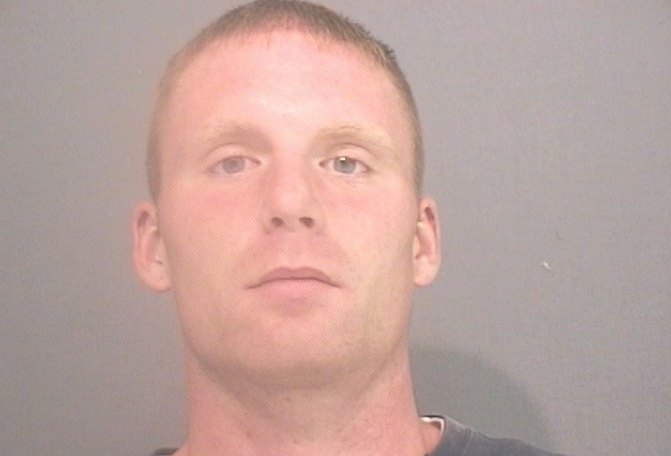
Michael Paul Brown and the 2025 Anaconda Bar Massacre
Overview
Michael Paul Brown is the Montana man accused of carrying out a mass shooting that killed four people inside The Owl Bar in Anaconda on August 1, 2025. The victims were a bartender and three customers who had gathered at the neighborhood tavern during the morning. Authorities alleged that Brown, a longtime Anaconda resident and former soldier who lived next door to the bar, used a rifle to kill everyone who was inside before fleeing into the mountainous countryside surrounding the community.
The attack occurred at approximately 10:30 a.m. at The Owl Bar, located at 819 East Third Street in Anaconda, Montana. The four victims were pronounced dead at the scene. No surviving gunshot victims were reported. Investigators said Brown apparently knew the people inside because he was familiar with the bar and had visited it for years. Despite that familiarity, authorities had not publicly established a clear personal dispute or motive connecting Brown to any particular victim.
The Events Before the Shooting
According to allegations described in charging documents and subsequent court proceedings, Brown entered The Owl Bar shortly before the killings and attempted to start a fire. Investigators alleged that he ignited a cardboard pizza box and tried to use it to set fire to a bucket containing flammable or potentially explosive material. The attempt failed when the bucket did not ignite.
Brown allegedly left the establishment, went to his neighboring residence and retrieved a rifle that authorities believed belonged to him. He then returned to the bar. Prosecutors alleged that Brown opened fire inside the tavern, killing bartender Nancy Lauretta Kelley and customers Daniel Edwin Baillie, David Allen Leach and Tony Wayne Palm. The four victims were believed to have been the only other people inside the bar at the time.
The attempted fire became an important part of the prosecution’s case because investigators believed it indicated an effort to damage or destroy the bar in addition to the fatal shootings. Brown was consequently charged not only with four counts of deliberate homicide but also with attempted arson.
Victims of the August 1, 2025 Shooting
- Nancy Lauretta Kelley, 64 — Killed on August 1, 2025, while working as the bartender at The Owl Bar, 819 East Third Street in Anaconda, Montana. Kelley was an Anaconda resident and was remembered by community members as a familiar and valued presence at the tavern.
- Daniel Edwin Baillie, 59 — Killed on August 1, 2025, while inside The Owl Bar in Anaconda, Montana. Baillie was an Anaconda resident and one of three customers fatally shot during the attack.
- David Allen Leach, 70 — Killed on August 1, 2025, while visiting The Owl Bar in Anaconda, Montana. Leach was an Anaconda resident and a patron of the neighborhood establishment.
- Tony Wayne Palm, 74 — Killed on August 1, 2025, while inside The Owl Bar in Anaconda, Montana. Palm was an Anaconda resident and the oldest of the four victims.
Flight from the Crime Scene
After the shooting, Brown allegedly returned briefly to his residence and then fled the immediate area wearing little clothing. Witness information and surveillance evidence indicated that he was initially shirtless, barefoot and wearing black shorts or underwear. Authorities alleged that he stole a white Ford F-150 pickup truck that contained clothing and camping equipment.
The stolen truck was later located abandoned near Stumptown Road, west of Anaconda. Investigators believed Brown changed clothing after leaving the bar and then entered the rugged forests, hills and abandoned structures surrounding the town. Because Brown had military experience and was believed to possess a firearm, authorities warned that he should be considered armed and extremely dangerous.
The Weeklong Manhunt
The killings triggered an extensive manhunt involving local police, the Montana Highway Patrol, the Montana Division of Criminal Investigation, the Federal Bureau of Investigation, the Bureau of Alcohol, Tobacco, Firearms and Explosives, the United States Marshals Service and numerous regional law-enforcement agencies. More than 250 officers and support personnel reportedly participated at different stages of the operation.
Search teams used helicopters, drones, tracking equipment, police dogs and heavily armed tactical units to examine the mountainous terrain west of Anaconda. Roads and portions of nearby forests were closed. Residents were advised to lock their doors, remain alert and avoid approaching anyone matching Brown’s description. Community events were canceled, businesses altered their operations and some residents remained inside as the search continued.
Authorities offered a reward for information leading to Brown’s arrest. The reward was eventually increased to $10,000 as investigators attempted to narrow the search area. Officers located discarded clothing and other evidence believed to be associated with Brown, but the difficult terrain allowed him to avoid capture for seven days.
Capture
Brown was captured on August 8, 2025, approximately one week after the killings. Members of a United States Marshals Service fugitive task force located him on private property near Montana Highway 1, several miles west of Anaconda and close to the area that had been intensively searched.
Brown was taken into custody alive. A property owner later said Brown made a statement suggesting that he regretted what had happened, although the precise meaning and admissibility of that statement remained matters for the court. His arrest ended the immediate threat to the community and concluded one of the largest law-enforcement operations in recent Montana history.
Background of Michael Paul Brown
Michael Paul Brown was 45 years old at the time of the shooting. He was born on October 31, 1979, and had lived in Anaconda for many years. Brown served as an armor crewman in the United States Army from 2001 until 2005. He was deployed to Iraq from early 2004 until March 2005. He later served in the Montana National Guard from 2006 until 2009 and left military service with the rank of sergeant.
Family members and acquaintances reported that Brown had experienced serious mental-health problems for years. Accounts published after the shooting described delusional and erratic behavior. Relatives said they had attempted to obtain assistance for him but encountered difficulties securing sustained treatment. These reports became relevant to the criminal proceedings, although they did not establish a legal defense or explain why the four victims were targeted.
The owner of The Owl Bar said Brown had been a regular customer and knew the people who were killed. The owner was not aware of a continuing dispute between Brown and the victims and said Brown had not previously caused significant trouble inside the establishment. Investigators continued to examine Brown’s actions, personal history and mental condition in an effort to determine what led to the attack.
Criminal Charges
Brown was formally charged with four counts of deliberate homicide, one count of attempted arson, one count of theft and one count of eluding law enforcement. The homicide counts corresponded to the deaths of Kelley, Baillie, Leach and Palm. The attempted-arson charge concerned the unsuccessful effort to ignite material inside the bar, while the theft and eluding charges arose from his alleged use of the stolen pickup and his weeklong flight from authorities.
Brown made an initial court appearance on August 11, 2025. Bond was initially set at $2 million with extensive conditions. On September 3, 2025, a district judge ordered Brown held without bail after prosecutors argued that his release would create an unacceptable danger to the public. Brown entered pleas of not guilty to the charges.
Prosecutors also considered whether to seek the death penalty. Montana law permits capital punishment for certain aggravated murders, although executions in the state have been legally blocked for years. No conviction had been entered, and Brown remained legally presumed innocent unless and until proven guilty in court.
Mental Competency Proceedings
Questions about Brown’s competency to stand trial emerged during pretrial proceedings. Competency concerns whether a defendant can understand the nature of the charges, comprehend the court process and assist attorneys in preparing a defense. It is separate from the question of whether mental illness affected the defendant at the time of the alleged offense.
In December 2025, Brown was found unfit to proceed to trial. The scheduled January 2026 trial was suspended, and Brown was transferred into the custody of the Montana Department of Public Health and Human Services for psychiatric examination and treatment. He was admitted to the Montana State Hospital in January 2026 under a treatment plan intended to determine whether he could regain competency.
The suspension did not dismiss the homicide or related charges. Proceedings could resume if medical professionals and the court concluded that Brown had become competent. The prosecution and defense continued to address his treatment, future evaluations and the legal steps required before the case could move toward trial.
Impact on Anaconda
The killings caused profound grief in Anaconda, a close-knit former mining community of fewer than 10,000 residents. The victims were local people known to friends, relatives and regular customers of The Owl Bar. Memorials, vigils and benefit events were organized to support their families and preserve their memories.
The Owl Bar remained closed during the immediate aftermath but later reopened. Community members gathered there to honor Kelley, Baillie, Leach and Palm and to raise money for a permanent memorial. The reopening was intended to demonstrate that the establishment and the surrounding neighborhood would not be permanently defined by the violence.
The manhunt also generated substantial costs for local government. Anaconda-Deer Lodge County faced hundreds of thousands of dollars in expenses related to overtime, equipment and the deployment of officers. State officials later offered financial assistance to reduce the burden on the small community.
Unresolved Motive and Continuing Case
No definitive motive for the shooting was publicly established. Brown allegedly knew all four victims, but investigators had not identified a documented conflict that adequately explained the attack. The alleged attempt to burn the bar, his decision to retrieve a rifle and his return to the establishment became central elements in determining whether the killings had been planned or resulted from a rapidly developing mental-health crisis.
The deaths of Nancy Lauretta Kelley, Daniel Edwin Baillie, David Allen Leach and Tony Wayne Palm remain the central facts of the case. Each was killed inside a familiar neighborhood gathering place on the morning of August 1, 2025. Brown’s eventual criminal responsibility, mental competency and possible punishment remained subject to continuing judicial proceedings rather than final resolution.