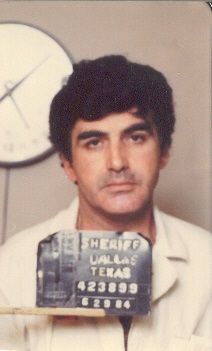
Edward Allaway and the 1976 California State University, Fullerton Massacre
Background
Edward Charles Allaway was a 37-year-old custodian employed at California State University, Fullerton, when he committed one of the deadliest acts of mass murder in Orange County history. On the morning of July 12, 1976, Allaway entered the university’s library building carrying a .22-caliber semiautomatic rifle. Within approximately five minutes, he shot nine people, killing seven and seriously wounding two others.
Allaway had worked as a custodian in the university library and was familiar with the building, its employees and the areas where staff members gathered before the library opened. His attack occurred shortly before 7:00 a.m., when relatively few students were present but several employees had already reported for work. Most of the violence took place in the Instructional Media Center in the library’s basement, although additional victims were shot near the first-floor lobby.
Mental Deterioration and Delusions
In the period before the massacre, Allaway’s behavior had become increasingly unstable. He had a history of mental illness, previous psychiatric treatment and at least one suicide attempt. He had also reportedly displayed violent behavior in his personal life and at an earlier workplace.
Allaway became consumed by paranoid beliefs involving his estranged wife and his coworkers. He believed that men employed in the university library were involved in producing pornographic films and that his wife had been forced or persuaded to appear in them. Investigators found no evidence that his wife had participated in such films. Nevertheless, the delusion became central to Allaway’s thinking and contributed to his hostility toward people at the library.
His marriage had deteriorated badly by the summer of 1976. Allaway and his wife separated during Memorial Day weekend, and she filed for divorce shortly before the shooting. His wife worked at the Hilton Inn in Anaheim, a location that would become important immediately after the massacre.
The Morning of July 12, 1976
Allaway arrived at the California State University, Fullerton campus early on Monday, July 12, 1976. He was armed with a .22-caliber semiautomatic rifle that he had recently purchased from a Kmart store in Buena Park. Because he was an employee, his presence inside the library building did not initially appear unusual.
The shooting began in or near the basement Instructional Media Center. Witnesses heard a rapid series of sharp popping sounds. Some initially mistook the noise for equipment malfunctioning or construction work. The confusion gave Allaway time to move through the workplace before people fully understood that a gunman was firing inside the building.
Allaway encountered several employees in the basement and opened fire. He reportedly pursued some of his victims as they attempted to escape. The violence was not confined to one room. He moved through corridors, work areas and the lobby, firing repeatedly at people he encountered.
Bruce Jacobson attempted to resist the gunman by confronting him with a metal statue. Allaway shot Jacobson during the struggle. Other victims were attacked while working, walking through the building or trying to flee. Deborah Paulsen and Donald Karges were reportedly chased before they were fatally shot.
Allaway later used a service elevator to move to another level of the library. Near the first-floor lobby, he continued firing. He shot Frank Teplansky and Stephen Becker while moving through the building. A visiting high school student was encountered but was not shot. The massacre ended after Allaway exhausted the ammunition available in his rifle.
Victims Killed
- Stephen L. Becker, 32 – Killed on July 12, 1976, inside the California State University, Fullerton library in Fullerton, California. Becker was associated with the university, and his father, Ernest Becker, had served as the school’s founding dean of students.
- Seth Fessenden, 72 – Killed on July 12, 1976, in the library building at California State University, Fullerton. He was among the people shot as Allaway moved through the Instructional Media Center and surrounding work areas.
- Paul F. Herzberg, 30 – Killed on July 12, 1976, inside the university library. Herzberg was shot during the early portion of the attack in the basement area.
- Bruce A. Jacobson, 32 – Killed on July 12, 1976, at California State University, Fullerton. Jacobson attempted to confront or subdue Allaway with a metal statue but was fatally shot.
- Donald E. Karges, 41 – Killed on July 12, 1976, in the library’s Instructional Media Center area. Reports indicated that Allaway pursued Karges before shooting him.
- Deborah D. Paulsen, 25 – Killed on July 12, 1976, inside the library building. Paulsen was an English student and library employee who was reportedly chased as she attempted to escape the gunman.
- Frank G. Teplansky, 51 – Killed on July 12, 1976, near the first-floor portion of the California State University, Fullerton library after Allaway traveled from the basement by service elevator.
People Wounded
- Maynard Hoffman, 64 – Shot and wounded on July 12, 1976, inside the California State University, Fullerton library.
- Donald Keran, 55 – Shot and wounded during Allaway’s attack in the university library on July 12, 1976.
Escape and Surrender
After the shooting, Allaway left the campus before police could capture him. Rather than attempting to hide for an extended period, he traveled to the Hilton Inn in Anaheim, where his estranged wife was employed. From the hotel, he telephoned police and admitted that he had committed a terrible act at Cal State Fullerton.
Allaway told authorities that he was unarmed and wanted officers to come and take him into custody. Police arrived at the hotel and arrested him without further violence. His surrender occurred soon after the massacre, leaving little doubt about the identity of the gunman.
Investigation and Motive
Investigators quickly focused on Allaway’s deteriorating mental condition and his delusions concerning his wife. He claimed that library employees had been involved in pornographic films and that his wife had appeared in the productions. Although some employees may have privately screened commercially produced adult films, there was no evidence supporting Allaway’s belief that his wife had been filmed or exploited by his coworkers.
The attack appeared to have been directed primarily at people associated with Allaway’s workplace, although not every victim had a meaningful personal connection to him. Some were coworkers, while others were people he happened to encounter as he moved through the building. His delusions created a broad category of perceived enemies rather than a carefully documented list of individuals who had actually harmed him.
Murder Trial
Allaway was brought to trial in 1977. Prosecutors presented evidence showing that he had purchased the rifle, carried it onto the campus, opened fire inside the library and later confessed to police. A jury convicted him of six counts of first-degree murder and one count of second-degree murder.
The legal proceedings then moved to the question of whether Allaway had been sane at the time of the massacre. The jury was unable to reach a unanimous decision during the sanity phase. A judge later concluded that Allaway was legally insane when he committed the killings.
Five mental-health professionals diagnosed him with paranoid schizophrenia. The court found that his actions had been driven by severe psychotic delusions and ruled him not guilty by reason of insanity. This ruling did not free him. Instead, he was committed to California’s state psychiatric hospital system for an indefinite period.
Psychiatric Confinement
Allaway was initially confined at Atascadero State Hospital and was later transferred to Patton State Hospital in San Bernardino County. Over the following decades, he repeatedly sought release or placement in a less restrictive treatment program. Those efforts were strongly opposed by prosecutors and by relatives of the people he killed.
At various hearings, hospital representatives argued that treatment had reduced or eliminated his obvious psychotic symptoms. Victims’ families responded that the extraordinary severity of the massacre and Allaway’s history of violence made his release too dangerous. Plans or recommendations that could have moved him toward community placement were challenged and did not result in his freedom.
In 2016, Allaway was transferred from Patton State Hospital to Napa State Hospital. The transfer prompted renewed objections from relatives who feared that movement to a different institution could eventually become a step toward less restrictive custody.
Legacy of the Massacre
The July 12, 1976, massacre left a lasting scar on California State University, Fullerton. Seven people who had arrived at the campus for an ordinary morning of work or study were killed within minutes. Two others survived gunshot wounds, while numerous witnesses and first responders were left with memories of the violence.
The university later established a Memorial Grove honoring Stephen Becker, Seth Fessenden, Paul Herzberg, Bruce Jacobson, Donald Karges, Deborah Paulsen and Frank Teplansky. On important anniversaries, relatives, survivors and members of the campus community have gathered to remember the victims as individuals rather than allowing their lives to be defined only by the man who killed them.
For decades, the attack remained the deadliest mass murder in Orange County. Although later shootings surpassed it in total fatalities, the Cal State Fullerton massacre remains an important early example of mass violence occurring in a workplace and educational environment. The case also raised difficult questions about untreated mental illness, warning signs, access to firearms and the standards used when a person convicted of mass murder is found legally insane.