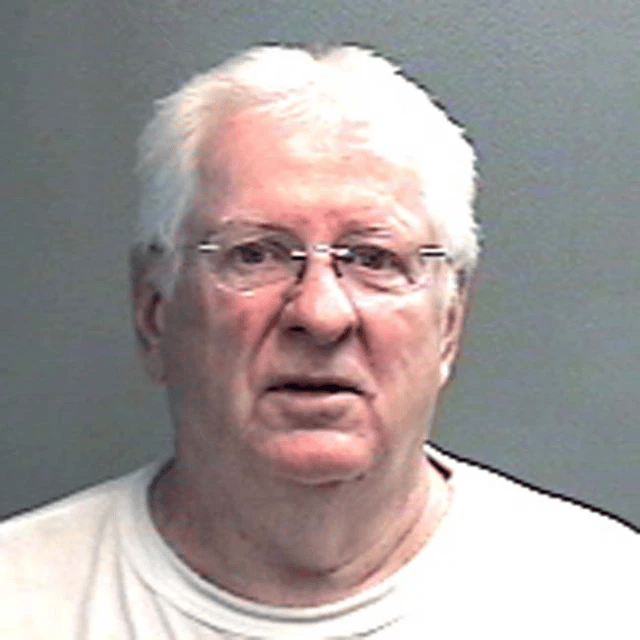
Frank J. Leaver: Murder, Suspicion, and a Trail Across Kentucky and Indiana
Overview
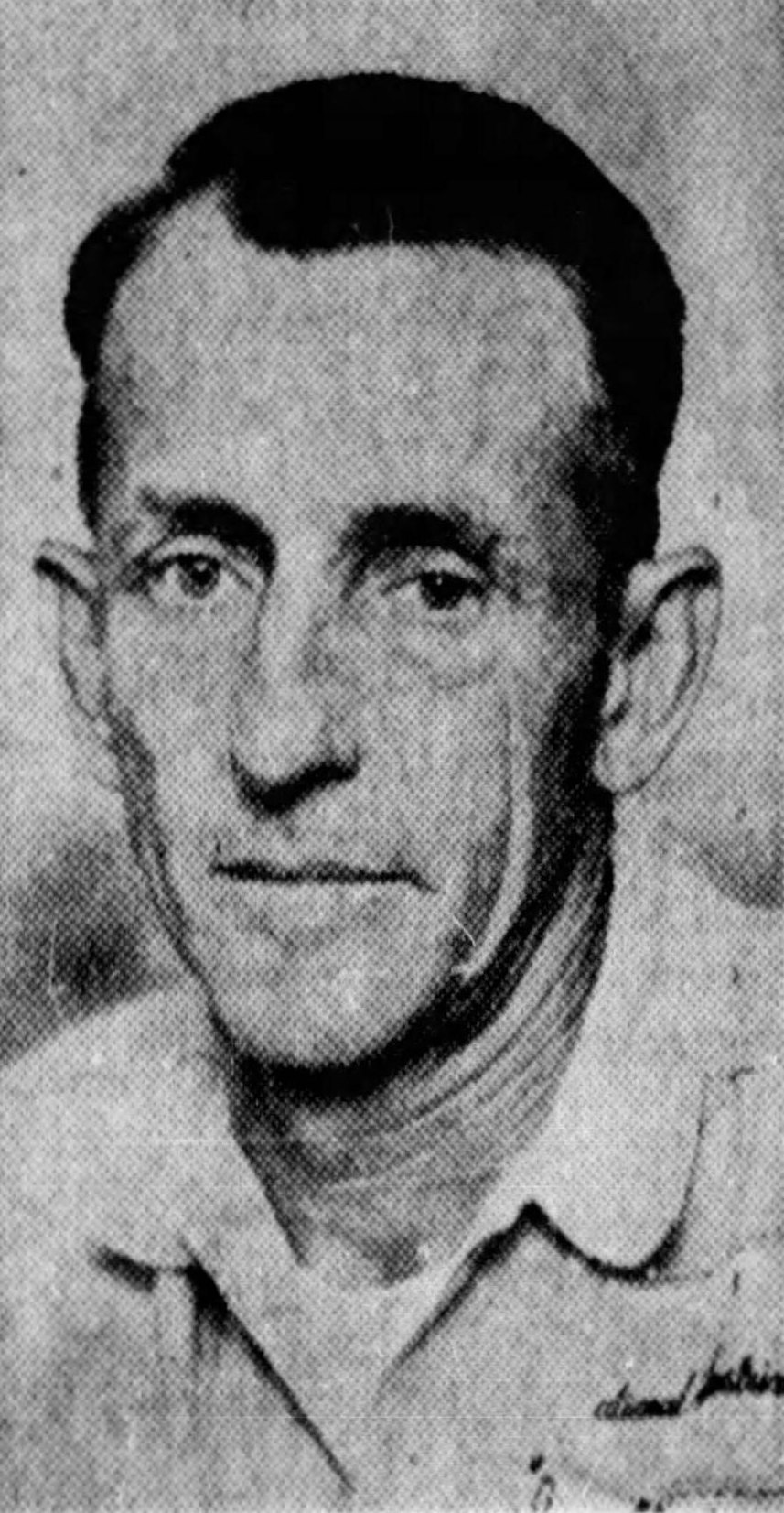
Frank J. Leaver was an American murderer whose name became associated with a series of violent deaths in Kentucky and southern Indiana between the 1930s and the 1960s. Although later crime references frequently describe him as a serial killer, the legal record is more limited: Leaver was conclusively convicted of murdering Anita Christine Barmore in 1962, while his responsibility for several other deaths remained alleged, suspected, or unresolved. The cases connected to him involved shootings, robbery, strangulation, and the unexplained deaths of young women whose bodies were abandoned in isolated locations.
Leaver was born on September 7, 1912, in Kentucky. He accumulated a lengthy criminal history and spent substantial portions of his adult life in prison. His known activities crossed the Ohio River region, particularly Louisville, Kentucky, and the communities of Jeffersonville and Charlestown, Indiana. By the early 1960s, several women from Louisville had been found dead across the river in southern Indiana, creating public fear that a single predator might be operating in the area.
Early Violence and the 1933 Shooting
The earliest death commonly attributed to Leaver was the shooting of 27-year-old James Henry Sanford in Kentucky on August 29, 1933. Surviving summaries of the case are sparse, but Leaver was reportedly convicted in connection with a robbery and shooting during this period and received a life sentence. Despite that sentence, he was eventually released after serving approximately fifteen years.
The 1933 case established a pattern that would follow Leaver throughout his life. He was capable of using deadly violence during an apparent financial crime, yet he later returned to the community. Decades would pass between Sanford’s death and the murder for which Leaver ultimately remained imprisoned, illustrating how fragmented records, overturned proceedings, and the passage of time allowed suspicions surrounding him to accumulate without producing lasting convictions.
The Murder of L.Q. Roberson
On December 3, 1958, 17-year-old L.Q. Roberson disappeared while carrying money and checks belonging to the Central Overall Company in Louisville. Roberson worked in the company’s laundry department and had been assigned to take approximately $600 in cash and roughly $2,000 in checks to a bank. He never completed the errand. He was shot and killed, and the company funds were taken.
Investigators eventually focused on Leaver, who reportedly worked for the same company as a truck driver and was familiar with Roberson’s responsibilities. The investigation gained momentum after Leaver’s wife told authorities that he had admitted killing the teenager, stealing the money, and disposing of incriminating items along Dixie Highway. Members of Leaver’s family reportedly testified that he had spoken about the crime.
Leaver was tried and convicted of Roberson’s murder, receiving another life sentence. However, the conviction did not remain in force. He was granted a new trial in 1961, and the prosecution dismissed the charge in 1962 after witnesses became unavailable or could no longer support the case. Consequently, Leaver was never left with a final, standing conviction for Roberson’s death, despite the earlier verdict and allegations that he had confessed privately.
Deaths of Women in Kentucky and Southern Indiana
During the late 1950s and early 1960s, a number of women died under violent or suspicious circumstances in Kentucky and southern Indiana. Several were young women from Louisville whose bodies were discovered across the Ohio River. Contemporary reports openly questioned whether the deaths were connected, although authorities did not establish that Leaver committed all of them.
Martha Mae Van Hook, a 28-year-old waitress and mother, was found dead on February 3, 1959, near Somerset, Kentucky. She had reportedly been strangled and abandoned along Crab Orchard Road. Her partially undressed body was discovered in the roadway. Later compilations placed her name among Leaver’s suspected victims, but no surviving conviction legally connected him to her murder.
Julia Ann Dawson, 22, was found dead on May 21, 1962, south of Jeffersonville, Indiana. Her body was badly decomposed. A coroner attributed her death to an overdose of pain medication, but the circumstances remained troubling enough that her name was later discussed alongside other young women found dead in the region. Leaver’s involvement was never proved, and Dawson’s death was not legally established as one of his murders.
Nancy Webb, 21, was killed in October 1962. Contemporary reporting stated that she had been beaten and strangled before her body was found in southern Indiana. Webb had worked in Louisville taverns and was acquainted with Anita Barmore, the woman whose murder would finally result in Leaver’s permanent imprisonment. The similarities between the deaths intensified fears that a serial predator was targeting women who lived or worked in the Louisville area.
The Murder of Anita Christine Barmore
Anita Christine Barmore was a 21-year-old Louisville bartender and waitress. On the night of November 7, 1962, witnesses saw her riding in a car with a man identified as or closely resembling Frank Leaver. One witness saw Leaver’s face that evening and noticed no injuries. When the same witness encountered him the following morning, Leaver reportedly had fresh scratches on his face, behaved nervously, and asked for help removing blood from his trousers.
During the early morning of November 8, 1962, Barmore’s body was discovered at the edge of a field on a farm near Charlestown, Indiana. She had been strangled with a ligature, and her body had been mutilated. Her broken fingernails and the scratches found on Leaver’s face suggested that she had fought desperately against her attacker.
The physical evidence placed Leaver under intense suspicion. Investigators found material inside his automobile that was consistent with evidence from Barmore and the location where her body was abandoned. Hair recovered from the car was comparable to hers. Biological material was present on the vehicle’s floor and door. A piece of plastic-covered cord found in the trunk produced a pattern similar to the ligature marks around Barmore’s neck.
Investigators also discovered blood evidence and documented Leaver’s facial scratches in photographs. A witness testified that Leaver claimed his injuries had resulted from an automobile accident, but evidence was introduced challenging that explanation. The prosecution argued that Barmore had scratched him while struggling for her life and that her body had been transported in his vehicle.
Arrest, Trial, and Conviction
Leaver was not immediately prosecuted after Barmore’s death. He was arrested and formally charged several years later, in 1965. His trial took place in Floyd County, Indiana, in April 1966. Prosecutors presented eyewitness testimony placing him with Barmore, accounts of his suspicious conduct the following morning, photographs of his injuries, and physical evidence recovered from his automobile.
The prosecution also introduced a written communication attributed to Leaver. The defense challenged portions of the state’s evidence and argued that the proof was insufficient. Nevertheless, the jury found Leaver guilty of first-degree murder. On May 6, 1966, he received a life sentence for killing Anita Barmore.
Leaver appealed his conviction, objecting to the admission of photographs, the written communication, and the sufficiency of the evidence. In 1968, the Indiana Supreme Court affirmed the conviction. He later sought post-conviction relief, claiming that his trial attorney had represented him incompetently. That effort also failed, and the Indiana Supreme Court again upheld the judgment in 1981.
Confirmed and Suspected Victims
- James Henry Sanford, 27 — Shot and killed on August 29, 1933, in Kentucky. Sanford is frequently identified as an early victim connected to Leaver, reportedly during a robbery-related shooting. Details preserved in easily accessible public records are limited.
- L.Q. Roberson, 17 — Shot and killed on December 3, 1958, in Louisville, Kentucky, while transporting his employer’s money and checks to a bank. Leaver was convicted and sentenced to life, but the conviction was set aside and the charge was later dismissed before a new trial.
- Martha Mae Van Hook, 28 — Found dead on February 3, 1959, near Somerset, Kentucky. She had reportedly been strangled and left along Crab Orchard Road. Leaver was later named as a suspect, but no conviction linked him to her death.
- Julia Ann Dawson, 22 — Found dead on May 21, 1962, south of Jeffersonville, Indiana. Her death was officially attributed to an overdose of pain medication, although it was discussed in connection with other suspicious deaths in the region. Leaver’s involvement was never proved.
- Judy Gardner, 22 — Reported in later compilations as having been strangled in June 1962. Publicly available details about the precise date, discovery location, and investigation are limited, and no court established Leaver’s responsibility.
- Nancy Webb, 21 — Beaten and strangled in October 1962 in southern Indiana. Contemporary reporting described her as a Louisville tavern worker and a friend of Anita Barmore. Her death was considered potentially connected to the other killings, but Leaver was not convicted in her case.
- Anita Christine Barmore, 21 — Last seen alive on November 7, 1962, and found strangled near Charlestown, Indiana, on November 8, 1962. Leaver was convicted of her first-degree murder in 1966 and sentenced to life imprisonment.
- Edith Johnson, 46 — Reported in later serial-killer references as having been strangled on October 18, 1964. Information firmly connecting her death to Leaver is limited, and he was never convicted of killing her.
The Limits of the Serial-Killer Classification
Leaver is often credited with two confirmed victims and several suspected victims. However, those categories require caution. Anita Barmore was the only victim whose murder resulted in a conviction that remained legally valid. The Roberson case initially produced a conviction, but that verdict was overturned and the prosecution ultimately abandoned the charge. The other deaths were never proved in court to have been Leaver’s work.
Some of the suspected cases also differed significantly. Several women had been strangled, while Julia Dawson’s death was classified as an overdose. James Sanford and L.Q. Roberson were shot during incidents associated with robbery or theft. These differences do not rule out a common offender, but they demonstrate why the broader allegations against Leaver should not be presented as settled fact.
Death in Prison and Legacy
Frank J. Leaver remained incarcerated after his conviction for Anita Barmore’s murder. His appeals and post-conviction challenges failed, leaving the life sentence intact. He died on October 25, 1981, while imprisoned in Michigan City, Indiana. He was 69 years old.
Leaver’s criminal history presents a disturbing mixture of proven guilt and unresolved suspicion. He was repeatedly accused of lethal violence, obtained release or legal relief after earlier proceedings, and eventually faced overwhelming evidence in the murder of Anita Barmore. Her case provided the strongest documented account of his methods: isolating a young woman, using his automobile to transport her, strangling her, and abandoning her body in a rural field.
The remaining cases continue to form part of Leaver’s dark reputation, but the victims deserve to be remembered individually rather than merely as entries in a suspected body count. Some were teenagers or young adults just beginning their lives. Others were workers and parents whose deaths left families without complete answers. The uncertainty surrounding several of the cases is an important part of the story, revealing both the limits of mid-twentieth-century investigations and the danger of treating unproved suspicions as established history.