Scott William Cox: Convicted Murderer and Suspected Serial Killer
Overview
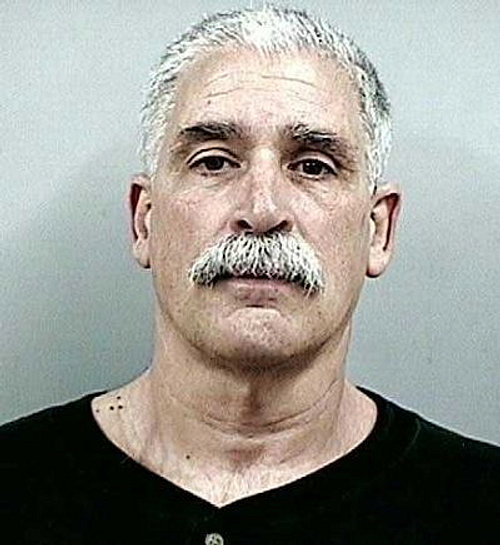
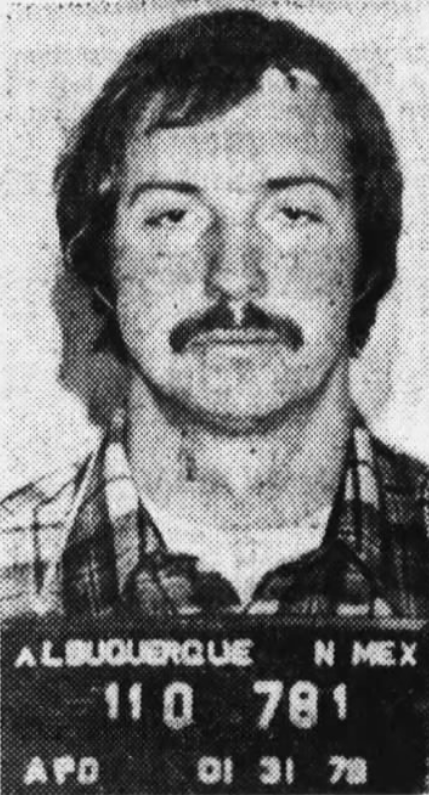
Scott William Cox was an Oregon long-haul truck driver who was convicted of murdering two women in Portland and investigated as a possible serial killer in numerous other unsolved cases across the western United States. Born on November 3, 1963, Cox lived in Newberg, Oregon, and spent years working as a truck driver, a profession that allowed him to travel extensively and made reconstructing his movements an important part of later homicide investigations. Authorities ultimately connected him to the murders of Rheena Ann Brunson and Victoria Rhone, and on September 15, 1993, he was convicted of two counts of murder after entering no-contest pleas.
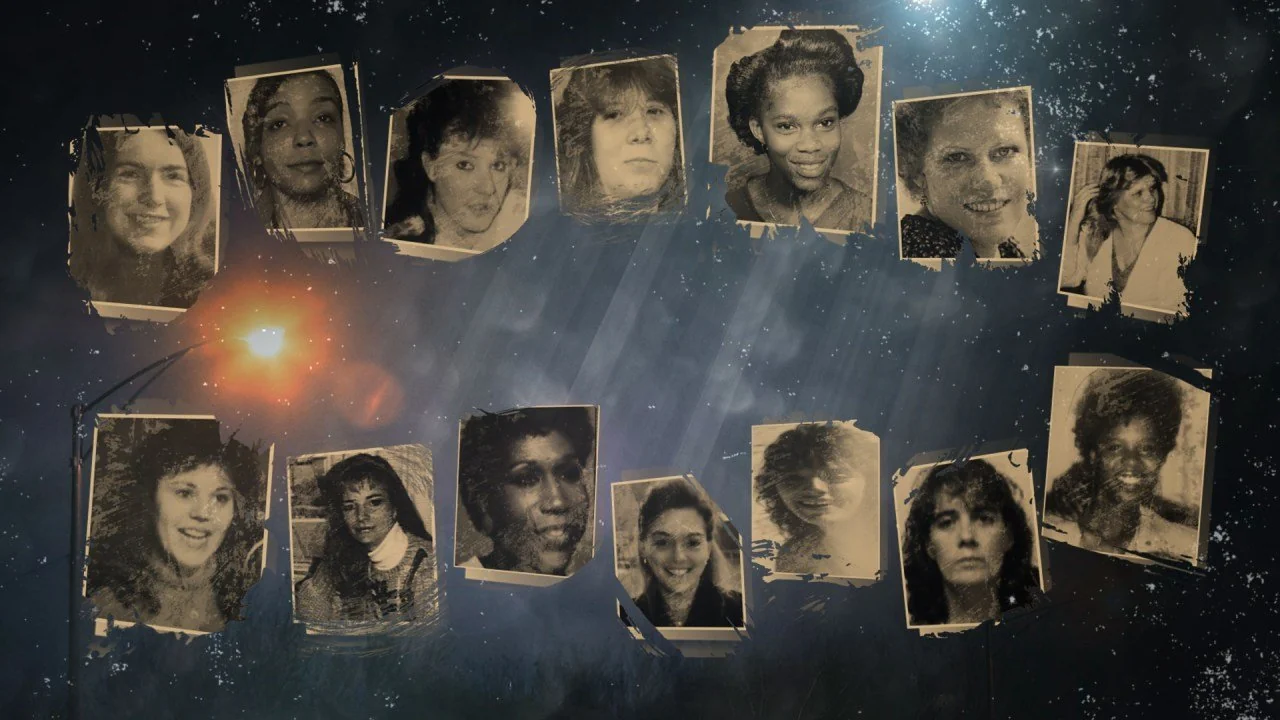
Cox became particularly troubling to investigators because his movements extended far beyond Portland. Police agencies compared his trucking routes with unsolved murders and disappearances in Oregon, Washington, Utah and other western states. At various points investigators examined whether he could have been responsible for roughly 20 additional killings. Those suspicions never produced additional murder convictions, however, and Cox's confirmed criminal responsibility remained limited to the murders of Brunson and Rhone. For that reason, he is most accurately described as a convicted double murderer and suspected serial killer.
The Murder of Rheena Ann Brunson
On November 24, 1990, 34-year-old Rheena Ann Brunson was found critically injured outside a Safeway store in northeast Portland, Oregon. Brunson had been badly assaulted. She had been restrained with handcuffs, beaten, cut in several places and stabbed in the heart. Although she was still alive when she was discovered, her injuries were fatal and she died shortly afterward.
The public location where Brunson was found suggested that she had either escaped from her attacker or had been abandoned while still alive. Investigators were left with a violent homicide involving a woman who had apparently been restrained before receiving the fatal stab wound. Her death would later become important when authorities began comparing it with another Portland killing and with a brutal attack on a woman in Washington.
The Murder of Victoria Rhone
Less than three months later, another woman was found murdered in the Portland area. On February 19, 1991, 32-year-old Victoria Rhone was discovered inside a railroad trailer or rail car at a Portland-area rail yard. Rhone had been restrained and strangled. Material torn from a shirt had reportedly been used to bind her, and investigators determined that strangulation caused her death.
The deaths of Brunson and Rhone involved different fatal injuries, but detectives saw significant similarities in the circumstances surrounding the women and the violence inflicted upon them. Both women were associated in contemporary police reports with street prostitution, placing them among a population that investigators believed Cox deliberately targeted. DNA evidence eventually connected Cox to the two Portland homicide investigations.
Confirmed Murder Victims
- Rheena Ann Brunson — November 24, 1990 — Portland, Oregon: Brunson, 34, was found critically injured outside a Safeway store in northeast Portland. She had been beaten, restrained with handcuffs, cut and stabbed in the heart. She was found alive but died from her injuries shortly afterward. Cox was ultimately convicted of her murder.
- Victoria Rhone — February 19, 1991 — Portland, Oregon: Rhone, 32, was found dead inside a trailer or railroad car at a Portland-area rail yard. She had been bound and strangled. Cox was ultimately convicted of her murder.
The Seattle Attack and the Investigation of Cox
A major investigative development came after a woman survived an extremely violent attack in Seattle in May 1991. The woman had been sexually assaulted, beaten and choked and was left in a condition that led investigators to believe her attacker intended for her to die. A witness reported circumstances connecting the assault to a truck driver. Investigators subsequently focused on a man using the name Seth Scott Cutter.
When information about Cutter was circulated to law-enforcement agencies in Oregon and Washington, detectives in Newberg recognized the man as Scott William Cox. Cox's use of another identity, his trucking occupation and his presence in areas where violent crimes against women had occurred immediately attracted greater attention. Investigators began reconstructing his movements and comparing the Seattle attack with the Brunson and Rhone homicides.
Cox reportedly made statements to investigators about the Portland murders and about attacks on other women, although important portions of those statements later became legally problematic. A judge excluded his confessions from use in the murder prosecution after determining that investigators had obtained them improperly. Prosecutors therefore had to proceed without relying on the excluded confessions. DNA evidence linking Cox to the Portland cases became particularly important.
Suspected Victims and Other Cases Investigated
Once Cox became a murder suspect, investigators began examining his extensive travel history. His occupation allowed him to move through numerous cities and states without attracting the same attention that a resident repeatedly appearing near local crime scenes might have received. Police studied trucking records and other documentation in an effort to determine where Cox had been when other women disappeared or were murdered.
- Hazel Ann Gelnett — body found May 8, 1988 — near Gold Bar, Snohomish County, Washington: Gelnett's body was discovered approximately 100 feet from U.S. Highway 2 near Proctor Creek Road east of Gold Bar. Her hands had been tied behind her back, she had been gagged, and she had been strangled. Her exact time of death was not publicly established. Cox was later identified as a suspect in her unsolved homicide, but he was never charged.
- Vicky Lynn Perkins — exact date of death unknown; body found May 9, 1990 — near Green River, Emery County, Utah: Perkins, 19, was found in brush beside the eastbound lanes of Interstate 70. The Utah medical examiner determined that she had been beaten and strangled and estimated that she had been dead for approximately three months before she was discovered. Perkins was from Portland and had reportedly spent time around truck stops. Utah investigators examined Cox as a possible suspect because of his extensive trucking routes through the West, but no charge was filed against him.
- Tia Marie Hicks — estimated death in mid-to-late March 1991; body found April 22, 1991 — Mountlake Terrace, Washington: Hicks, 20, had last been seen in Seattle months before her body was discovered inside a deteriorating boat parked along 220th Street Southwest in Mountlake Terrace. Decomposition prevented medical examiners from establishing a definitive cause of death, although police investigated the case as a homicide. Medical examiners estimated that she had died in mid-to-late March. Cox became the principal suspect, but he was never charged with Hicks' death.
Stephanie Douglas and Other Unresolved Disappearances
Cox's name also surfaced during discussions of unresolved disappearances. Stephanie Douglas, 25, disappeared from McMinnville, Oregon, on November 27, 1990. She has never been conclusively located, and no verified date of death exists, so she cannot be listed as a confirmed homicide victim. Her disappearance nevertheless occurred during the same period in which Cox was operating in Oregon, and investigators and researchers have examined whether there could have been a connection. No charge tying Cox to Douglas' disappearance was ever filed.
Investigators reportedly compared Cox's movements with many other unsolved cases. His job took him throughout the western United States and reportedly into Canada and Mexico, creating an enormous geographical area for investigators to examine. Detectives attempted to reconstruct his trips using trucking records and other documentation. Although Cox was publicly discussed as a possible suspect in approximately 20 additional killings, suspicion alone was not evidence of guilt, and many of those cases remained unresolved or were eventually associated with other offenders.
DNA Evidence and the Murder Case
The strongest evidence against Cox involved Brunson and Rhone. DNA evidence connected him to both women, providing prosecutors with a means of proceeding even after statements attributed to Cox were suppressed. The developing use of forensic DNA testing during the early 1990s became especially significant in cases involving offenders who traveled between jurisdictions, because biological evidence could establish connections that interviews and geographic records alone could not.
On September 15, 1993, Cox entered no-contest pleas to two counts of murder. A no-contest plea resulted in criminal convictions without requiring Cox to formally admit guilt in court. He received two consecutive sentences of 150 months, totaling 300 months, or 25 years. His sentence also included lifetime post-prison supervision.
Why Investigators Feared There Were More Victims
Cox fit a pattern that concerned homicide investigators studying mobile offenders. A long-haul driver could encounter victims in one jurisdiction, commit an offense and then be hundreds of miles away before a body was discovered. Different police departments might investigate similar crimes without initially knowing that another agency was examining an offender with comparable behavior.
The murder of Brunson, the murder of Rhone and the Seattle assault demonstrated an established history of severe violence against women. When detectives compared those cases with unsolved deaths along highways and trucking corridors, Cox became a logical person to investigate. Authorities examined cases involving women who were homeless, hitchhiking, involved in prostitution or otherwise living in circumstances that could make their disappearances less immediately noticeable.
Despite the scale of the investigation, it is important to distinguish suspicion from established responsibility. Cox was convicted only of killing Brunson and Rhone. He was never convicted of murdering Gelnett, Hicks, Perkins or any of the numerous other women whose cases were compared with his movements.
Release From Prison
Cox served approximately 20 years of his 25-year sentence. On February 22, 2013, he was released from the Oregon Department of Corrections and returned to Yamhill County under lifetime post-prison supervision. Authorities publicly warned the community about his release. Conditions of his supervision included GPS monitoring and restrictions intended to allow corrections officials to closely follow his activities.
The comparatively short amount of prison time Cox served for two murders attracted considerable public attention. His crimes had occurred before later Oregon sentencing changes that imposed considerably longer mandatory minimum terms for certain violent offenses. Although he was no longer confined in a state prison after 2013, he remained under intensive supervision and was subject to restrictions for the remainder of his life.
The Death of Scott William Cox
Cox's life ended violently several years after his release. On April 3, 2017, human remains were discovered at a residence in Alta Sierra, California. Authorities identified the remains as Scott William Cox. Investigators determined that he had been shot twice in the head and concluded that the wounds were inconsistent with suicide.
The Nevada County investigation determined that Cox had probably been killed approximately a year before his body was discovered, on or before April 16, 2016. Investigators focused on his brother, James Richard Cox. Authorities said evidence overwhelmingly implicated James Cox in Scott Cox's killing, but James died from a terminal illness before prosecutors could file charges. On June 29, 2017, the Nevada County District Attorney announced that no charges would be filed and closed the homicide investigation.
Legacy of the Investigation
Scott William Cox remains an example of the difficulties investigators face when a violent offender is highly mobile. His trucking career allowed him to travel through numerous jurisdictions, while several of the women whose cases were examined lived vulnerable or transient lifestyles. Those circumstances complicated efforts to establish timelines, preserve evidence and recognize patterns between crimes occurring hundreds or thousands of miles apart.
What can be established with certainty is narrower than the full scope of suspicion that surrounded him. Rheena Ann Brunson died in Portland on November 24, 1990. Victoria Rhone was found murdered in Portland on February 19, 1991. DNA evidence connected Cox to both cases, and he was convicted of both murders on September 15, 1993. Investigators subsequently explored whether those killings were only two crimes in a much larger series, but Cox died without being prosecuted for any additional homicides. The unanswered cases associated with his name therefore remain separate cold cases whose victims deserve to be remembered independently of the man investigators once suspected of killing them.