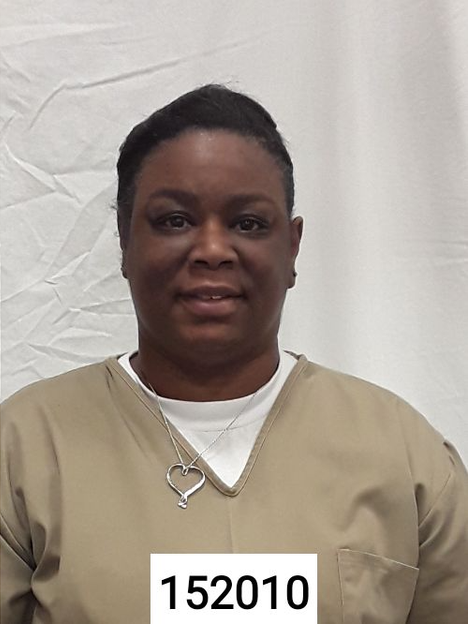
Daniel Owen Conahan: The Hog Trail Killer
Background
Daniel Owen Conahan Jr., born May 11, 1954, is an American convicted murderer and suspected serial killer associated with the series of killings commonly known as the Hog Trail Murders in southwest Florida. Conahan was convicted of only one murder, the 1996 killing of Richard Allen Montgomery, but investigators connected him as a suspect to a group of remarkably similar homicides in Charlotte and Sarasota counties. Years later, he also became a person of interest in the deaths of eight men whose skeletal remains were discovered together in Fort Myers.
The cases became linked because of an unusually distinctive pattern. Male victims were found unclothed in remote wooded locations. Several showed evidence of having been restrained against trees, and several had suffered genital mutilation. Investigators eventually learned that Conahan approached financially vulnerable men and offered them money to pose for nude or bondage photographs in isolated areas. The testimony of a man who survived one such encounter became a crucial part of the case against him.
The First Hog Trail Victim: Gerald "Jerry" Lombard
On February 1, 1994, a construction company worker reported discovering a decomposing human body in woods near Wyandotte Avenue and Tulip Street in northern Charlotte County, Florida. The man had no identification and initially became known simply as John Doe No. 1.
The exact date of the man's death could not be established. His body was unclothed, and circumstances at the scene later became significant when detectives began comparing it with several other deaths. Investigators found similarities involving the remote location, mutilation and evidence suggesting that trees near the scenes may have been used to restrain victims.
For more than 27 years the man remained unidentified. Forensic genetic genealogy eventually led detectives to the Lombard family. DNA obtained from relatives confirmed in June 2021 that John Doe No. 1 was Gerald "Jerry" Lombard, who was born August 30, 1962, in Massachusetts and had lived in Lowell. His family had not heard from him since approximately 1991 or 1992.
Charlotte County investigators have specifically identified Conahan as a suspect in Lombard's homicide. No charge, however, was ever filed against Conahan for Lombard's death.
The Unidentified North Port Victim
Another disturbing discovery occurred on January 1, 1996, in North Port, Florida. A family's dog brought a human skull to their residence. Police searched the surrounding area and recovered additional skeletal remains in woods off Plamendon Street.
The victim, sometimes referred to as the Sarasota County John Doe or John Doe No. 2 in accounts of the Hog Trail investigation, remains unidentified. His exact date of death is unknown. The medical examiner could not establish a precise cause of death because of decomposition, but the death was treated as homicidal violence.
The condition and positioning of the remains resembled the earlier Charlotte County victim. Investigators also found markings on a nearby tree consistent with rope having been wrapped around the trunk. Those similarities became increasingly important when another victim was discovered only two months later.
John William Melaragno
On March 7, 1996, a motorist who had stopped near Laramie Circle in North Port entered a wooded area and discovered the nude body of a man. Investigators determined that the victim had suffered multiple stab wounds and mutilation. Evidence also indicated that he had been restrained.
A tree near the body had marks consistent with a ligature having been wrapped around it. Investigators believed the victim may have managed to break free temporarily before being pursued and killed.
The medical examiner estimated that the victim had been dead for approximately ten days when he was discovered. Because that was an estimate rather than a documented date of death, his exact death date should be considered unknown.
For more than three years he was known as John Doe No. 3. In June 1999 investigators identified him as John William Melaragno, a Cleveland-area native who had moved to North Port during the months before his death.
The similarities between Melaragno's killing, the unidentified North Port victim and the earlier Charlotte County case convinced investigators that they were likely dealing with the same offender.
Kenneth Lee Smith
On April 17, 1996, Charlotte County workers discovered human remains in a remote wooded area near Trembly Avenue and Willow Drive in northern Charlotte County. Detectives searching the scene found decomposed and dismembered human remains that were eventually identified as Kenneth Lee Smith of Fort Myers.
Smith's exact date of death has never been established. Because his remains were already decomposed when discovered on April 17, it is inaccurate to assign him a specific 1995 death date without additional evidence.
Investigators found Smith's remains approximately one-half mile from the location where Gerald Lombard had been discovered in 1994. Evidence recovered during the broader investigation further strengthened suspicions that Smith was part of the same series. Trace evidence associated with Smith's remains was among the evidence investigators examined while focusing on Conahan.
Conahan was never charged with Smith's murder, but Smith remains one of the principal suspected victims associated with the original Hog Trail investigation.
Richard Allen Montgomery
While investigators were searching the woods for additional portions of Kenneth Smith's remains on April 17, 1996, they made another discovery. Nearby, beneath pieces of foam material, was the recently deposited body of 21-year-old Richard Allen Montgomery of Punta Gorda.
Montgomery had last been seen alive on April 16, 1996, between approximately 4:00 and 7:00 p.m. He had told friends that he was going out to make several hundred dollars and expected to return shortly. He had also told his mother that someone had offered him approximately $200 to pose for nude photographs. During the same conversation he mentioned a man he had recently met named Daniel Conahan, a nurse living in Punta Gorda Isles.
Montgomery was killed on April 16, 1996. His nude body was discovered the following day. He had injuries to his neck, chest and wrists consistent with being tightly restrained against a tree. His genitalia had been removed, and an autopsy determined that he died from ligature strangulation.
Montgomery's murder provided investigators with the case in which they could ultimately obtain a conviction against Conahan.
Stanley Burden Survives a Similar Attack
Detectives reviewing earlier reports discovered an extraordinarily similar attack from August 15, 1994. Stanley Burden had survived an encounter with a man who offered him between $100 and $150 to pose for nude photographs.
Burden said he accompanied the man into an isolated wooded area where a tarp and Polaroid camera were produced. After taking photographs, the man introduced clothesline for what he described as bondage photographs.
Burden was then forcibly secured to a tree with rope around his body, arms, legs and neck. His attacker sexually assaulted him and repeatedly attempted to strangle him by pulling the rope tightly around his neck. Burden fought to keep his airway open and survived the prolonged attack. His assailant eventually abandoned him while he was still restrained.
Burden managed to free himself and received medical treatment. Police located the wooded crime scene and documented ligature marks on a tree that corresponded with his account and injuries.
When detectives showed Burden a photographic lineup during the Hog Trail investigation, he identified Daniel Conahan as the man who had attacked him.
The Investigation Turns Toward Conahan
Investigators placed Conahan under surveillance and used undercover officers to learn whether he was continuing to approach potential victims. On May 24 and May 25, 1996, an undercover Charlotte County deputy encountered Conahan at Kiwanis Park. During the encounters, Conahan eventually offered the deputy money to pose for nude photographs.
Police searched Conahan's residence and vehicles on May 31. Investigators took paint samples from a Mercury Capri used by Conahan and compared them with a paint chip recovered from Richard Montgomery's body. Laboratory examination found the samples indistinguishable.
Investigators also reconstructed Conahan's activities on April 16, the day Montgomery was killed. At approximately 6:07 p.m., Conahan's credit card was used at a Punta Gorda Walmart to purchase clothesline, Polaroid film, pliers and a utility knife. Five minutes later, he made an ATM withdrawal near the store.
The timing and nature of the purchases were particularly important because Montgomery had spoken of being paid to pose for photographs, and his injuries showed that he had been restrained with a ligature before being strangled.
Confirmed Victim
- Richard Allen Montgomery – Murdered April 16, 1996, in Charlotte County, Florida; body discovered April 17, 1996. Montgomery was 21 years old. He had been restrained and died from ligature strangulation. Conahan was convicted of his first-degree murder and kidnapping.
Other Suspected Victims of the Original Hog Trail Series
- Gerald "Jerry" Lombard – Exact date of death unknown. His decomposed body was discovered February 1, 1994, near Wyandotte Avenue and Tulip Street in northern Charlotte County, Florida. He remained unidentified until DNA confirmed his identity in 2021. Charlotte County investigators consider Conahan a suspect in Lombard's homicide.
- Unidentified North Port / Sarasota County John Doe – Exact date of death unknown. His remains were discovered beginning January 1, 1996, after a dog brought a human skull to a North Port residence. Additional remains were recovered from woods off Plamendon Street. He remains unidentified.
- John William Melaragno – Exact date of death unknown. His body was discovered March 7, 1996, near Laramie Circle in North Port, Florida, and the medical examiner estimated that he had been dead approximately ten days. He had been restrained, stabbed and mutilated. He was identified in 1999.
- Kenneth Lee Smith – Exact date of death unknown. His decomposed and dismembered remains were discovered April 17, 1996, near Trembly Avenue and Willow Drive in northern Charlotte County, Florida. Conahan was investigated as a suspect but was never charged with Smith's murder.
The Fort Myers Eight
The potential scope of the case became much larger on March 23, 2007. A surveyor working in a wooded area near Rockfill and Arcadia Streets in eastern Fort Myers discovered human skeletal remains. An extensive excavation ultimately revealed eight sets of male remains concentrated within the same wooded area.
The men became known collectively as the Fort Myers Eight. Investigators determined that the bodies had been there for years. Their exact dates of death remain unknown, although several of the identified men disappeared during the mid-1990s, overlapping the period in which the Hog Trail murders occurred.
The location also attracted investigators' attention because Stanley Burden had survived Conahan's 1994 attack relatively close to where the Fort Myers Eight were eventually discovered.
Conahan has not been charged with killing any member of the Fort Myers Eight. Fort Myers investigators have nevertheless identified him as a person of interest in the investigation. These men should therefore be described as possible or suspected Conahan victims rather than confirmed victims.
- John Blevins – Exact date of death unknown. Blevins was last known to be alive in the Fort Myers area during 1995. His remains were among the Fort Myers Eight discovered March 23, 2007, and he was identified later that year.
- Erik David Kohler – Exact date of death unknown. Kohler disappeared from the southwest Florida area in 1995. His remains were discovered with the Fort Myers Eight in 2007 and identified through DNA. His name is sometimes incorrectly rendered as "Eric Kohler."
- Jonathan James Tihay – Exact date of death unknown. Tihay was last known to be alive in October 1995 in Fort Myers. His remains were among the Fort Myers Eight and were identified in 2008.
- Robert Ronald "Bobbie" Soden – Exact date of death unknown. Soden's last known contact was during the 1990s, and investigators connected him to the Fort Myers area. Genetic genealogy led to the identification of his remains in 2022.
- Fort Myers Victim A – Unidentified male. Exact date of death unknown. Remains discovered March 23, 2007, in the Fort Myers burial area.
- Fort Myers Victim B – Unidentified male. Exact date of death unknown. Remains discovered March 23, 2007, in the Fort Myers burial area.
- Fort Myers Victim F – Unidentified male. Exact date of death unknown. Remains discovered March 23, 2007, in the Fort Myers burial area.
- Fort Myers Victim G – Unidentified male. Exact date of death unknown. Remains discovered March 23, 2007, in the Fort Myers burial area.
William "Billy" Charles Patten: A Possible but Unproven Connection
William "Billy" Charles Patten is frequently mentioned in historical discussions of Conahan, but his case should be distinguished from the more strongly linked Hog Trail victims. Patten disappeared in 1993 when he was 24 years old. On May 22, 1997, while Conahan was already in custody awaiting trial, a county worker discovered skeletal remains near Quesada Avenue in the Murdock area of Charlotte County.
DNA testing identified the remains in March 1998 as Patten's. The medical examiner believed he had been dead for several years, meaning his death could have occurred during the period when Conahan was free in southwest Florida.
Patten's case has consequently appeared on numerous lists of possible Hog Trail victims. However, authorities were never able to establish an evidentiary connection between his death and Conahan. His exact date and cause of death were not established. For accuracy, Patten is best described as a possible or uncertain additional case rather than one of Conahan's established suspected victims.
Trial and Conviction
Conahan was arrested in July 1996 following the investigation into Stanley Burden's attack. In February 1997 he was indicted in connection with Richard Montgomery's murder.
During the murder trial, prosecutors presented the physical evidence from Montgomery's body and the crime scene, evidence recovered from Conahan's vehicles and residence, the Walmart purchase made shortly before Montgomery disappeared, and Stanley Burden's account of surviving an attack with a remarkably similar method.
The court allowed Burden's attack to be considered because of its unusual similarities to Montgomery's death. Both men were financially vulnerable, both had been offered money for nude photography, both were taken into isolated woods, and both were restrained against trees with rope. Burden survived the attempted strangulation; Montgomery did not.
In August 1999, Conahan was found guilty of first-degree premeditated murder and kidnapping in Richard Montgomery's case. During the penalty phase, a jury unanimously recommended death. On December 10, 1999, Conahan was sentenced to death for Montgomery's murder and to an additional 15 years for kidnapping.
One Conviction and a Much Larger Unsolved Investigation
Legally, Richard Allen Montgomery remains Conahan's only confirmed murder victim because it is the only homicide for which Conahan was convicted. Gerald Lombard, the unidentified North Port man, John William Melaragno and Kenneth Lee Smith make up the other four victims in the original five-case Hog Trail series that investigators believed shared a common offender.
The Fort Myers Eight represent a separate but potentially related group. Four of those men have now been identified, while four still lack names. Conahan remains a person of interest rather than a convicted offender in those deaths.
This distinction is important. The evidence strongly justified investigating Conahan as a serial killer, but the unresolved cases should not be presented as convictions. A careful accounting therefore separates Montgomery as the confirmed victim, the four other original Hog Trail cases as suspected victims, the Fort Myers Eight as possible or suspected additional victims, and William Patten as an uncertain case for which investigators never established a direct connection.
Execution Warrant
Conahan remained on Florida's death row for more than two decades while pursuing state and federal post-conviction challenges. On August 11, 2026, Florida Governor Ron DeSantis signed a death warrant for Daniel Owen Conahan Jr.
As of August 23, 2026, Conahan is scheduled to be executed by lethal injection at Florida State Prison at 6:00 p.m. on September 10, 2026. Litigation challenging his conviction and sentence remains active in advance of the scheduled execution.
Legacy of the Hog Trail Murders
The Daniel Conahan investigation demonstrates why old serial-homicide cases can continue changing decades after an arrest. Gerald Lombard remained nameless until 2021. Robert Soden was not identified as one of the Fort Myers Eight until 2022. Four men from the Fort Myers site still have not been identified, and the North Port victim discovered in January 1996 likewise remains without a name.
DNA testing and forensic genetic genealogy have therefore done something investigators in the 1990s could not: restore identities to men who had spent decades known only by case numbers. Those identifications have also allowed detectives to reconstruct where the victims were living and when they disappeared, providing new opportunities to examine whether they crossed paths with Conahan.
Conahan's responsibility for Richard Montgomery's kidnapping and murder was established in court. His suspected responsibility for the remainder of the original Hog Trail series, along with the possibility that his crimes extended to the Fort Myers Eight and other unidentified men, remains one of the darker unresolved chapters in southwest Florida criminal history.