Carl Millard Patton Jr.: The Flint River Killer
Overview
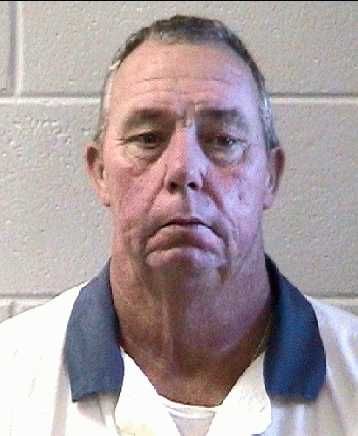
Carl Millard Patton Jr., commonly known as the “Flint River Killer,” was an American serial killer responsible for five murders in Georgia between 1973 and 1977. Several of the killings were carried out with Patton’s friend and accomplice, Joseph Thomas “Joe” Cleveland. The crimes involved murder-for-hire arrangements, insurance money, personal retaliation and Patton’s eventual effort to silence the accomplice who could expose him.
Patton remained free for approximately 25 years after the final murders. Although investigators suspected him in 1977, the physical evidence available at the time was not sufficient to obtain a conviction. The case was revived decades later, when modern DNA testing connected Patton to evidence from one of the crime scenes. Following his arrest in February 2003, his wife, Norma Patton, agreed to cooperate with authorities and revealed how the victims had been killed and their bodies concealed.
The Murder of Richard Russell Jackson
Patton’s first confirmed victim was 41-year-old Richard Russell Jackson, who was killed on March 9, 1973. Jackson was married to Marie Jackson, a woman who later used the name Marie Jackson Wyatt. According to Patton’s eventual confession, Marie approached him about killing her husband and claimed that Jackson had abused her. Prosecutors and members of Jackson’s family believed that financial gain, including insurance money, was also an important motive.
Patton enlisted Joe Cleveland to help carry out the killing. The men persuaded Jackson to enter their vehicle and drove him to a wooded area near Ellenwood in Henry County, Georgia. Patton was armed with a .22-caliber handgun. When Jackson realized that he was in danger, he resisted, escaped from the vehicle and attempted to run away. Patton and Cleveland pursued him and shot him to death.
The crime remained unsolved for three decades. Patton did not admit responsibility until April 2003, after he had already pleaded guilty to four murders committed in 1977. He formally pleaded guilty to Jackson’s murder on May 14, 2003, and received an additional life sentence.
The Murders of Fred Wyatt and Betty Jo Ephlin
On November 12, 1977, Patton and Cleveland killed 45-year-old Fred Andrew Wyatt and Wyatt’s 45-year-old companion, Betty Jo Ephlin, in Clayton County, Georgia. Wyatt had previously been in a long-term relationship with Marie Jackson Wyatt but had left her and moved into a residence with Ephlin.
According to Norma Patton’s testimony, Marie wanted Wyatt killed after their relationship ended and offered Carl Patton approximately $15,000 to carry out the murder. Marie had also reportedly obtained a life insurance policy connected to Wyatt. Patton accepted the arrangement and again recruited Cleveland as his accomplice.
Wyatt and Ephlin were shot and killed. Patton and Cleveland then separated the bodies and attempted to make the deaths appear unrelated. Ephlin’s body was discarded in the Flint River. Wyatt’s body was placed inside his automobile, and the vehicle was positioned on railroad tracks. A train subsequently struck the car, creating the appearance that Wyatt had died in a railroad accident.
Investigators later determined that the staged collision had been intended to conceal Wyatt’s murder. The relationship between Wyatt, Ephlin and Marie Jackson Wyatt eventually became central to the investigation. When Patton was prosecuted in 2003, he admitted killing both victims and pleaded guilty rather than face separate murder trials.
The Murders of Joe Cleveland and Liddie Evans
By December 1977, Patton had become concerned that Joe Cleveland was discussing their previous crimes with other people. Cleveland had participated in the murders of Richard Jackson, Fred Wyatt and Betty Jo Ephlin, making him a dangerous witness who could connect Patton to all three killings.
On December 17, 1977, Patton invited 28-year-old Joe Cleveland and Cleveland’s 31-year-old companion, Liddie Matthews Evans, to the Patton residence in DeKalb County, Georgia. Once they were inside, Patton shot both victims with a shotgun. Evans was not known to have participated in any of the earlier crimes, but she was killed because she was present and could identify Patton as Cleveland’s killer.
Norma Patton later admitted that she helped her husband after the murders. The bodies were wrapped in sleeping bags, placed in a vehicle and transported away from the house. They were weighted with heavy objects and dumped into the Flint River. Norma cleaned blood from the residence and vehicle, while Carl burned bloodstained furniture and other items in an effort to destroy evidence.
The bodies of Cleveland and Evans were recovered from the river on December 20, 1977, in Fayette County. Investigators questioned Carl and Norma Patton soon afterward. Blood evidence linked to Evans was reportedly discovered in a vehicle associated with Patton, but forensic science at the time could not establish the conclusive connection needed to prosecute him.
Confirmed Victims
- Richard Russell Jackson, 41 — March 9, 1973: Lured into a vehicle and taken to a wooded area near Ellenwood in Henry County, Georgia. Jackson attempted to escape but was pursued and shot by Patton and Joe Cleveland.
- Fred Andrew Wyatt, 45 — November 12, 1977: Shot and killed in Clayton County, Georgia, during an alleged murder-for-hire scheme. His body was placed in his automobile on railroad tracks, where the vehicle was struck by a train to disguise the homicide as an accident.
- Betty Jo Ephlin, 45 — November 12, 1977: Killed with Fred Wyatt in Clayton County, Georgia. Her body was transported to the Flint River and discarded. It was recovered in Fayette County.
- Joseph Thomas “Joe” Cleveland, 28 — December 17, 1977: A firefighter and Patton’s accomplice in three earlier murders. Cleveland was shot inside Patton’s DeKalb County residence because Patton feared he would expose their crimes. His body was dumped in the Flint River and recovered in Fayette County on December 20, 1977.
- Liddie Matthews Evans, 31 — December 17, 1977: Cleveland’s companion, who was shot at the Patton residence in DeKalb County. Her body was wrapped in a sleeping bag, weighted and dumped in the Flint River. It was recovered in Fayette County on December 20, 1977.
The Initial Investigation
The discovery of Cleveland and Evans in the Flint River generated immediate suspicion around Carl Patton. Investigators learned that Patton knew both victims and had connections to Wyatt and Ephlin. They also found physical evidence suggesting that Evans had been inside a vehicle associated with Patton.
Despite these suspicions, prosecutors did not believe the evidence was strong enough to prove murder beyond a reasonable doubt. DNA profiling was not yet available as a routine investigative tool, and Patton denied responsibility. The cases gradually became cold, allowing him to return to an outwardly ordinary life.
Patton continued working in the construction and roofing industries and lived in several Georgia counties. He was convicted of felony theft in 1983 and briefly imprisoned, but he was not charged with any of the murders at that time. There are no confirmed murders attributed to him after December 1977.
DNA Breakthrough and Arrest
In 2002, Fayette County investigators reopened the Flint River cases and reviewed evidence that had been preserved since 1977. Modern forensic testing produced a DNA profile that matched Carl Patton. The result provided the scientific connection that investigators had lacked for more than two decades.
Patton was arrested at his Locust Grove home on February 23, 2003. He was initially charged in connection with the murder of Liddie Evans, but authorities quickly began examining his involvement in the deaths of Cleveland, Wyatt and Ephlin.
Shortly after the arrest, Norma Patton offered to cooperate with prosecutors in exchange for protection from more serious charges. She described the killings, the movement of the bodies, the destruction of evidence and her husband’s relationship with Cleveland. Her statements allowed investigators to reconstruct the 1977 murders and connect Patton to the earlier death of Richard Jackson.
Guilty Pleas and Sentencing
In March 2003, Patton faced prosecution in Clayton County for the murders of Fred Wyatt and Betty Jo Ephlin. Norma served as a principal witness and described the alleged murder-for-hire arrangement. On March 8, Patton pleaded guilty to both murders and received two life sentences.
Patton was then transferred to DeKalb County to face charges for killing Joe Cleveland and Liddie Evans. On March 15, 2003, he pleaded guilty to those murders and received two additional life sentences. Norma pleaded guilty to a lesser charge arising from her assistance after the killings and was sentenced to probation and a fine.
Approximately one month later, Patton confessed to the previously unsolved 1973 murder of Richard Russell Jackson. He described how Jackson had been lured into a vehicle, taken to an isolated location and shot after attempting to escape. Patton pleaded guilty on May 14, 2003, and received a fifth life sentence.
Marie Jackson Wyatt’s Alleged Role
Marie Jackson Wyatt was repeatedly identified as the person who allegedly initiated several of the murders. Patton claimed she hired him to kill her husband, Richard Jackson, in 1973. Norma Patton later testified that Marie also arranged the 1977 killing of Fred Wyatt after he left her for Betty Jo Ephlin.
Marie was suspected of being motivated by a combination of anger, revenge and financial gain. However, she was never prosecuted. She died in 1988, approximately 15 years before Patton’s confession and guilty pleas revealed the complete scope of the crimes.
The accounts of Marie’s motives were disputed within the Jackson family. Some relatives described Richard Jackson and Fred Wyatt as abusive, while others portrayed Marie as manipulative and primarily interested in insurance proceeds. Because Marie died before the cases were resolved, her precise involvement was never examined in a criminal trial.
Patton’s Criminal Pattern
Patton’s murders did not follow the pattern of a stranger who selected victims at random. Every confirmed victim was connected to him, his accomplice or Marie Jackson Wyatt. His first three known killings were alleged contract murders, while the final two were committed to prevent Cleveland from revealing the earlier crimes.
Patton repeatedly used personal relationships to gain access to his victims. He relied on Cleveland’s assistance during the first three murders and then eliminated Cleveland when the partnership became a threat. He also involved his wife in concealing evidence, creating a small circle of people who knew what had happened but remained silent for years.
The disposal methods demonstrated planning and an effort to confuse investigators. Patton used a wooded area for Jackson’s murder, staged Wyatt’s death as a railroad accident and placed three victims in the Flint River. After killing Cleveland and Evans, he burned furniture and other items that might contain blood or physical evidence.
Later Years and Death
Patton was sentenced to five life terms for the five confirmed murders. His convictions closed cases that had remained unresolved for approximately a quarter of a century and finally provided official answers to the victims’ surviving relatives.
He remained incarcerated within the Georgia prison system for the rest of his life. Carl Millard Patton Jr. died at Dodge State Prison in Chester, Georgia, on December 16, 2024. He was approximately 75 years old.
Legacy of the Flint River Murders
The Patton investigation became an important example of how preserved evidence and advances in DNA technology could solve crimes committed decades earlier. Investigators in 1977 had identified Patton as a possible suspect, but they could not conclusively establish that the victims had been inside his home or vehicle. The later DNA match transformed those suspicions into evidence capable of supporting prosecution.
The case also demonstrated how murder-for-hire crimes can expand as offenders attempt to silence accomplices and witnesses. Patton began by killing people for another person’s alleged benefit and ended by murdering his own partner and an innocent woman who happened to be with him. His attempts to hide the victims in the Flint River gave the case its enduring name, but it was the surviving physical evidence and the eventual testimony of his wife that brought the Flint River Killer to justice.