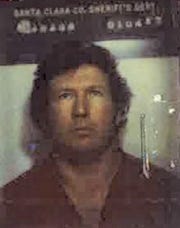
Rhonda Belle Martin: The Poisoner of Montgomery
A Pattern of Death Inside One Family
Rhonda Belle Martin was an American serial poisoner who killed members of her own family over a period extending from 1937 to 1951. Born Rhonda Belle Thomley on November 4, 1906, she lived in Montgomery, Alabama, and worked as a waitress. Behind the appearance of an ordinary wife and mother was a pattern of arsenic poisoning that eventually led Martin to confess to killing her mother, two husbands and three of her daughters.
Martin relied on arsenic-containing rat poison, which she secretly introduced into food, coffee, alcoholic drinks and other items consumed by her victims. Arsenic poisoning can cause vomiting, abdominal pain, weakness, numbness, paralysis and the gradual failure of vital organs. When administered repeatedly in small amounts, its effects can resemble serious natural illnesses. This allowed the deaths surrounding Martin to remain unsuspected for many years.
The people Martin targeted were relatives who trusted her completely. Her daughters became ill while living under her care, her husbands deteriorated in their own homes, and her mother died after becoming another victim of the same general method. Martin often appeared to be the devoted caregiver during these illnesses. After each death, she received sympathy as a woman who had suffered another devastating personal loss.
Victims Rhonda Belle Martin Confessed to Poisoning
- Emogene Garrett – Martin's young daughter died on July 9, 1937, in Montgomery, Alabama. Emogene was born on December 13, 1934, making her two years old at the time of her death, although contemporary accounts sometimes described her as three. Martin later confessed that she had given the child arsenic-containing rat poison.
- George Wertlaw Garrett Jr. – Martin's second husband died on December 24, 1939, in Montgomery, Alabama. He was 35 years old. Martin later admitted placing rat poison in his whiskey. His death was initially attributed to bronchopneumonia following an illness, and no homicide investigation was opened at the time.
- Anna Carolyn Garrett – Martin's six-year-old daughter died on May 15, 1940, in Montgomery, Alabama. Her death occurred less than five months after the death of her father, George Garrett. Martin eventually confessed that Carolyn had also been poisoned with rat poison.
- Ellyn Elizabeth Garrett – Martin's 11-year-old daughter died on August 1, 1943, in Montgomery, Alabama. Martin later included Ellyn among the children she admitted poisoning. Like the earlier deaths, Ellyn's death was initially treated as the result of illness rather than deliberate poisoning.
- Mary Frances Grimes Gibbon – Martin's mother died on February 11, 1944, in Montgomery, Alabama. She was approximately 58 years old. Martin confessed that her mother had been poisoned, extending the series of killings beyond her husbands and children.
- Claude Carroll Martin – Martin's fourth husband died on April 27, 1951, in Montgomery, Alabama, at the age of 51. Martin secretly administered arsenic to him through food and beverages. Claude was the only victim whose murder resulted in Martin's prosecution and conviction.
Other Deaths and the Limits of the Confession
Five of Martin's seven children died before reaching the age of 12. However, she confessed to killing only three of those children: Emogene, Anna Carolyn and Ellyn Elizabeth Garrett. She denied causing the deaths of two other daughters who died during childhood. Because those deaths occurred many years before the investigation, the available evidence never established conclusively whether Martin was responsible for them.
For that reason, Martin is generally listed as having six murder victims rather than eight. The accepted victim count consists of the six people she confessed to poisoning: three daughters, her mother and two husbands. She was convicted only of Claude Carroll Martin's murder, but her confession connected her directly to the other five deaths.
Some later accounts have published victim lists containing names such as Emmitt Martin, Ruth Evelyn Martin, Elberta Martin, Rhonda Belle Thomley and Lee Roy Gentry. Those names are not consistent with Martin's confession, the murder charge against her or the recognized historical record of the case. Claude Carroll Martin was not her first husband or merely a suspected victim; he was her fourth husband, the man whose arsenic murder led to her conviction and death sentence.
The Poisoning of Ronald Martin
Martin's crimes were finally exposed after she poisoned Ronald Martin, who survived. Ronald was Claude Carroll Martin's adult son and therefore Rhonda's former stepson. After Claude's death, Rhonda married Ronald, making him her fifth husband. Accounts that describe Ronald as her former son-in-law are inaccurate.
Ronald began suffering from a severe and unexplained illness that included weakness and paralysis. Unlike Martin's earlier victims, he did not die. He survived but was left seriously disabled and reportedly required the use of a wheelchair. His condition raised suspicions that had not been raised by the earlier family deaths.
Physicians discovered evidence that Ronald had been exposed to arsenic. Investigators then examined the extraordinary number of deaths surrounding Rhonda Martin. What had previously appeared to be a series of unrelated illnesses and personal tragedies began to look like a prolonged campaign of poisoning.
Investigation and Arrest
Authorities reopened questions about the deaths of Martin's relatives and investigated the possibility that arsenic had been responsible. Claude Martin's body was exhumed, and toxicological testing found arsenic in his remains. The discovery provided physical evidence supporting the suspicion that he had been deliberately poisoned.
Martin was arrested in March 1956. During questioning, she confessed to poisoning six relatives. Her admissions identified Emogene Garrett, George Garrett, Anna Carolyn Garrett, Ellyn Elizabeth Garrett, Mary Frances Gibbon and Claude Carroll Martin as her victims. She also admitted poisoning Ronald Martin, although he survived the attack.
The confession transformed a history of apparently natural deaths into a documented series of family murders. Martin described using commercial rat poison as her weapon. Because arsenic was readily available and its symptoms could be mistaken for disease, she had been able to continue poisoning relatives for years without attracting serious suspicion.
Possible Motives
Prosecutors argued that money was one reason for the killings. Martin carried small life insurance policies on several of the people who died and collected payments after their deaths. However, the proceeds were not especially large and in some cases may have done little more than cover funeral and burial expenses. Martin never provided a clear and consistent financial explanation for the entire series.
Investigators and writers also considered whether Martin craved the attention surrounding illness and bereavement. While a relative was sick, she occupied the role of concerned caregiver. After a death, she received visits, cards, condolences and sympathy from friends and neighbors. Reports concerning the case suggested that she enjoyed the attention created by these repeated family tragedies.
No single motive fully explains why Martin poisoned children, husbands and her own mother. Shortly before her execution, she claimed that she did not understand why she had committed the crimes. She expressed the belief that something must have been wrong with her and asked that her body be studied after her death in the hope that doctors might discover an explanation.
The Trial for Claude Martin's Murder
Although Martin confessed to six murders, Alabama prosecutors placed her on trial specifically for the murder of Claude Carroll Martin. His death was the most recent of the admitted killings, his remains had been examined for arsenic, and the prosecution possessed stronger physical and legal evidence in his case than in the older deaths.
The indictment charged Martin with unlawfully and intentionally killing Claude through arsenic poisoning. The state presented evidence concerning his illness, the arsenic discovered during the investigation and Martin's statements to authorities. Her confession regarding other poisoned relatives was also important because it demonstrated a repeated method and pattern.
Martin's defense challenged the confession and the state's interpretation of the evidence. Nevertheless, the jury found her guilty of first-degree murder in June 1956. She was sentenced to death in Alabama's electric chair. The Alabama Supreme Court upheld her conviction on March 14, 1957, and denied a rehearing on June 27, 1957.
Execution
Rhonda Belle Martin was executed at Kilby Prison in Montgomery, Alabama, shortly after midnight on October 11, 1957. She was 50 years old. Carrying a Bible, she entered the execution chamber and recited the 23rd Psalm with the prison chaplain.
The first electrical current was applied at approximately 12:10 a.m., and Martin was pronounced dead at approximately 12:16 a.m. She did not deliver a formal final statement. Her execution followed unsuccessful appeals, requests for clemency and arguments that her mental condition had not been adequately examined.
Martin had asked that her body be given to a scientific institution so physicians could attempt to determine why she had committed the murders. That request was not carried out. Her body was released to relatives and buried at Montgomery Memorial Cemetery, where several members of her family had also been laid to rest.
Legacy of the Case
Rhonda Belle Martin is remembered as one of the most notorious poisoners in Alabama history. Her confirmed historical victim list consists of Emogene Garrett, George Wertlaw Garrett Jr., Anna Carolyn Garrett, Ellyn Elizabeth Garrett, Mary Frances Grimes Gibbon and Claude Carroll Martin. Ronald Martin survived her attempt to poison him and became the central living victim whose illness helped expose the crimes.
Her case demonstrates how a poisoner could exploit the privacy of family life, the trust placed in a caregiver and the limitations of medical testing during the first half of the 20th century. The victims did not die together, and their symptoms appeared consistent with ordinary illnesses. As a result, physicians, relatives and authorities initially considered each death separately instead of recognizing the pattern connecting them.
Martin was legally convicted of one murder, confessed to six murders and admitted poisoning a seventh person who survived. The complete truth concerning the deaths of her other two young daughters may never be known. What is firmly established is that from 1937 through 1951, Martin repeatedly used arsenic against members of her immediate family and concealed those crimes beneath the appearance of caregiving, illness and grief.