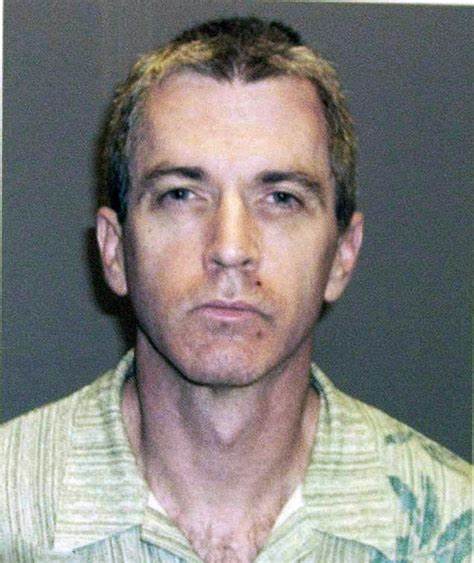
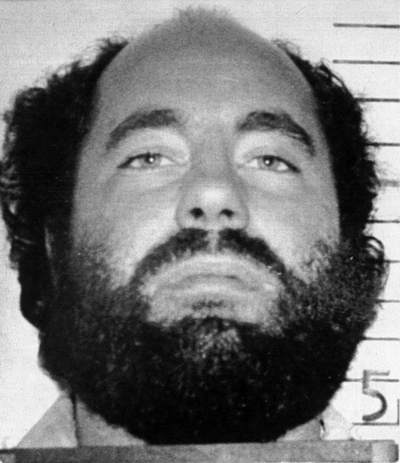
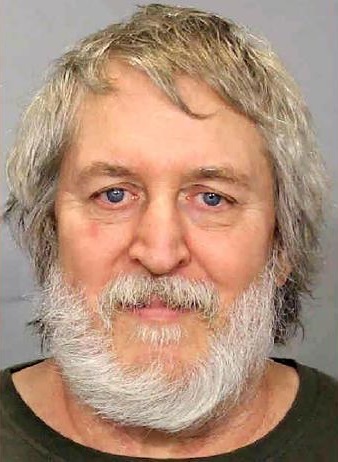
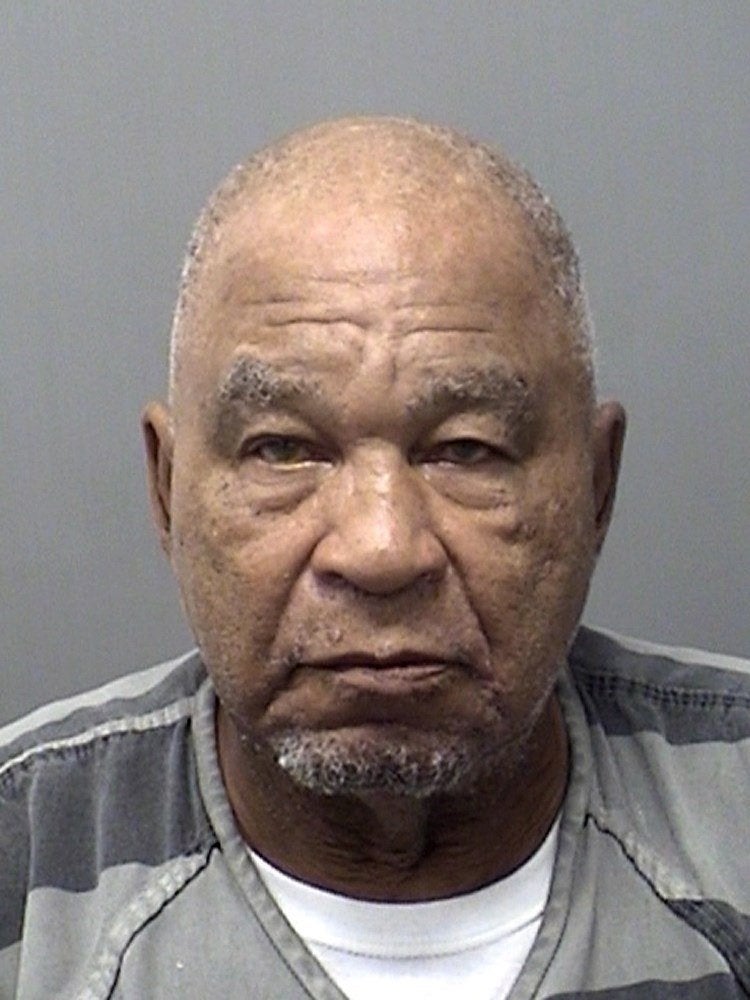
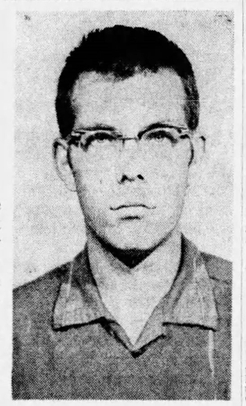
John Eric Armstrong: The Detroit Serial Killer and Former U.S. Navy Sailor
Background and Military Service
John Eric Armstrong was born on November 23, 1973, in New Bern, North Carolina. He graduated from New Bern High School and entered the United States Navy in 1992. Beginning in 1993, Armstrong served aboard the aircraft carrier USS Nimitz, where his duties included work connected with aircraft fueling and ship services. He remained in the Navy for approximately seven years and was honorably discharged in April 1999.
During his military career, Armstrong traveled extensively as the Nimitz visited ports in the United States and throughout Asia and the Pacific. Those travels later became an important part of the investigation into him because, after his arrest in Michigan, Armstrong claimed that his murders had begun years before the killings for which he was ultimately convicted. He told investigators that he had attacked people in several of the same places visited by his ship. Although police agencies around the world investigated those statements, most of the alleged overseas murders could never be independently verified.
After leaving the Navy, Armstrong settled in the Detroit metropolitan area with his wife and family. He lived in Dearborn Heights, Michigan, attended classes at Schoolcraft College, and held several jobs. To neighbors and acquaintances he did not outwardly resemble the violent offender police would later describe. Behind that appearance, however, Armstrong began targeting vulnerable people in Detroit, particularly women associated with street prostitution along the Michigan Avenue corridor.
The Murder of Monica Johnson
The first of Armstrong's five confirmed Detroit-area victims was 31-year-old Monica Johnson. On December 3, 1999, Johnson encountered Armstrong in Detroit. Armstrong later admitted that he had sex with her and strangled her. Johnson was abandoned near an I-94 service drive in Detroit. She was still alive when she was discovered, but her injuries were fatal and she died at a hospital later that day.
At the time, Johnson's death was one of hundreds of violent deaths being investigated in Detroit, and there was not yet an obvious connection to the man who would eventually be identified as her killer. It was only after Armstrong's arrest months later that investigators were able to place Johnson's death within the larger series of attacks.
The Murder of Wendy Jordan
Thirty-nine-year-old Wendy Jordan became Armstrong's next confirmed victim. In the early hours of January 2, 2000, Armstrong picked Jordan up in Detroit. He later admitted that the two had a sexual encounter before he strangled her. Armstrong then transported Jordan's body to Dearborn Heights and threw her from a bridge into the Rouge River.
The case took an unusual turn because Armstrong himself drew police attention to Jordan's body. Later on January 2, he claimed that he had become nauseated while near the bridge, looked over the side and unexpectedly saw a woman's body below. He reported the discovery to authorities. Investigators soon became suspicious of the circumstances surrounding his story.
An examination of Jordan established that she had been strangled. Investigators also recovered biological and trace evidence. DNA eventually connected Armstrong to Jordan, while fibers associated with her clothing were linked to his vehicle. Dearborn Heights investigators increasingly regarded Armstrong as a strong suspect, but he remained free while laboratory work and the investigation continued.
Escalating Attacks in the Spring of 2000
While police were investigating Armstrong in connection with Wendy Jordan's death, he continued approaching people along Detroit's prostitution corridor. Several survived encounters that could easily have become additional homicides.
On April 2, 2000, 42-year-old Wilhelminia Drane entered Armstrong's Jeep after accepting a ride. Armstrong attacked her and attempted to strangle her. Drane fought back and managed to use pepper spray or Mace against him, allowing her to escape from the vehicle.
Five days later, on April 7, Armstrong encountered Devon Marcus. Armstrong offered Marcus money for sex and subsequently attempted to strangle Marcus. Marcus escaped and provided police with information about the attacker and his vehicle. These surviving witnesses became important as Detroit investigators tried to identify the man responsible for a growing series of violent attacks.
The Railroad Yard Murders
On the morning of April 10, 2000, the investigation changed dramatically when three bodies were discovered near railroad tracks in southwest Detroit. The victims had been left in the same general area but were in different stages of decomposition, immediately suggesting that they had been killed at different times and returned to the same dumping location.
The women were identified as Rose Marie Felt, Kelly Jean Hood and Nicole Young, who was also known as Robin or Robbin Brown. Investigators determined that the victims had been strangled. The condition of the bodies indicated that Felt and Hood had been dead for weeks, while Young had apparently been killed only hours before the bodies were discovered.
The repeated use of the same secluded railroad area demonstrated a recognizable pattern. Investigators believed they were dealing with a serial killer who was deliberately returning to a familiar location. Armstrong later admitted responsibility for the three deaths.
Confirmed Victims
- Monica Johnson, 31 — Died December 3, 1999, in Detroit, Michigan. Armstrong strangled Johnson and abandoned her near the I-94 service-drive area. She was discovered alive but critically injured and died at a hospital the same day.
- Wendy Jordan, 39 — Killed January 2, 2000, after being picked up in Detroit, Michigan. Armstrong strangled Jordan and dumped her body into the Rouge River from a bridge in Dearborn Heights. Armstrong later reported finding the body himself.
- Rose Marie Felt, 32 — Killed during March 2000 in Detroit, Michigan. The precise day of her death was not publicly established with certainty. Armstrong strangled Felt and left her body in a secluded railroad area in southwest Detroit. Her body was discovered on April 10, 2000.
- Kelly Jean Hood, 34 — Killed during March 2000 in Detroit, Michigan. The exact date of death was not publicly established; investigators determined that she had been dead for weeks when discovered. Armstrong strangled Hood and left her near the same southwest Detroit railroad corridor. Her body was found on April 10, 2000.
- Nicole Young, also known as Robin or Robbin Brown, 20 — Killed during the early hours of April 10, 2000, in Detroit, Michigan. Armstrong strangled Young and left her near the railroad tracks where Felt and Hood had previously been abandoned. Her body was discovered only hours later.
Arrest and Confession
After the three railroad-yard victims were discovered, Detroit police intensified their search. Investigators connected the recent attempted strangulations to the homicide investigation, while the earlier DNA evidence from Wendy Jordan's case was pointing directly toward Armstrong.
Shortly after midnight on April 12, 2000, police stopped Armstrong on Michigan Avenue in southwest Detroit. During questioning, investigators confronted him with the evidence against him. Armstrong eventually began admitting responsibility for the Detroit-area murders.
He described picking up victims, engaging in sexual activity and strangling them. Investigators said that he supplied details about the crimes and dumping locations. His admissions connected the murders that had previously been investigated separately and established that the deaths of Monica Johnson, Wendy Jordan, Rose Marie Felt, Kelly Hood and Nicole Young were the work of the same offender.
Armstrong also made disturbing statements concerning the railroad-yard victims. Investigators reported that he admitted arranging or leaving some of the bodies in positions that would allow him to return to the location. His statements indicated that his interest in the victims did not necessarily end with their deaths, adding a sexual and necrophilic element to portions of the case.
Claims of Murders Around the World
Armstrong's confession quickly expanded beyond Michigan. He claimed that he had been killing people while serving aboard the USS Nimitz and that his crimes stretched through American and foreign ports. Early police reports attributed to him claims involving approximately eleven additional killings, with other statements suggesting an even larger possible total.
Locations mentioned during the investigation included the Seattle area in Washington, Hawaii, Hong Kong, North Carolina, Virginia, Thailand and Singapore. Authorities also explored possible cases in other places visited during Armstrong's military service.
The international claims must be distinguished from the five Michigan murders for which Armstrong was convicted. Investigators in several jurisdictions were unable to locate unsolved killings matching Armstrong's accounts. Some details he gave changed during questioning, causing investigators to question whether he was exaggerating his victim count.
Linette Hillig and the Virginia Investigation
One of the more significant possible connections outside Michigan involved 34-year-old Linette Ann Hillig in Norfolk, Virginia. Hillig's body was found behind a bingo parlor on March 5, 1998. The USS Nimitz had returned to its home port at Newport News only days earlier, placing Armstrong in the region during the relevant period.
Armstrong reportedly described killing a woman in Virginia and gave details that caused Norfolk investigators to reexamine Hillig's unsolved death. Reports indicated that Hillig had been run over by a vehicle, and Armstrong was said to have described using his Jeep against a Virginia victim. Despite the similarities, Armstrong was never convicted of Hillig's murder, and the case should therefore be regarded as a possible or suspected connection rather than one of his five legally confirmed victims.
Doubts About the Overseas Confessions
Police agencies and the FBI attempted to compare Armstrong's military itinerary with unsolved killings in the places he named. The fact that the USS Nimitz had visited many of the locations described by Armstrong initially made his claims appear potentially credible. In several instances, however, local authorities could not identify murders that matched his descriptions.
Hawaii investigators, for example, examined unsolved cases but publicly expressed doubts that Armstrong had committed murders there. A previously unsolved killing of 36-year-old Lisa Fracassi in Honolulu in November 1994 was examined because it superficially resembled the kind of crime being discussed, but investigators found no evidence that Armstrong was in Hawaii at the time. Fracassi therefore should not be considered a confirmed Armstrong victim.
Investigators in Washington State also questioned portions of Armstrong's accounts when descriptions of alleged victims changed. These inconsistencies prevented law enforcement from simply accepting his statements as proof of an international killing spree. The safest documented conclusion remains that Armstrong murdered five people in the Detroit area, while his claimed earlier murders were largely unverified.
Trial for Wendy Jordan's Murder
Armstrong's first major murder trial concerned Wendy Jordan. The case went to trial in Wayne County in early 2001. Prosecutors presented Armstrong's confession along with powerful forensic evidence. His DNA was connected to evidence recovered from Jordan, and fibers provided an additional link between Jordan and Armstrong's vehicle.
Armstrong's defense attempted to argue that he was legally insane or otherwise mentally impaired when the murder occurred. The jury rejected the defense. On March 8, 2001, Armstrong was convicted of first-degree murder for killing Wendy Jordan. On April 3, 2001, he was sentenced to life imprisonment without the possibility of parole.
Convictions for the Remaining Detroit Murders
Armstrong subsequently faced prosecution for the other Detroit-area deaths. He was convicted of first-degree murder in connection with Kelly Jean Hood's killing, resulting in another life sentence. On June 18, 2001, he entered guilty pleas to second-degree murder for the deaths of Monica Johnson, Rose Marie Felt and Nicole Young, identified in the court proceedings as Robbin Brown.
The resulting sentences ensured that Armstrong would remain imprisoned for the rest of his life. In total, his convictions consisted of two first-degree murder convictions and three second-degree murder convictions. He received two life sentences along with an additional lengthy prison term for the other murders.
The Significance of the Armstrong Case
John Eric Armstrong's crimes drew international attention because of the contrast between his outward appearance and the extreme violence revealed after his arrest. He had been a husband, father and honorably discharged sailor who had traveled around the world aboard one of the United States Navy's most prominent aircraft carriers. Once in custody, he portrayed himself as a killer whose violence had followed him from port to port.
What investigators could prove was already devastating. Between December 1999 and April 2000, five people in the Detroit area were killed by Armstrong. Several others survived attempts on their lives. The discovery of three victims in the same southwest Detroit railroad area finally exposed the pattern and accelerated a multi-agency investigation that ended with Armstrong's arrest.
The wider claims remain much less certain. Armstrong may have committed additional murders before arriving in Michigan, particularly during his years in the Navy, but a confession by itself does not establish responsibility. Investigators in numerous jurisdictions were unable to verify much of what he said, and some of his accounts were inconsistent. For that reason, the five Detroit-area murders remain the confirmed core of the John Eric Armstrong case, while Linette Hillig and the numerous unidentified victims Armstrong claimed around the world remain part of the unresolved questions surrounding his criminal history.
Imprisonment
Armstrong's convictions permanently removed him from the streets. His first-degree murder sentences require life imprisonment, and his additional murder convictions added further prison time. The case remains notable not simply because of Armstrong's sensational claims of an international killing spree, but because of the five documented victims whose deaths could be conclusively tied to him through confessions, physical evidence and criminal proceedings.