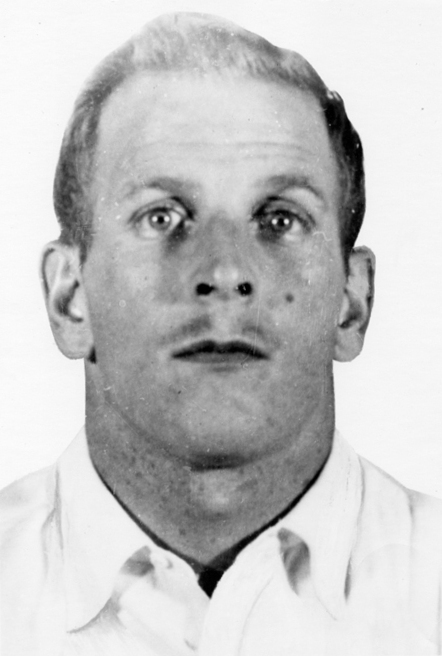
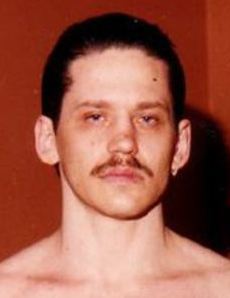
Edward Delon Warren: The Oregon Coast Killer
Overview
Edward Delon Warren was an American serial killer whose violent crimes terrorized communities in Oregon during the late 1970s. A hardened criminal with a history of armed robbery and prison escapes, Warren's brutality was first officially recognized with his conviction for the 1979 murders of a young couple, Ricky Dale Hemphill and Charla Toma, near the coastal town of Brookings. The senselessness of the crime led to a death sentence, which was later commuted to life in prison. For decades, Warren was known only for this double homicide. However, long after his death from natural causes in prison, advancements in forensic science would connect him to a much older, colder case. In 2009, DNA evidence definitively proved that Warren was also responsible for the brutal 1976 murder of 80-year-old Rosa Cinnamon in Portland, a crime he committed on the very day he was paroled from prison. The revelation solidified his status as a serial killer and solved what was, at the time, the oldest cold case ever closed by DNA in Oregon's history.
Early Life and Criminal History
Edward Delon Warren was born on February 13, 1953, in Brookings, a small timber and fishing town on the southern Oregon coast. Little is publicly known about his childhood or family life, but his path into the criminal justice system began early. By his late teens, he was already engaging in serious and violent offenses.
His formal criminal record began in January 1972, when he was convicted of armed robbery for holding up a convenience store in Portland. This conviction marked his entry into the state prison system. His time in custody did little to reform him. In 1973, Warren escaped from the Oregon State Correctional Institution. He fled to Salem, where his pattern of predatory violence continued. He broke into a woman's home, brandished a gun, tied her up, and then stole her car to continue his flight from the law. His freedom was short-lived, and he was quickly recaptured.
Warren was returned to prison and served his time at the Oregon State Penitentiary. He remained incarcerated from December 1973 until March 24, 1976. On that Wednesday, at the age of 23, he was released on parole. The date would become tragically significant, as he would not let a single day of freedom pass before killing.
The Murder of Rosa Cinnamon
On the day of his release, March 24, 1976, Edward Warren traveled from the penitentiary in Salem to Portland to meet with his parole officer. He presented a facade of a man ready to reform, telling the officer he planned to enroll at Portland Community College and secure housing in the city. His actual intentions were far darker.
That same evening, Warren broke into the Southeast Portland apartment of Rosa Cinnamon. An 80-year-old widow who had moved to Oregon from Dayton, Ohio, Rosa lived a quiet life. The motive appeared to be robbery, but the encounter escalated into a brutal struggle. Rosa fought fiercely for her life, leaving deep scratches on her attacker's skin as she tried to fend him off. Her resistance was ultimately futile. Warren overpowered her, beating and strangling her to death.
Her body was discovered the next day by a neighbor. Detectives from the Portland Police Bureau processed the scene, collecting what evidence they could. Crucially, the medical examiner took scrapings from beneath Rosa Cinnamon's fingernails, preserving the skin cells of her killer. With no witnesses, no forced entry, and no immediate suspects, the investigation stalled. The trail went cold, and for more than three decades, the murder of Rosa Cinnamon remained an unsolved homicide, a source of enduring pain and uncertainty for her family.
The Murders of Ricky Hemphill and Charla Toma
After the murder of Rosa Cinnamon, Warren's activities for the next three years are not well-documented, but he managed to stay out of prison. By the fall of 1979, he was back in his hometown of Brookings. It was there, in the rugged wilderness of the Chetco River valley, that he would kill again.
On Sunday, September 9, 1979, a young couple decided to spend the day enjoying the natural beauty of the area. Ricky Dale Hemphill, 19, was a U.S. Coast Guard Petty Officer Third Class stationed at the Chetco River Station. Originally from Riverside, California, he was a dedicated serviceman. His girlfriend, 18-year-old Charla Toma of Lincoln City, was working on a fishing boat, saving money with a dream of one day moving to Hawaii. They were last seen together that afternoon in Ricky's pickup truck, heading out for a picnic.
The following day, a search began after the couple failed to return. Ricky Hemphill's body was discovered on a gravel bar along the Chetco River, about 16 miles east of Brookings. He had been shot twice in the back with a .22-caliber firearm. His truck was missing, and there was no sign of Charla Toma.
The discovery launched a massive search and rescue operation, as authorities and her family held out hope that she might be found alive. The search extended upriver, into the remote and densely forested Siskiyou National Forest. Tragically, her body was later found approximately 24 miles upstream from where Ricky's body lay. She had been shot three times, also in the back. The brutal, execution-style killings of the popular young couple sent a shockwave of fear and outrage through the small, tight-knit communities of the southern Oregon coast.
The Victims
- Rosa Cinnamon, 80 — March 24, 1976, in Portland, Oregon. A widow and grandmother originally from Ohio, she was a quiet resident of Southeast Portland who was tragically murdered in her own home on the very day her killer was paroled.
- Ricky Dale Hemphill, 19 — September 9, 1979, near Brookings, Oregon. A dedicated Petty Officer Third Class in the U.S. Coast Guard, he was from Riverside, California, and was stationed at the mouth of the Chetco River.
- Charla Toma, 18 — September 9, 1979, near Brookings, Oregon. A vibrant young woman from Lincoln City, she was working hard on a fishing vessel to save money for her dream of moving to Hawaii. She and her boyfriend, Ricky, were enjoying a picnic when their lives were violently cut short.
Investigation and Capture
The double homicide in Curry County immediately became the top priority for local and state law enforcement. The investigation quickly zeroed in on Edward Delon Warren, who was already known to police as a dangerous ex-convict with a history of violence. A critical tip came from a local hunter who had been in the area and provided information that pointed detectives directly toward the 26-year-old Warren.
An arrest warrant was issued, and a manhunt began. On October 4, 1979, less than a month after the murders, police in the town of Port Orford, about 30 miles north of Brookings, spotted a vehicle carrying three men, one of whom they recognized as Warren. When officers pulled the vehicle over, Warren and another passenger, George Rose, leaped out and fled into the dense woods nearby.
A tense chase ensued. Police called in bloodhounds to track the fugitives through the rugged coastal terrain. After an hour-long search, the dogs located both men, and they were taken into custody without further incident. Warren was arrested as the prime suspect in the murders of Hemphill and Toma. His accomplice in the escape, George Rose, was found to be an escapee from a forestry camp where he was serving time for robbery and assault, and he was returned to custody.
Trial and Sentence
Edward Delon Warren's case moved swiftly through the justice system. In February 1980, he appeared in court in Curry County and pleaded guilty to two counts of murder. As part of his plea, he provided a chilling and remorseless confession, detailing the final moments of his victims' lives.
Warren claimed the confrontation began when he encountered the couple on the remote logging road. He alleged that Ricky Hemphill had made a profane remark that angered him, which he used as a justification for his actions. He shot Hemphill twice in the back. Afterward, he forced a terrified Charla Toma into Hemphill's truck and made her drive him further up the winding road along the Chetco River. After some distance, he ordered her out of the truck. He walked her a short way into the woods, where he shot her three times in the back and left her body. He then fled in the stolen truck.
On February 29, 1980, during his sentencing hearing, Curry County Circuit Judge Frederick Starkweather Jr. condemned Warren's actions. Citing his extensive criminal past, the brutal and calculated nature of the murders, and his apparent lack of remorse, the judge declared him a "dangerous man who cannot be rehabilitated." Believing Warren posed an ongoing threat to society, Judge Starkweather sentenced him to death. Warren was transferred back to the Oregon State Penitentiary to await his execution on death row. However, his sentence was later automatically commuted to two consecutive life terms when the Oregon Supreme Court invalidated the state's existing death penalty statute.
A Cold Case Solved
For 33 years, the murder of Rosa Cinnamon remained in the cold case files of the Portland Police Bureau. Her family was left without answers, and her killer remained a ghost. The break in the case came not from a new witness or a confession, but from the slow, steady march of forensic technology.
In 1999, Oregon passed a law requiring all convicted felons to submit DNA samples to a statewide database, which was then linked to the national Combined DNA Index System (CODIS). As a convicted murderer serving a life sentence, Edward Delon Warren's genetic profile was collected and entered into this system.
Five years later, in 2004, an investigator with the Multnomah County District Attorney's office, Devra Stipe, decided to take a fresh look at the Cinnamon case file. She noted the well-preserved evidence from the original 1976 investigation, particularly the fingernail scrapings that detectives had meticulously collected during the autopsy. For nearly three decades, this crucial piece of evidence had been carefully stored, waiting for technology to catch up.
The scrapings were sent to the Oregon State Police crime lab for analysis. Technicians were able to extract a full DNA profile of an unknown male from the skin cells Rosa had clawed from her attacker. This profile was uploaded to CODIS for comparison against the database of convicted offenders and arrestees.
The system returned a direct hit. The DNA from beneath Rosa Cinnamon’s fingernails was a perfect match to Edward Delon Warren. The discovery, announced by the Portland Police Bureau in April 2009, was a landmark moment. It officially linked Warren to a third murder, confirming he was a serial killer. It also brought a profound, albeit bittersweet, sense of closure to Rosa's surviving relatives. At the time of its resolution, the 33-year-old case was the oldest homicide in Oregon to be solved with DNA evidence.
Death in Prison
Edward Delon Warren would never stand trial for the murder of Rosa Cinnamon. On October 22, 2003, he died at the age of 50 in a prison hospital in Salem. The official cause of death was reported as respiratory failure. He had served nearly 24 years for the murders of Ricky Hemphill and Charla Toma. His death occurred six years before his name would be publicly linked to the 1976 cold case, meaning he died without ever being held accountable for his first known murder.
Legacy
The case of Edward Delon Warren is a stark illustration of how a life of escalating violence can lead to senseless tragedy. His crimes extinguished the lives of three people from different generations and backgrounds, leaving their families to grapple with immeasurable grief. The murders of Ricky Hemphill and Charla Toma shattered the peace of a small coastal community, while the killing of Rosa Cinnamon left a question mark hanging over a Portland neighborhood for a generation. The resolution of the Cinnamon case, long after Warren's death, stands as a powerful testament to the importance of meticulous police work and the relentless advancement of forensic science. It serves as a beacon of hope for other families of cold case victims, demonstrating that even after decades of silence, the truth can be uncovered and a measure of justice can finally be delivered.