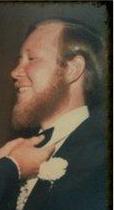
On September 9, 1979, the body of 19-year-old Ricky Dale Hemphill, a Coast Guard petty officer, was discovered at a gravel bar near the Chetco River, approximately 16 miles east of Brookings, Oregon. Hemphill, originally from Riverside, California, was stationed in Brookings as a boatswain's mate third class. He was last seen in his pickup truck with his 18-year-old girlfriend, Charla Toma, from Lincoln City. The investigation revealed that Hemphill had been shot twice in the back.
The next day, another body was found about 24 miles upstream, which was later identified as Charla Toma. Toma had been shot three times in the back. The circumstances surrounding their deaths led to a swift and intensive investigation by local authorities.
The breakthrough in the case came when officers conducted a routine traffic stop in Port Orford. On September 10, 1979, they stopped a vehicle occupied by three men: 26-year-old Edward Delon Warren, 34-year-old George Rose, and another man who was never identified. During the stop, Warren and Rose suddenly fled into the woods, leaving the third occupant behind. After a pursuit involving police bloodhounds, Warren and Rose were captured about an hour later.
Edward Delon Warren, a resident of Brookings and a former convict with a history of robbery and burglary, was detained as a suspect in the Hemphill-Toma murders. Warren's past was marked by several crimes, including a convenience store robbery in Portland in 1972 and a house break-in in Salem, for which he was imprisoned and later escaped. He had been paroled in March 1976 and had a history of violent behavior.
During his trial in February 1980, Warren claimed that a profane remark from Hemphill had led to the shooting. He admitted to ordering Charla Toma to drive Hemphill's pickup truck up the Chetco River and then shooting her in the back after a short walk through the woods. Despite his plea of guilty to the murders, Warren's defense attempted to mitigate the circumstances, but Justice Frederick Starkweather Jr. sentenced him to death, citing his belief that Warren posed a significant danger to society. However, the Oregon Supreme Court later commuted Warren's sentence to two life imprisonment terms.
Warren's connection to the murders was solidified through his confession and the evidence gathered during the investigation. His DNA, which was entered into the national database in 1999, would later link him to another unsolved murder in Portland, that of 80-year-old Rosa Cinnamon, which occurred in 1976. This link was established in 2009, making it the oldest solved cold case in Oregon's history at the time.
Edward Delon Warren spent the remainder of his life in prison, where he died in 2003 from respiratory failure at a Salem prison hospital. His case remains a significant example of the persistence of law enforcement in solving crimes, even those that initially went cold.