Richard Baumhammers: The 2000 Pittsburgh-Area Hate-Crime Murders
Background
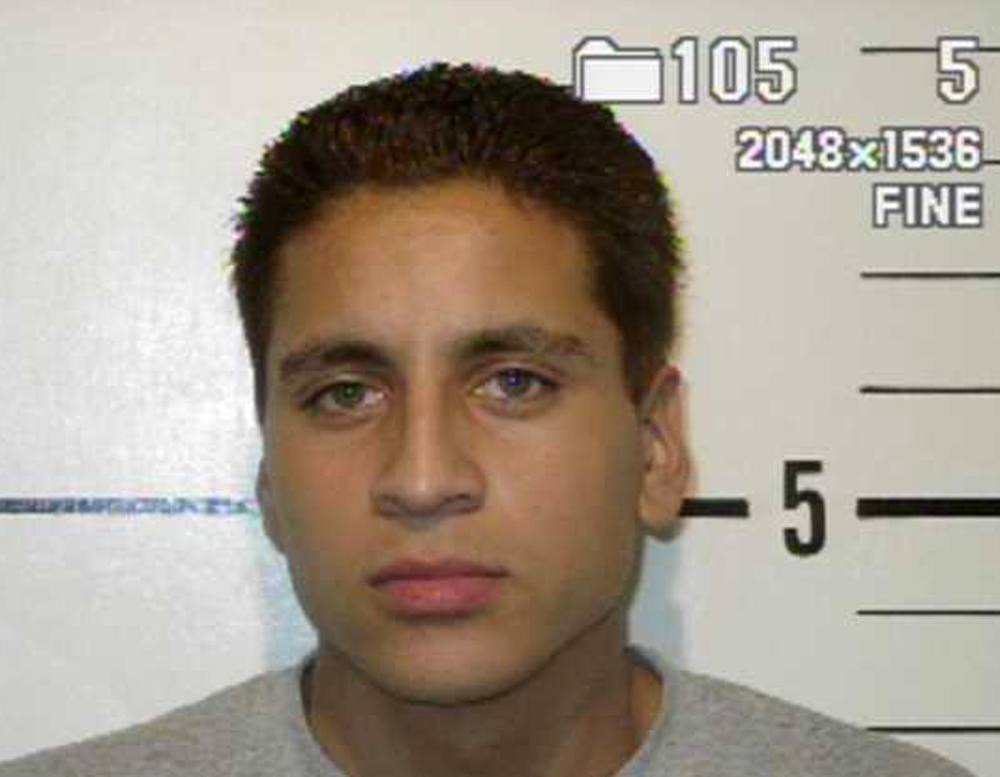
Richard Scott Baumhammers was a 34-year-old former attorney when he carried out a racially motivated shooting spree across western Pennsylvania on April 28, 2000. During an approximately two-hour period, Baumhammers traveled through communities in Allegheny and Beaver counties, killing five people, critically wounding another man, attacking two synagogues and setting fire to the home of his first victim.
The people targeted during the rampage were Jewish, Indian, Chinese, Vietnamese and African American. Investigators concluded that the attacks were driven by Baumhammers’ white-supremacist and anti-immigrant beliefs. Evidence recovered after his arrest included extremist writings and a document associated with a proposed organization he called the Free Market Party.
Baumhammers was born in Pittsburgh, Pennsylvania, on May 17, 1965. He grew up in the suburb of Mt. Lebanon and later attended Kent State University, Cumberland School of Law and the University of the Pacific’s McGeorge School of Law. He practiced law for a period but eventually became unemployed and returned to his parents’ home in Mt. Lebanon.
Before the murders, Baumhammers had undergone extensive psychiatric treatment. He had been hospitalized and diagnosed with serious delusional and psychotic symptoms. Family members later described his increasingly paranoid behavior, including his belief that federal authorities were monitoring him. However, the prosecution maintained that his crimes were deliberate, organized and motivated by racial hatred rather than an inability to understand his actions.
Extremist Beliefs and Preparation
During the years preceding the shootings, Baumhammers expressed increasingly hostile opinions about immigration and racial minorities. He created a website for his proposed Free Market Party, where he complained that white Americans were being displaced and called for an end to non-European immigration. He also accessed white-supremacist websites and collected extremist writings that promoted violence by individuals acting alone.
Baumhammers purchased a Smith & Wesson .357 Magnum revolver on April 30, 1999. The weapon was later used during the April 2000 attacks. Investigators said his selection of victims and institutions demonstrated a consistent pattern: he attacked people because of their religion, race or national origin.
The Murder of Anita “Nicki” Gordon
The rampage began at approximately 1:30 p.m. on Friday, April 28, 2000, in Mt. Lebanon. Baumhammers walked next door to the home of 63-year-old Anita “Nicki” Gordon, a Jewish woman who had been a friend of his parents for more than three decades.
Baumhammers shot Gordon inside or near her home and then set the residence on fire. Firefighters responding to the property discovered her body. The attack was especially shocking to the Baumhammers family because Gordon was not a stranger. She had lived beside them for years and belonged to Beth El Congregation in Scott Township.
After killing Gordon and setting the fire, Baumhammers entered his Jeep Cherokee and began driving through the Pittsburgh suburbs. His movements created a trail of shootings and vandalism extending through two counties.
Attack on Beth El Congregation
Baumhammers next traveled to Beth El Congregation in Scott Township. The synagogue was associated with Anita Gordon and represented the Jewish community that Baumhammers had chosen to target.
He fired bullets through the synagogue’s windows from his vehicle. He then got out and spray-painted red swastikas and an antisemitic word on the building. No one was killed at the synagogue, but the gunfire and vandalism made the religious institution an unmistakable part of the broader hate-driven attack.
Shooting at India Grocer
A short distance from the synagogue, Baumhammers entered India Grocer at Scott Town Center. Inside the store, he confronted 31-year-old Anil Thakur, an Indian immigrant who had stopped to purchase groceries during his lunch break.
Baumhammers fatally shot Thakur. He also shot the store’s 25-year-old manager, Sandip Patel, striking him in the neck and upper back. Patel survived the initial attack but was paralyzed and required the use of a wheelchair.
Patel lived with the consequences of the shooting for nearly seven years. He died on February 3, 2007, at UPMC Passavant in McCandless, Pennsylvania, after developing pneumonia and other complications associated with his paralysis. Baumhammers’ original murder convictions remained based on the five people who died in 2000.
Vandalism at Congregation Ahavath Achim
Baumhammers continued to Carnegie, Pennsylvania, where he targeted Congregation Ahavath Achim. He fired into the building and shattered its windows. As at Beth El Congregation, no one was killed, but the attack reinforced the antisemitic nature of the spree and created fear throughout the region’s Jewish community.
Murders at Robinson Town Centre
Baumhammers then drove to Robinson Town Centre in Robinson Township. He entered Ya Fei Chinese Cuisine while customers and employees were inside the restaurant.
There he shot and killed restaurant manager Ji-ye Sun, a 34-year-old Chinese immigrant. He also murdered 27-year-old Thao “Tony” Pham, a Vietnamese American delivery driver. The two men were attacked in front of witnesses, apparently because Baumhammers perceived them as Asian immigrants.
The shootings caused panic inside the shopping center. Police agencies across the Pittsburgh metropolitan area began coordinating their response as reports from the separate crime scenes were connected to the same gunman and vehicle.
The Murder of Garry Lee
Baumhammers crossed into Beaver County and went to the C.S. Kim School of Karate in Center Township. Inside, 22-year-old Garry Lee, an African American man, was exercising with his white friend, George Thomas II.
Baumhammers initially pointed his revolver toward Thomas. He then redirected the weapon toward Lee and shot him, killing him at the scene. The decision to spare Thomas while killing Lee was presented as further evidence that the victims were selected according to race.
Victims
- Anita “Nicki” Gordon, 63 — Fatally shot on April 28, 2000, at her home in Mt. Lebanon, Allegheny County, Pennsylvania. Baumhammers also set fire to her residence. Gordon was Jewish and had been the Baumhammers family’s neighbor and friend for approximately 31 years.
- Anil Thakur, 31 — Fatally shot on April 28, 2000, inside India Grocer at Scott Town Center in Scott Township, Allegheny County, Pennsylvania. Thakur was originally from Bihar, India, and had entered the store during his lunch break.
- Ji-ye Sun, 34 — Fatally shot on April 28, 2000, inside Ya Fei Chinese Cuisine at Robinson Town Centre in Robinson Township, Allegheny County, Pennsylvania. Sun was the restaurant’s manager and was of Chinese origin.
- Thao “Tony” Pham, 27 — Fatally shot on April 28, 2000, inside Ya Fei Chinese Cuisine at Robinson Town Centre in Robinson Township, Allegheny County, Pennsylvania. Pham was a Vietnamese American delivery driver.
- Garry Lee, 22 — Fatally shot on April 28, 2000, at the C.S. Kim School of Karate in Center Township, Beaver County, Pennsylvania. Lee was African American and was exercising with a friend when Baumhammers entered the school.
- Sandip Patel, 25 — Shot in the neck and upper back on April 28, 2000, at India Grocer in Scott Township, Pennsylvania. Patel survived but was paralyzed. He died at age 32 on February 3, 2007, at UPMC Passavant in McCandless, Pennsylvania, after suffering pneumonia and complications related to his injuries.
Arrest
The shootings ended at approximately 3:30 p.m., about two hours after the first murder. Police located Baumhammers driving his Jeep Cherokee in Ambridge, Pennsylvania. Officers stopped the vehicle and arrested him without another shooting.
By the time he was taken into custody, Baumhammers had traveled roughly 15 miles through several municipalities. Five people were dead, Sandip Patel was permanently disabled and multiple religious and commercial properties had been damaged.
A search of Baumhammers’ home uncovered extremist literature and a three-page political document bearing his name. The document portrayed him as the chairman of the Free Market Party, advocated preferential treatment for people of European ancestry and expressed hostility toward immigrants from developing nations.
Charges and Mental Competency Proceedings
On May 1, 2000, prosecutors filed numerous charges against Baumhammers. They included five counts of criminal homicide, attempted homicide, aggravated assault, ethnic intimidation, arson, institutional vandalism, criminal mischief, reckless endangerment and firearms violations.
On May 19, 2000, a judge initially ruled that Baumhammers was not competent to stand trial and ordered him to receive psychiatric treatment. Several mental-health specialists agreed that he was psychotic, although they differed over the exact diagnosis. Terms used during the proceedings included paranoid schizophrenia, delusional disorder and psychotic thought disorder.
After treatment and further evaluation, Baumhammers was declared competent to face prosecution. His attorneys later argued that he was legally insane when he committed the crimes. Prosecutors responded that his careful movement from one targeted location to another, his efforts to select minority victims and his decision to leave each scene demonstrated awareness and planning.
Trial and Conviction
Baumhammers went on trial in Allegheny County in 2001. Witnesses described the shootings, the synagogue attacks and the devastation left at each location. Prosecutors presented the murders as a single racially motivated campaign against Jewish people, immigrants, Asian Americans and African Americans.
On May 9, 2001, the jury found Baumhammers guilty on all charges, including five counts of first-degree murder. During the penalty phase, the prosecution emphasized the number of victims, the racial and religious motivation and the methodical nature of the spree.
On May 11, 2001, the jury deliberated for approximately 20 minutes before sentencing Baumhammers to death. He was subsequently incarcerated within the Pennsylvania state prison system.
Appeals and Death Sentence
Baumhammers repeatedly appealed his convictions and sentence. His attorneys continued to raise questions regarding his psychiatric condition, competency and the effectiveness of his legal representation. Courts nevertheless upheld the jury’s findings that he was legally responsible for the murders.
On January 19, 2010, Pennsylvania Governor Ed Rendell signed an execution warrant setting Baumhammers’ execution for March 18, 2010. The execution did not occur because a judge granted an indefinite stay on February 28, 2010, allowing additional legal proceedings to continue.
In November 2019, Baumhammers lost another appeal challenging his convictions and death sentence. He remained under a death sentence in Pennsylvania, where executions have frequently been delayed by litigation and other legal restrictions.
Aftermath and Legacy
The April 28, 2000, murders became one of the most notorious hate-crime sprees in Pennsylvania history. The attacks affected several communities at once, including Jewish congregations, immigrants from India and East Asia and Pittsburgh’s African American community.
Families of several victims later filed a civil lawsuit against Baumhammers and his parents. The lawsuit argued that his parents knew of his deteriorating psychiatric condition and access to firearms but failed to prevent him from possessing the revolver. The dispute continued for years and was eventually resolved through an out-of-court settlement in 2009.
The case also drew attention to the relationship between untreated or inadequately controlled mental illness, firearm access and extremist ideology. Although Baumhammers had a documented psychiatric history, the crimes followed a coherent pattern based on his published racial beliefs. Every person he killed belonged to a group he had condemned in his writings.
Anita Gordon, Anil Thakur, Ji-ye Sun, Thao Pham and Garry Lee were killed during an attack designed to spread racial and religious terror. Sandip Patel survived the shooting but lived with paralysis until his death in 2007. Their names remain central to the account of the crime, which was not a series of random confrontations but a deliberate campaign of violence against people selected because of their identities.