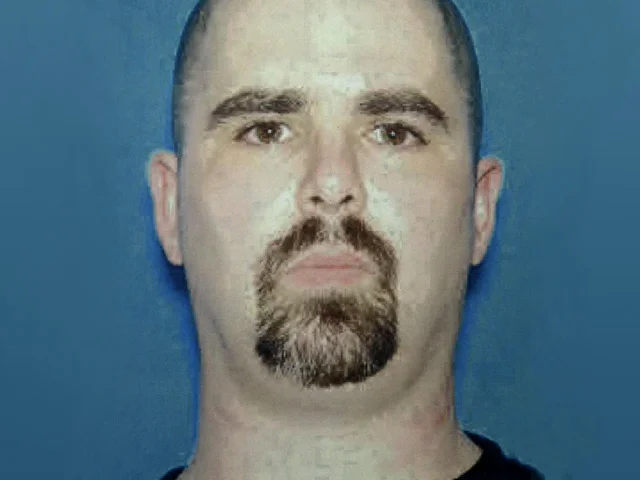
George Hennard and the 1991 Luby’s Cafeteria Massacre
Background
George Pierre Hennard was born on October 15, 1956, in Sayre, Pennsylvania. He was the son of an Army physician, and his family moved several times while he was growing up because of his father’s military assignments. Hennard graduated from Mayfield High School in Las Cruces, New Mexico, in 1974. He later served in the United States Navy and worked for years as a merchant mariner.
By the late 1980s, Hennard’s career and personal life had deteriorated. His merchant-mariner credentials were suspended following drug-related and disciplinary problems, and he began moving between temporary jobs. He eventually settled in a family-owned home in Belton, Texas, approximately eight miles from Killeen.
People who encountered Hennard before the massacre described increasingly hostile behavior, particularly toward women. He complained that women had rejected, humiliated, or conspired against him. In a disturbing letter sent to two young women who lived near his Belton home, he referred to women in Killeen and Belton as “vipers.” Former coworkers also recalled that he made alarming statements about killing people shortly before the attack.
Preparations and Weapons
In February 1991, Hennard purchased two 9-millimeter semiautomatic pistols in Henderson, Nevada: a Glock 17 and a Ruger P89. He acquired several magazines and enough ammunition to conduct a prolonged attack. Investigators found no evidence that another person assisted him or that he belonged to an organized extremist group.
Approximately ten days before the massacre, Hennard left a job at a cement company in Copperas Cove. On October 16, 1991, the day after his thirty-fifth birthday, he armed himself with both pistols and drove his blue 1987 Ford Ranger pickup truck from Belton toward Killeen.
The Attack at Luby’s Cafeteria
At approximately 12:39 p.m. on Wednesday, October 16, 1991, Hennard deliberately drove his pickup truck through the large plate-glass front window of Luby’s Cafeteria at 1705 East Central Texas Expressway in Killeen, Texas. The restaurant was crowded with roughly 150 customers and employees during the lunchtime rush. It was also Boss’s Day, and several groups had gathered for workplace lunches.
The truck crashed through the dining area, scattering tables, chairs, glass, and debris. Some customers initially believed that the collision was an accident. Hennard quickly emerged from the vehicle carrying his two pistols and began firing at people inside the cafeteria.
Hennard moved through the dining room, firing at customers who were seated, attempting to hide, or trying to escape. Witnesses reported that he made hostile statements about women and blamed the people of Killeen and Belton for what he believed had been done to him and his family. Although both men and women were killed, many witnesses believed that Hennard displayed particular hostility toward female victims.
Customers crawled beneath tables, hid behind furniture, or fled through exits. Some people escaped through windows. Survivor Tommy Vaughan threw himself through a plate-glass window, creating an opening that allowed numerous other customers to escape from the building.
Several victims attempted to protect relatives or confront the gunman. Alphonse “Al” Gratia tried to rush Hennard after seeing his wife, Ursula Gratia, threatened. Hennard shot and killed him. Ursula was also killed. Their daughter, Suzanna Gratia, survived by escaping through a broken window.
Hennard continued shooting as police officers arrived outside the restaurant. Officers from the Killeen Police Department and the Texas Department of Public Safety entered the building and exchanged gunfire with him. Hennard was wounded during the confrontation and retreated toward an area near the restrooms.
Officers ordered him to surrender, but he refused. At approximately 12:51 p.m., only about twelve minutes after driving through the restaurant window, Hennard placed a pistol to his head and died from a self-inflicted gunshot wound.
Victims
Hennard killed 23 people and wounded 27 others. Twenty-two victims died at or near the scene, while another victim died after the attack. All of the following victims were killed as a result of the October 16, 1991, shooting at Luby’s Cafeteria in Killeen, Texas:
- Patricia Carney — Died October 16, 1991, at Luby’s Cafeteria in Killeen, Texas. She was from Belton, Texas.
- Jimmie Caruthers — Died October 16, 1991, at Luby’s Cafeteria in Killeen, Texas. He was from Austin, Texas.
- Kriemhild Davis — Died October 16, 1991, at Luby’s Cafeteria in Killeen, Texas. She was from Killeen.
- Lieutenant Colonel Steven Dody — Died October 16, 1991, at Luby’s Cafeteria in Killeen, Texas. He was associated with Fort Hood and lived in the Copperas Cove area.
- Alphonse “Al” Gratia — Died October 16, 1991, at Luby’s Cafeteria in Killeen, Texas. He was from Copperas Cove.
- Ursula Gratia — Died October 16, 1991, at Luby’s Cafeteria in Killeen, Texas. She was from Copperas Cove and was the wife of Alphonse Gratia.
- Debra Gray — Died October 16, 1991, at Luby’s Cafeteria in Killeen, Texas. She was from Copperas Cove.
- Dr. Michael Griffith — Died October 16, 1991, at Luby’s Cafeteria in Killeen, Texas. The veterinarian was from Copperas Cove and was among the first people shot.
- Venice Henehan — Died October 16, 1991, at Luby’s Cafeteria in Killeen, Texas. She was from Metz, Missouri.
- Clodine Humphrey — Died October 16, 1991, at Luby’s Cafeteria in Killeen, Texas. She was from Marlin, Texas.
- Sylvia King — Died October 16, 1991, at Luby’s Cafeteria in Killeen, Texas. She was from Killeen.
- Zona Lynn — Died October 16, 1991, at Luby’s Cafeteria in Killeen, Texas. She was from Marlin, Texas.
- Constance “Connie” Peterson — Died October 16, 1991, at Luby’s Cafeteria in Killeen, Texas. She was from Austin.
- Ruth Pujol — Died October 16, 1991, following the attack at Luby’s Cafeteria in Killeen, Texas. She was from Copperas Cove.
- Su-Zann Rashott — Died October 16, 1991, at Luby’s Cafeteria in Killeen, Texas. She had ties to the Copperas Cove and San Antonio areas.
- John Romero Jr. — Died October 16, 1991, at Luby’s Cafeteria in Killeen, Texas. He was from Copperas Cove.
- Thomas Simmons — Died October 16, 1991, at Luby’s Cafeteria in Killeen, Texas. He lived in the Killeen and Copperas Cove area.
- Glen Arval Spivey — Died October 16, 1991, at Luby’s Cafeteria in Killeen, Texas. He was from Harker Heights.
- Nancy Stansbury — Died October 16, 1991, at Luby’s Cafeteria in Killeen, Texas. She was from Harker Heights.
- Olgica Taylor — Died October 16, 1991, at Luby’s Cafeteria in Killeen, Texas. She was from Waco.
- James Welsh — Died October 16, 1991, at Luby’s Cafeteria in Killeen, Texas. He was from Waco and was the husband of Lula Welsh.
- Lula Welsh — Died October 16, 1991, following the attack at Luby’s Cafeteria in Killeen, Texas. She was from Waco and was the wife of James Welsh.
- Iva Juanita Williams — Died October 16, 1991, at Luby’s Cafeteria in Killeen, Texas. She was from Temple.
Investigation and Motive
Because Hennard died at the scene, investigators were unable to question him. Searches of his home, vehicle, correspondence, and personal history revealed a deeply resentful man who believed that women and society had mistreated him. His letters and statements contained misogynistic language, paranoid accusations, and fantasies of retaliation.
Police found no single incident that fully explained the massacre. Investigators concluded that the attack was probably driven by a combination of personal failure, social isolation, resentment toward women, paranoid thinking, and a desire for revenge. The cafeteria did not appear to have been selected because of any particular employee or customer. Its large lunchtime crowd and open dining area may have made it an attractive target.
Hennard’s actions were deliberate rather than spontaneous. He arrived with two loaded firearms and additional ammunition, used his truck to force his way into the crowded building, and continued shooting until police intervention made further escape or killing impossible.
Community Impact
The massacre devastated Killeen, Copperas Cove, Belton, Temple, and other communities surrounding Fort Hood. Many victims belonged to military families or had close connections to the installation. Hospitals treated dozens of wounded survivors while relatives gathered outside the restaurant and medical facilities seeking information.
Funerals and memorial services were held throughout Central Texas. Residents placed flowers, wreaths, cards, and other memorials outside the damaged cafeteria. Survivors and first responders later described long-term psychological effects, including nightmares, anxiety, survivor’s guilt, and post-traumatic stress.
Luby’s repaired and reopened the restaurant approximately five months after the attack. The location remained in business until September 2000. A permanent memorial bearing the victims’ names was later established behind the Killeen Community Center.
Historical Significance
At the time, the Luby’s Cafeteria massacre was the deadliest mass shooting carried out by a single gunman in modern United States history. That distinction remained until the Virginia Tech shooting of April 16, 2007.
The attack also became part of a national debate concerning firearms, public safety, concealed-carry laws, mental health, and emergency preparedness. Survivor Suzanna Gratia Hupp, whose parents Alphonse and Ursula Gratia were killed, became a prominent advocate for laws allowing qualified citizens to carry concealed handguns. Texas enacted a concealed-handgun licensing law in 1995.
Death of George Hennard
George Hennard died by suicide inside Luby’s Cafeteria in Killeen on October 16, 1991. He had turned 35 one day earlier. His death ended the immediate attack but left investigators, survivors, and relatives of the victims with questions that could never be answered through a trial or interrogation.
The massacre remains one of the most destructive acts of mass murder in Texas history. Its enduring legacy is centered not on Hennard, but on the 23 people he killed, the many others he wounded, the courage displayed by customers and police officers, and the lasting trauma carried by the survivors and the Central Texas community.