Louis Hastings and the 1983 McCarthy Mass Murder
Background
On March 1, 1983, Louis D. Hastings carried out a carefully planned mass murder in McCarthy, Alaska, a remote former mining settlement in the Wrangell Mountains. Hastings, a 39-year-old unemployed computer programmer from Anchorage, armed himself with a .223-caliber Ruger Mini-14 semiautomatic rifle and moved through the isolated community, shooting residents at their cabins, along trails and near the local airstrip.
McCarthy had only about 22 year-round residents at the time. Its isolation, limited communications and dependence on small aircraft made the community especially vulnerable. Hastings intended to kill everyone in the settlement, conceal the bodies and then continue with a plan to sabotage the Trans-Alaska Pipeline. By the time he was stopped, six people were dead and two others had been wounded.
Hastings’ Life Before the Murders
Hastings had previously worked as a computer programmer, including employment connected with Stanford University in California. He later moved to Alaska, where he sought a quieter life in what he considered an unspoiled natural environment. He spent time in Anchorage and McCarthy and was familiar with the residents, cabins, trails and airstrip.
His personal and professional life deteriorated in the period before the murders. His programming business failed, and a brief marriage ended. Hastings had also received psychiatric care earlier in his life. He later described himself as socially isolated and expressed nihilistic ideas about the value of human life.
Despite those difficulties, the attack was not an impulsive outburst. Evidence recovered after the murders showed that Hastings had developed an elaborate plan involving weapons, transportation, the destruction of evidence and an attack on the pipeline.
The Pipeline Sabotage Plan
Hastings reportedly believed that the development of the Trans-Alaska Pipeline had damaged Alaska’s environment and transformed the state in ways he resented. He planned to obtain a gasoline truck, drive it to Pump Station 12 and ignite it in an attempt to damage or disable the pipeline.
He apparently expected to die during the explosion. Hastings did not want his family to learn that he was responsible, so he devised an additional plan to eliminate witnesses in McCarthy. He intended to kill the residents, intercept the community’s mail plane and use the aircraft to transport the bodies to a glacier or crevasse, where they would disappear.
Hastings apparently hoped that his own remains would be destroyed in the pipeline explosion and that investigators would believe he had vanished with the other residents. A written checklist discovered in his cabin referred to his rifle, ammunition, a suppressor or silencer, clothing and flares, demonstrating that the violence had been considered in advance.
The Attack on Christopher Richards
The shooting spree began during the morning of March 1, 1983. At approximately 8:30 a.m., Hastings went to the cabin of Christopher Richards, a McCarthy resident who knew him. Richards reportedly invited Hastings inside and offered him coffee.
Without warning, Hastings shot Richards in the neck and near one eye. Although seriously wounded, Richards fought back and stabbed Hastings in the leg with a knife. During the struggle, Hastings attempted to persuade Richards to stop resisting by telling him that he was already going to die.
Richards escaped from the cabin and obtained help. He eventually reached the airstrip and was flown to Glennallen for medical treatment. His escape was crucial because it allowed authorities outside McCarthy to learn that an armed attacker was moving through the settlement.
The Murder of Harley King
Harley Bain King was encountered while traveling by snowmobile along a trail leading toward the McCarthy airstrip. Hastings shot and killed him. Investigators later found King’s snowmobile marked by gunfire.
King’s death demonstrated that Hastings was not targeting a single household or acting because of a sudden personal dispute. He was systematically attacking residents as he encountered them and moving toward the airstrip, which was central to his plan.
The Hegland Cabin Murders
Hastings next reached the cabin of Lester “Les” Hegland and Florence “Flo” Hegland near the airstrip. He killed both residents. Maxine Edwards was also killed and found inside or near the same cabin.
After the shootings, Hastings used the cabin as a concealed position from which he could watch the airstrip. He was waiting for the regularly scheduled mail plane, which he intended to seize. Anyone approaching the landing area was at risk of being shot.
The Murders of Tim and Amy Nash
Charles Timothy “Tim” Nash and his wife, Amy Lou Ashenden Nash, were also shot and killed during the rampage. Their bodies were recovered near the airstrip.
Evidence indicated that Hastings had begun gathering or positioning victims near the landing area. This was consistent with his plan to load the bodies onto an aircraft and dispose of them in a remote glacial crevasse. His actions showed a methodical attempt to control the community’s only practical transportation link to the outside world.
Donna Byram’s Attempt to Warn the Plane
Donna Byram realized that the incoming mail plane and its occupants were in danger. She ran toward the airstrip and attempted to signal the pilot not to land.
Hastings fired at Byram and wounded her in the arm. Despite the injury, her effort helped prevent the aircraft from landing in the middle of the attack. She became the second known survivor wounded by Hastings that morning.
Victims Killed on March 1, 1983
- Harley Bain King – Killed on March 1, 1983, along a snowmobile trail leading toward the airstrip in McCarthy, Alaska.
- Lester E. “Les” Hegland – Killed on March 1, 1983, at or near the Hegland cabin beside the McCarthy airstrip.
- Florence Evelyn “Flo” Carlson Hegland – Killed on March 1, 1983, at the Hegland cabin near the McCarthy airstrip.
- Maxine Beverly Krussow Edwards – Killed on March 1, 1983, and found at the Hegland cabin near the airstrip.
- Charles Timothy “Tim” Nash – Killed on March 1, 1983, near the McCarthy airstrip.
- Amy Lou Ashenden Nash – Killed on March 1, 1983, near the McCarthy airstrip with her husband, Tim Nash.
People Wounded
- Christopher Richards – Shot in the neck and near one eye at his cabin on March 1, 1983. He fought Hastings, escaped and survived.
- Donna Byram – Shot and wounded in the arm near the McCarthy airstrip while attempting to warn an approaching mail plane.
Escape Attempt and Capture
Once Hastings realized that residents had escaped and that the mail plane had been warned, his original plan began to collapse. He abandoned the effort to kill every person in McCarthy and left the settlement on a snowmobile.
Hastings headed toward the highway, apparently intending to continue with the pipeline sabotage plan by locating and hijacking a fuel truck. Alaska State Troopers responded by aircraft and helicopter after receiving reports of the shootings.
A police helicopter intercepted Hastings before he could reach the highway. Hastings later claimed that the helicopter flew low and that shots were fired in his direction. Authorities reported that he was taken into custody without further violence. He was arrested on the same day as the murders.
Investigation
Investigators recovered Hastings’ rifle, ammunition and materials connected to his plans. His cabin and computer equipment were searched. Authorities reportedly discovered information concerning numerous public officials, law-enforcement officers and other individuals, leading to questions about whether Hastings had considered additional acts of violence.
Police also investigated whether a fire that had destroyed a lodge near Hastings’ cabin was connected to him. The central evidence, however, established that the McCarthy killings were part of a calculated plan to eliminate witnesses before an attack on the pipeline.
The geographic layout of the crime scenes supported that conclusion. Hastings moved from one residence to another and toward the airstrip, killing people who could interfere with his plan. His effort to control the mail plane showed that the murders, the disposal of the bodies and the planned pipeline attack were all components of the same scheme.
Criminal Charges and Plea
Hastings was initially charged with six counts of first-degree murder, two counts of attempted murder and related offenses. Questions about his mental condition became an important part of the proceedings.
Medical experts evaluated whether Hastings was legally responsible for his actions. His defense presented evidence concerning his psychiatric history and mental illness, while state experts concluded that he understood the nature and consequences of his conduct. The extensive preparation behind the attack was significant because it demonstrated planning, awareness and an effort to avoid detection.
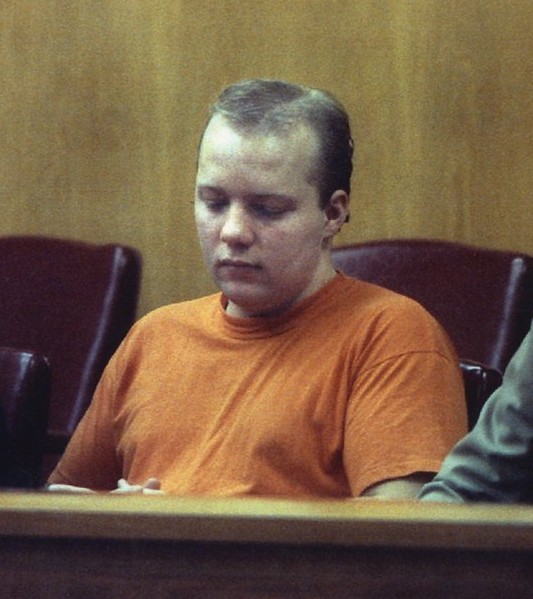
On December 5, 1983, the day his trial was scheduled to begin, Hastings entered no-contest pleas to six counts of first-degree murder and two counts of attempted murder. A no-contest plea allowed the court to convict and sentence him without requiring him to formally admit every allegation in open court.
Sentence
On July 27, 1984, Superior Court Judge Ralph Moody sentenced Louis Hastings to a combined prison term of 634 years. The sentence reflected the six murders, the attempted murders of Christopher Richards and Donna Byram and the deliberate nature of the attack.
The court treated each killing as a separate and exceptionally serious crime. The extraordinary sentence was intended to ensure that Hastings would never again be released into the community.
Hastings later attempted to withdraw his pleas and challenged aspects of his conviction and sentence. He argued, among other things, that his legal representation had been ineffective. His efforts were unsuccessful, and the convictions remained in place.
Impact on McCarthy
The murders devastated McCarthy. Six of the settlement’s approximately 22 residents were killed in a single morning, and two more were wounded. In a community of that size, nearly every survivor had lost friends, neighbors or relatives.
The attack also exposed the dangers faced by people living in extremely isolated Alaskan communities. Residents had limited access to police, emergency medical care and communications. Aircraft were often the only rapid connection to larger towns, making Hastings’ attempt to control the airstrip especially dangerous.
Christopher Richards’ resistance and escape, Donna Byram’s attempt to warn the mail plane and the rapid response of the surviving residents prevented Hastings from completing his plan. Had he succeeded in killing the entire community and seizing the aircraft, the death toll could have been substantially higher.
Legacy of the Case
The McCarthy massacre remains one of the most notorious mass murders in Alaska’s history. Unlike many spontaneous shooting sprees, Hastings’ attack involved a lengthy and highly organized plan. The murders were intended to prepare the way for a larger act of sabotage and to conceal his responsibility for it.
Louis Hastings did not destroy the Trans-Alaska Pipeline, seize the mail plane or erase the evidence of his crimes. Instead, survivors escaped, authorities were alerted and he was captured within hours. His 634-year sentence ensured that the man responsible for the deaths of Harley King, Les Hegland, Flo Hegland, Maxine Edwards, Tim Nash and Amy Nash would remain imprisoned for the rest of his life.