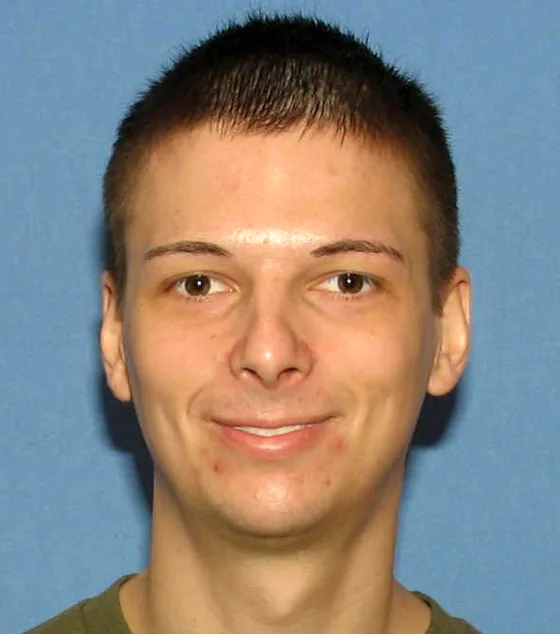
Chris Harper-Mercer and the 2015 Umpqua Community College Massacre
Background
Christopher Sean Harper-Mercer was a 26-year-old student who carried out a mass shooting at Umpqua Community College near Roseburg, Oregon, on October 1, 2015. He murdered nine people and wounded eight others before dying by suicide following an exchange of gunfire with police officers. The attack occurred primarily inside Snyder Hall, where Harper-Mercer was enrolled in an introductory writing course.
Harper-Mercer was born on July 26, 1989, and had previously lived in California before moving with his mother to Winchester, Oregon. He was described as socially isolated and deeply interested in firearms, military subjects and previous mass shootings. In 2008, he briefly entered the United States Army but was discharged after approximately five weeks for failing to meet minimum administrative standards during basic training.
By 2015, Harper-Mercer was attending Umpqua Community College. School records later showed that he had struggled academically and had been placed on scholastic probation. Investigators also discovered writings indicating that he felt rejected, resentful and frustrated with his life. He studied previous mass murderers and appeared to believe that committing a spectacular act of violence would give him the recognition he believed he lacked.
The Attack at Umpqua Community College
At approximately 10:38 a.m. on Thursday, October 1, 2015, emergency dispatchers began receiving reports of gunfire at Umpqua Community College. The campus was located several miles north of Roseburg in Douglas County, Oregon. Harper-Mercer was inside Snyder Hall, where students had gathered for classes that morning.
Harper-Mercer entered the area around Classroom 15 armed with several handguns. He fired a shot and forced students to gather together. He then began shooting members of the class, including the instructor, Lawrence Levine. Witnesses reported that Harper-Mercer questioned some students about their beliefs before firing, although later evidence indicated that religious identity was not the sole factor determining whom he attacked.
The gunman deliberately spared one student and ordered that person to deliver a package of his writings to law enforcement. Those writings included complaints about loneliness, rejection and his failure to establish meaningful relationships. They also demonstrated his fascination with other mass killers and his desire to become notorious through murder.
Several students attempted to protect themselves or help others escape. Army veteran and student Chris Mintz responded after hearing the attack from a nearby classroom. Mintz helped warn other people and attempted to prevent Harper-Mercer from continuing through the building. Harper-Mercer shot Mintz multiple times, but Mintz survived after receiving extensive medical treatment.
Police Response and the Gunman's Death
Roseburg police officers and Douglas County sheriff's deputies rushed to the college. Roseburg Police Sergeant Joe Kaney and Detective Todd Spingath reached Snyder Hall at approximately 10:44 a.m., about six minutes after the first emergency call.
Harper-Mercer fired at the officers from the classroom area. The officers returned fire, striking him once. After continuing to exchange gunfire with police, Harper-Mercer retreated into the classroom. At approximately 10:48 a.m., he fatally shot himself in the head. The entire attack lasted about ten minutes.
Investigators recovered multiple firearms from the scene, including a Glock 19 pistol, a Taurus PT24/7 pistol, a Smith & Wesson handgun, a Hi-Point pistol and a revolver. A semi-automatic rifle was also found but was not believed to have been fired during the massacre. Additional firearms and ammunition were discovered at the apartment Harper-Mercer shared with his mother. Authorities determined that the weapons had been legally acquired by Harper-Mercer or members of his family.
Victims Murdered on October 1, 2015
- Lucero Alcaraz, 19 — A student from Roseburg, Oregon, who was killed inside Snyder Hall at Umpqua Community College on October 1, 2015.
- Treven Taylor Anspach, 20 — A student from Sutherlin, Oregon, who was murdered during the classroom attack on October 1, 2015.
- Rebecka Ann Carnes, 18 — A student from Myrtle Creek, Oregon, who was killed in Snyder Hall on October 1, 2015.
- Quinn Glen Cooper, 18 — A student from Roseburg, Oregon, who was murdered while attending class on October 1, 2015.
- Kim Saltmarsh Dietz, 59 — A student from Roseburg, Oregon, who was killed during the shooting at Umpqua Community College on October 1, 2015.
- Lucas Eibel, 18 — A student from Roseburg, Oregon, who was murdered in the Snyder Hall classroom on October 1, 2015.
- Jason Dale Johnson, 33 — A student from Winston, Oregon, who was killed during the attack on October 1, 2015.
- Lawrence Levine, 67 — The English and writing instructor teaching the class targeted by Harper-Mercer. Levine was murdered inside Snyder Hall on October 1, 2015.
- Sarena Dawn Moore, 43 — A student from Myrtle Creek, Oregon, who used a wheelchair. She was murdered inside the classroom on October 1, 2015.
The Wounded and Surviving Students
Eight people suffered injuries during the massacre, with several sustaining multiple gunshot wounds. Some survivors remained inside the classroom with the bodies of classmates until officers secured the building. Others escaped from nearby rooms or sheltered across the campus while police searched for possible additional attackers.
Chris Mintz became one of the most widely recognized survivors. After attempting to warn others and interfere with the attack, he was shot repeatedly. He survived after undergoing surgery and a prolonged recovery. Other wounded students faced physical rehabilitation, emotional trauma and lasting psychological effects from witnessing the murders.
Investigation and Motive
Investigators found no evidence that Harper-Mercer was acting as part of a larger organization or that another person helped him carry out the massacre. The evidence indicated that he planned and committed the attack alone. His writings suggested that his central motivations included resentment over perceived social and romantic rejection, anger about his personal failures and a desire to achieve fame through mass murder.
Harper-Mercer appeared to identify with other alienated killers and studied the publicity generated by previous attacks. He wrote approvingly about the attention received by mass murderers and expressed the belief that violence could transform an unknown person into someone recognized around the world. Authorities concluded that notoriety was an important part of his motive.
Early reports emphasized claims that Harper-Mercer specifically targeted Christians. Survivors did report that he asked certain victims about their religious beliefs. However, accounts varied, and the available evidence did not establish that every victim was selected solely because of religion. His writings contained broader grievances involving isolation, resentment, racial hostility, sexual frustration and admiration for other killers.
Aftermath
The Umpqua Community College massacre devastated Roseburg and the surrounding Douglas County communities. Classes were suspended as investigators processed Snyder Hall and interviewed survivors. Families gathered at local facilities to receive information about missing relatives, while hospitals treated the wounded and community organizations organized vigils and memorial services.
The attack renewed national debate over access to firearms, campus security, emergency response procedures and the danger of giving mass murderers the notoriety they seek. Douglas County Sheriff John Hanlin publicly avoided repeatedly naming Harper-Mercer, explaining that he did not want to glorify the killer or distract attention from the victims.
A permanent memorial honoring the nine victims was unveiled at Umpqua Community College in December 2016. The memorial and annual observances have focused on the lives of Lucero Alcaraz, Treven Anspach, Rebecka Carnes, Quinn Cooper, Kim Dietz, Lucas Eibel, Jason Johnson, Lawrence Levine and Sarena Moore rather than on the gunman who murdered them.
Conclusion
Chris Harper-Mercer's attack on October 1, 2015, remains one of the deadliest acts of mass violence in Oregon history. In approximately ten minutes, he murdered a professor and eight students, wounded eight other people and permanently changed the lives of their families, classmates and community. His subsequent suicide prevented a criminal trial, but the investigation established that the massacre was a deliberately planned act driven by resentment, isolation and a calculated desire for public recognition.