Robert Benjamin Smith and the 1966 Rose-Mar College of Beauty Massacre
Overview
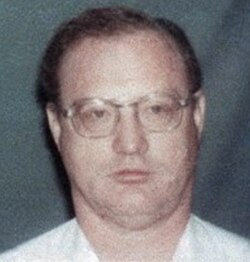
Robert Benjamin Smith was an 18-year-old high-school senior who murdered five people and wounded two others at the Rose-Mar College of Beauty in Mesa, Arizona, on November 12, 1966. The victims were four women and a three-year-old girl who had gathered at the school shortly before it opened for business. Smith did not know his victims and had no personal grievance against the beauty college. Investigators determined that he selected the school as a convenient place to commit a mass murder that he hoped would make his name nationally known.
The massacre occurred during a disturbing year in American history. Only months earlier, Richard Speck had murdered eight student nurses in Chicago, and Charles Whitman had opened fire from the University of Texas Tower in Austin. Smith closely followed reports about both crimes. He later admitted that the publicity surrounding Speck and Whitman helped inspire him and that he wanted to surpass their death tolls. His motive was not robbery, revenge or political ideology. He wanted notoriety and believed that murdering strangers would guarantee that people remembered him.
Background and Preparation
Robert Benjamin Smith was born on February 10, 1948, in Houston, Missouri. By 1966, he was living with his family in Mesa and attending Mesa High School. He was generally described as quiet, withdrawn and intelligent, although later examinations revealed deeply troubling fantasies about violence, power and recognition. He had developed an intense interest in assassins, dictators and notorious killers.
Smith reportedly began planning a mass killing approximately three months before the attack. He considered several possible targets, including a high school, another beauty school and a bank in Missouri where he knew people. He eventually settled on the Rose-Mar College of Beauty at 42 North Stapley Drive in Mesa. The location offered a group of potential victims inside a relatively small building, and Smith believed he could control the occupants long enough to carry out his plan.
Smith armed himself with a .22-caliber single-action revolver and carried additional ammunition. He also brought two hunting knives and plastic sandwich bags. The bags were apparently intended to suffocate or restrain his victims, although they proved too small to be used as he had planned. On the morning of November 12, Smith walked from his home to the beauty college and waited for an opportunity to enter.
The Rose-Mar College of Beauty
The Rose-Mar College of Beauty trained students to become licensed cosmetologists. Students completed classroom instruction before gaining practical experience by serving customers under supervision. The school was normally busy, but the attack occurred shortly before regular business hours, when only a small number of students and customers were present.
The school’s director had arrived and allowed the waiting students and customers inside. She later noticed Smith outside carrying a handgun. Realizing that something was wrong, she moved away from the building and contacted police from a neighboring business. Her decision to summon help prevented Smith from having more time inside the school and may have saved additional lives.
The Attack on November 12, 1966
Smith entered the beauty college carrying the revolver. When the people inside did not immediately react to him, he fired a warning shot to command their attention. He then ordered the occupants into a rear room. The group included cosmetology students, a customer named Joyce Sellers and Sellers’ two young daughters.
Once everyone was in the back room, Smith forced the victims to lie on the floor in a circle with their heads facing inward. Contemporary newspapers described the arrangement as resembling the spokes of a wheel. Smith initially attempted to place plastic sandwich bags over the victims’ heads, apparently intending to suffocate them. When the bags would not fit properly, he abandoned that part of the plan.
Mary Margaret Olsen began praying as she lay on the floor. Smith became angry and demanded to know what she was doing. Another victim, Carol Farmer, explained that Olsen was praying. Smith then began firing at the defenseless group at close range. The confined space offered the victims almost no opportunity to escape or defend themselves.
Smith shot the women and children as they lay together on the floor. Joyce Sellers attempted to protect her three-month-old daughter, Tamara, by covering the baby with her own body. Joyce was killed, but her actions helped save Tamara, who suffered a gunshot wound to the arm and survived.
Joyce’s three-year-old daughter, Debra LaRae Sellers, was wounded but remained alive after the initial gunfire. Smith then used one of his hunting knives against the child, inflicting fatal injuries. The killing of a wounded toddler became one of the most horrifying details disclosed during the investigation and court proceedings.
Bonita Sue Harris, a student at the college, was shot but survived by remaining still and pretending to be dead. Smith reportedly believed that he had killed her. Harris’ ability to conceal that she was alive allowed her to remain a direct witness to the massacre and later provide investigators with an account of what happened inside the room.
Victims Killed
- Mary Margaret Olsen, 18 — A cosmetology student killed on November 12, 1966, inside the Rose-Mar College of Beauty at 42 North Stapley Drive in Mesa, Arizona. Olsen was reportedly praying shortly before Smith opened fire.
- Glenda Sue Carter, 18 — A cosmetology student killed on November 12, 1966, in the rear room of the Rose-Mar College of Beauty in Mesa, Arizona.
- Carol Pope Farmer, 19 — A cosmetology student killed on November 12, 1966, at the Rose-Mar College of Beauty in Mesa. Farmer reportedly told Smith that Olsen was praying moments before the shooting began.
- Joyce Faye Luth Sellers, 27 — A customer killed on November 12, 1966, at the Mesa beauty school. She used her body to shield her three-month-old daughter, Tamara, helping the baby survive the attack.
- Debra LaRae “Debbie” Sellers, 3 — Joyce Sellers’ daughter, killed on November 12, 1966, at the Rose-Mar College of Beauty. She survived the initial gunfire but was then fatally attacked with a knife.
Survivors
- Bonita Sue Harris — A cosmetology student who was shot during the attack. Harris survived by lying motionless and pretending to be dead until police arrived.
- Tamara Lynn Sellers, approximately three months old — The infant daughter of Joyce Sellers. Tamara suffered a gunshot wound to her arm but survived because her mother shielded her during the shooting.
Arrest at the Scene
Police reached the beauty college while Smith was still inside or nearby. He made no serious attempt to escape and offered no resistance. When officers confronted him, he indicated that he had shot people in the back room and directed them to the bag containing his revolver and ammunition.
Officers entering the rear room discovered the victims lying close together. Five were dead or fatally wounded, while Harris and the infant Tamara remained alive. One responding officer recalled hearing the surviving baby crying amid the aftermath. Smith was immediately taken into custody.
His calm surrender supported the conclusion that he had expected to survive the attack. Unlike perpetrators who intended to die during their crimes, Smith appeared to want to remain alive to witness the publicity and attention that he believed the massacre would generate.
Confession and Motive
Smith openly admitted responsibility for the killings. He told investigators that he wanted to become famous and had been influenced by the enormous attention given to Richard Speck and Charles Whitman. He had imagined killing far more people and expressed disappointment that the number of victims inside the school was smaller than he anticipated.
The timing of the attack greatly limited the number of people present. School officials later said that dozens of students and customers might have been inside if Smith had arrived later in the morning. His original ambitions were therefore interrupted not by a change of heart, but by the small number of available victims and the rapid response of police.
Investigators learned that Smith had considered other targets and had rehearsed violent scenarios in his mind. He reportedly viewed murder as a means of transforming himself from an obscure teenager into a nationally recognized figure. His statements showed little concern for the victims or the devastation inflicted upon their families.
Mental Competency Proceedings
Because of Smith’s behavior and statements, the courts ordered extensive psychiatric examinations. His mental condition became a major issue before the case could proceed to trial. Doctors evaluated whether he understood the charges against him and whether he was capable of assisting his attorneys.
Psychiatric testimony described a young man with grandiose ideas, emotional detachment and a disturbing lack of empathy. One examiner testified that Smith saw himself as possessing extraordinary importance and power. Other testimony indicated that he had experienced homicidal fantasies for years and felt exhilarated rather than remorseful during the massacre.
Despite his psychological abnormalities, Smith was eventually ruled competent to stand trial. The legal question was not whether he was emotionally disturbed, but whether he understood the proceedings and could participate in his defense. The court concluded that he met that standard.
Trial and Convictions
Smith was prosecuted for five counts of first-degree murder and two counts of assault with intent to commit murder. The assault charges involved survivors Bonita Harris and Tamara Sellers. There was little dispute that Smith had committed the crimes. His confession, the surviving witness, the recovered weapons and his arrest at the scene created overwhelming evidence.
He was convicted of all five murders and both assaults. Smith received death sentences for the murders. The case was appealed to the Arizona Supreme Court, which reviewed questions involving his competency, mental condition, confession and punishment. In its March 26, 1971, decision in State of Arizona v. Robert Benjamin Smith, the court affirmed the convictions and sentences.
Death Sentence Changed to Life Imprisonment
Smith was never executed. In 1972, the United States Supreme Court’s decision in Furman v. Georgia invalidated existing death-penalty procedures across the country. As a result, numerous death sentences, including Smith’s, were reduced to life imprisonment.
Smith remained in the Arizona prison system for the remainder of his life. He came up for parole consideration more than once, but release was denied. The calculated nature of the attack, his desire for publicity and the vulnerability of his victims continued to weigh heavily against any possibility of freedom.
Robert Benjamin Smith died on April 21, 2024, after being transferred from prison to a hospital in Goodyear, Arizona. He was 76 years old and had spent more than 57 years in custody.
Legacy of the Massacre
The Rose-Mar College of Beauty massacre remains one of the most infamous crimes in Arizona history. It is frequently described as the deadliest school shooting in the state because the attack occurred at an educational institution and resulted in five deaths. It is also regarded as an early example of a publicity-seeking copycat mass killing.
The massacre demonstrated how intense media attention surrounding one mass murderer could influence another person seeking recognition. Smith explicitly connected his actions to the crimes of Speck and Whitman and wanted to exceed their notoriety. His case later became part of broader discussions about fame-seeking violence, imitation and the responsibility involved in publicizing mass killers.
The lasting significance of the case belongs not to Smith’s desire for recognition, but to the five people whose lives were taken and the two who survived. Mary Margaret Olsen, Glenda Sue Carter and Carol Pope Farmer were young students preparing for careers. Joyce Sellers was a mother who died protecting her infant daughter. Three-year-old Debra Sellers was a child brought to the school with her mother and sister. Their deaths transformed an ordinary Saturday morning at a neighborhood beauty college into a tragedy that continued to affect their families and the Mesa community for generations.