Gan Fong Chin and the 1978 Cathay Terrace Restaurant Massacre
Background
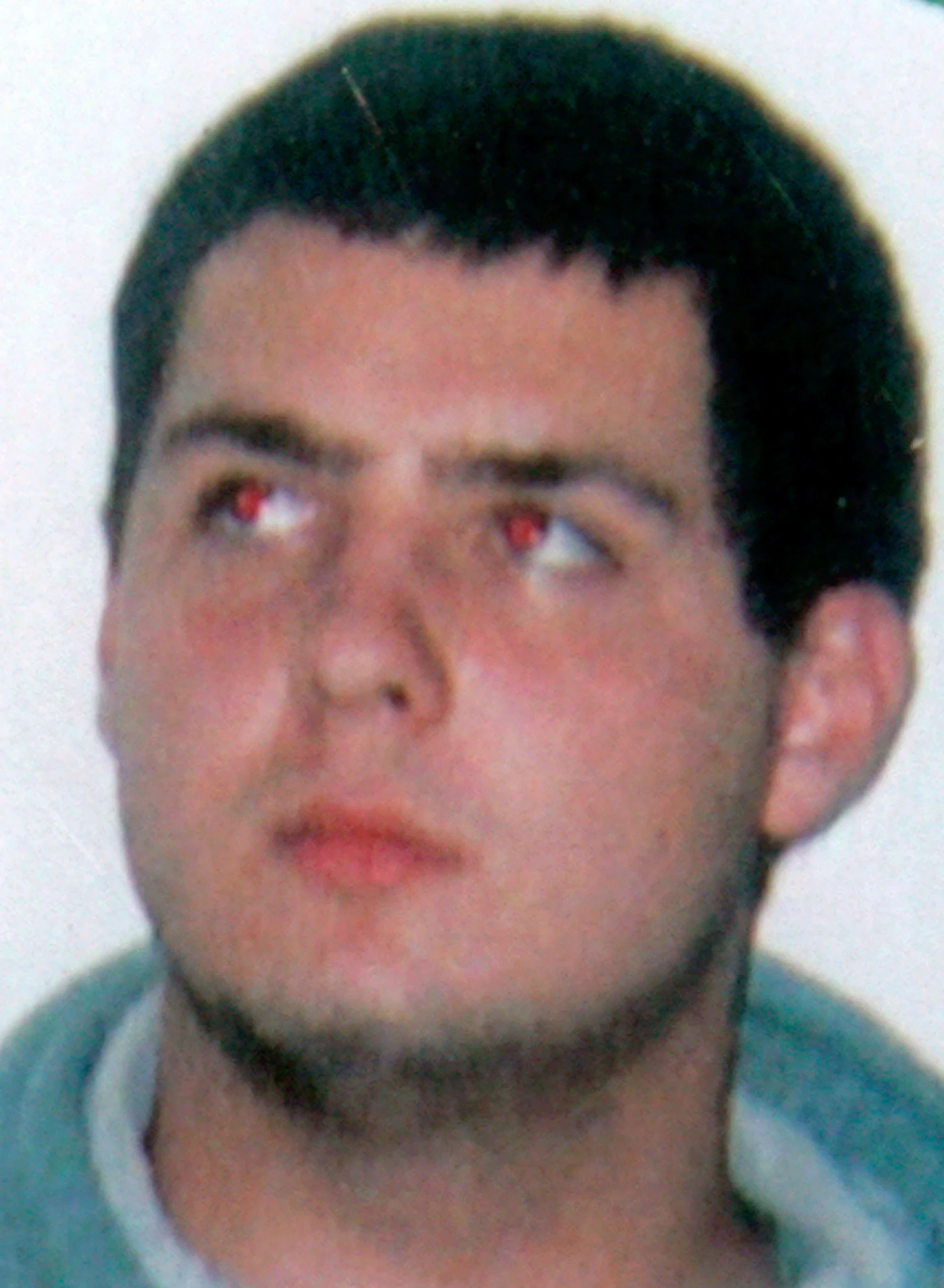
Gan Fong Chin was a Chinese-born restaurant worker who lived in Rhode Island and worked as a cook at Lee's Cathay Terrace, a family-operated Chinese restaurant on Post Road in Warwick. On June 17, 1978, Chin carried out a carefully prepared shooting inside the restaurant, killing four of his coworkers and causing panic that contributed to the death of an elderly customer from a heart attack.
Chin was approximately 48 years old at the time of the massacre. Evidence presented during later court proceedings showed that he had developed intense suspicions about the people with whom he worked. He reportedly believed that his coworkers were mistreating him and attempting to poison his food. These beliefs were later described by mental-health specialists as paranoid delusions.
Although Chin's psychiatric condition became a major issue during the lengthy legal proceedings, investigators also uncovered evidence that the shooting was not an entirely spontaneous act. Eleven days before the killings, Chin purchased a .30-30-caliber carbine. On the day of the massacre, he concealed the rifle inside a gift-wrapped box before carrying it into the restaurant.
The Cathay Terrace Restaurant
Lee's Cathay Terrace was located at 2099 Post Road in Warwick, Rhode Island. The restaurant was a familiar local establishment operated by members of the Lee family and staffed by cooks, servers, bartenders and other employees who regularly worked together.
On the evening of Saturday, June 17, 1978, employees were preparing food and serving customers when Chin arrived with the wrapped package. Nothing about the box immediately revealed that it contained a firearm. The decorative wrapping allowed Chin to carry the weapon through the restaurant without creating immediate alarm.
Once inside, Chin opened the package and removed the rifle. He began firing at close range in the restaurant, deliberately targeting people with whom he had worked. The confined surroundings left employees and customers with little time to understand what was happening or find a safe place to hide.
The Shooting on June 17, 1978
The first shots transformed the busy restaurant into a scene of terror. Chin moved through the building with the loaded carbine, firing at coworkers in the kitchen and other working areas. Witnesses were forced to flee, take cover or remain frozen as gunfire echoed through the restaurant.
Four employees were fatally shot. They included restaurant co-owner Robert Lee, maître d' John O'Dell, employee Danny Linn and cashier or waitress Dorothy Johnston. Johnston was reportedly pregnant at the time of her death, adding another painful dimension to the tragedy.
An elderly female customer also collapsed during the attack and died from a heart attack. She was not counted among the four murder convictions because she was not struck by gunfire, but her death was directly associated with the terror and chaos created by the shooting. Contemporary reports therefore frequently described the massacre as an incident in which five people died.
Chin also fired at another person who survived, resulting in a later conviction for assault with intent to murder. By the time the violence ended, four people had been shot to death, at least one additional person had been attacked, and customers and employees had witnessed one of the deadliest restaurant shootings in Rhode Island history.
Victims
- Robert Lee, 51 — Fatally shot on June 17, 1978, inside Lee's Cathay Terrace at 2099 Post Road in Warwick, Rhode Island. Lee was a member of the family associated with the operation of the restaurant and was described as a co-owner.
- John O'Dell, 40 — Fatally shot on June 17, 1978, at Lee's Cathay Terrace in Warwick. O'Dell worked as the restaurant's maître d' and was one of Chin's coworkers.
- Danny Linn, 48 — Fatally shot on June 17, 1978, inside the restaurant. Linn was another employee or coworker targeted during the attack.
- Dorothy Johnston, 38 — Fatally shot on June 17, 1978, at Lee's Cathay Terrace. Johnston worked as a cashier or waitress and was reportedly pregnant when she was killed.
- Unidentified elderly female customer — Suffered a fatal heart attack after Chin exposed the rifle and began shooting on June 17, 1978. Although she was not struck by a bullet, her death brought the number of people who died during the incident to five.
Arrest and Mental-Health Proceedings
Chin was taken into custody following the massacre and charged with four murders and the attempted killing of another person. The central facts of the shooting were not seriously disputed. The more difficult legal question was whether Chin was mentally competent to stand trial and whether he could be held criminally responsible for what he had done.
After his arrest, Chin underwent extensive psychiatric evaluation. He was diagnosed with serious mental illness, including paranoid schizophrenia, and was confined at Rhode Island's state mental-health institution. His delusional belief that coworkers had been poisoning or persecuting him became a central element of his defense.
Because of concerns about his ability to understand the proceedings and assist his attorneys, Chin did not immediately face trial. He remained in a psychiatric institution for approximately nine years while doctors and the courts continued to evaluate his condition. This extraordinary delay meant that the victims' families had to wait nearly a decade before the criminal charges reached a jury.
The 1987 Murder Trial
Chin was finally brought to trial in Rhode Island Superior Court in 1987. By then, he was 57 years old. Prosecutors presented evidence showing that he had acquired the .30-30 carbine eleven days before the massacre, concealed it inside a gift-wrapped box and carried it into his former workplace before opening fire.
The defense argued that Chin's paranoid delusions prevented him from being held legally responsible. Four forensic psychiatrists reportedly testified during the proceedings, offering differing opinions about his mental condition and his ability to appreciate the criminal nature of his actions.
Prosecutors maintained that Chin's preparations demonstrated planning and awareness. Purchasing the weapon in advance, wrapping it to disguise its appearance and transporting it into the restaurant were presented as purposeful actions rather than the behavior of someone completely unable to understand what he was doing.
After approximately seven hours of deliberations spread over two days, a jury of nine women and three men returned its verdict on September 1, 1987. Chin was found guilty of four counts of first-degree murder. He was also convicted of assault with intent to murder for shooting at a person who survived.
Request for a New Trial
Following the convictions, Chin's public defender requested a new trial. The defense contended that the jury had made a mistake by finding Chin criminally responsible despite the extensive evidence of paranoid delusions and severe mental illness.
Superior Court Judge Thomas Needham denied the request in September 1987. The judge concluded that the verdict was supported by the evidence. Of the forensic psychiatrists who testified, the judge reportedly considered the specialist who found Chin criminally responsible to be the most credible.
The prosecution argued that granting a new trial would be an injustice to the four people who had been deliberately shot and killed. With the motion denied, Chin faced a mandatory life sentence for each first-degree murder conviction.
Sentencing and Imprisonment
Chin received four mandatory life sentences, one for each person murdered at Cathay Terrace. He was transferred from the state mental-health institution to Rhode Island's Adult Correctional Institutions after the court determined that he was legally responsible for the massacre.
The sentences formally recognized four homicide victims because Robert Lee, John O'Dell, Danny Linn and Dorothy Johnston had been killed by gunfire. The elderly customer who suffered the fatal heart attack remained an additional casualty of the attack but was not the subject of a separate first-degree murder conviction.
Chin's case illustrated the difficult distinction between mental illness and legal insanity. The trial evidence established that he experienced serious psychiatric symptoms, but the jury ultimately decided that those symptoms did not eliminate his criminal responsibility for purchasing the rifle, concealing it and intentionally shooting his coworkers.
Death of Gan Fong Chin
Gan Fong Chin did not spend many years in prison following his conviction. He died in Rhode Island in 1988, approximately ten years after the massacre and only about a year after the jury found him guilty. Later accounts reported that he died from lymphatic cancer while serving his sentences.
His death ended any remaining appeal or effort to overturn the convictions. The official legal record continued to identify him as the sole perpetrator responsible for the four murders at Lee's Cathay Terrace.
Legacy of the Massacre
The June 17, 1978, attack left a lasting wound in Warwick. A familiar restaurant had become the scene of a calculated workplace massacre, and four employees who expected to complete an ordinary evening shift never returned home. Another woman lost her life after being overcome by the terrifying violence unfolding around her.
The long delay before trial also prolonged the suffering of those connected to the victims. For nine years, the criminal case remained unresolved while Chin was confined and evaluated. The 1987 verdict finally established his legal responsibility, but it came too late to erase the years of uncertainty endured by the victims' families.
The Cathay Terrace massacre remains notable for the concealment of the murder weapon, the evidence of advance preparation and the complicated psychiatric questions that delayed the prosecution. Above all, the case is remembered through the people whose lives were taken: Robert Lee, John O'Dell, Danny Linn and Dorothy Johnston, along with the elderly customer who died amid the panic of the shooting.