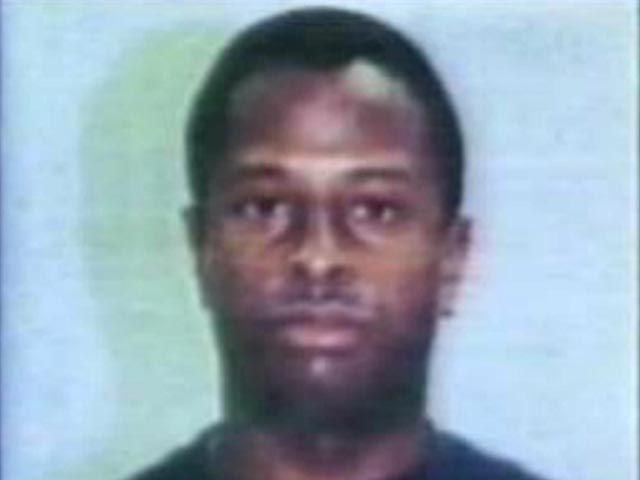
Emile Pierre Benoist and the 1977 Hackettstown Massacre
A Summer Evening of Violence
On August 26, 1977, 20-year-old Emile Pierre Benoist carried out a deadly shooting rampage along a railroad corridor running through Hackettstown and neighboring Mansfield Township in Warren County, New Jersey. During an attack lasting approximately two hours, Benoist ambushed people traveling near the tracks, killing six victims before taking his own life as police closed in.
The violence unfolded in a normally quiet section of northwestern New Jersey where residents frequently walked, rode bicycles and traveled on motorcycles near the railroad right-of-way. Benoist positioned himself along the tracks with a powerful .44-caliber semiautomatic rifle equipped with a telescopic sight. From concealed areas near brush, trees and fields, he fired at people who apparently had no connection to him and no warning that they were in danger.
The Gunman
Emile Pierre Benoist, whose first name was also reported as Emil, was born on May 24, 1957. He was the son of a former Hackettstown councilman and had grown up in the community where the murders occurred. Contemporary reports described him as a former Marine recruit who had failed to complete his service. He had also participated in boxing but had not achieved notable success in the sport.
People who knew Benoist reportedly expressed disbelief after learning that he was responsible for the killings. Although he had experienced difficulties and had been in trouble before, acquaintances said they had not regarded him as someone capable of planning and carrying out a mass murder. In the immediate aftermath, one friend suggested that Benoist must have suddenly snapped.
Investigators examined several possible explanations for his actions. One reported theory was that Benoist had become angry over delays involving an automobile insurance matter. However, no single motive was conclusively established that could explain why he selected six unrelated people and murdered them. The available evidence indicated that the victims were chosen because they happened to enter the area where Benoist was waiting.
The Railroad Ambush
The first reports of gunfire reached Hackettstown police at approximately 5:36 p.m. on Friday, August 26. Officers responding to the area initially faced confusion because the victims were scattered along the railroad line rather than concentrated at one scene. As additional bodies were discovered, authorities realized that an armed gunman was moving through or hiding within the corridor.
Benoist appears to have used the railroad tracks and surrounding vegetation as cover. He shot at people who were walking, bicycling or riding motorcycles, creating a trail of victims extending from Hackettstown into Mansfield Township. The attacks were deliberate ambushes rather than a single confrontation. Some victims were struck while simply passing through the area during the late afternoon or early evening.
The youngest person killed was 14-year-old David J. Galvin, who was reportedly riding a minibike near the railroad tracks. He was preparing to begin his freshman year at Hackettstown High School the following month. His death demonstrated the complete randomness of the attack: a teenager taking an ordinary ride suddenly encountered a hidden gunman armed with a high-powered rifle.
Other victims included young men traveling near the tracks and older residents who happened to cross Benoist’s path. There is no reliable indication that any of them had threatened, confronted or provoked him. The murders were connected only by location, timing and the presence of the same gunman.
Victims of the August 26, 1977 Attack
- David J. Galvin, age 14 — Killed on August 26, 1977, near the railroad tracks in the Hackettstown area of Warren County, New Jersey. Galvin was reportedly riding a minibike when he was shot. He had lived in Hackettstown for most of his childhood and was preparing to enter Hackettstown High School as a freshman.
- Jeffrey L. Gianquitti, age 19 — Killed on August 26, 1977, along or near the railroad right-of-way in the Hackettstown and Mansfield Township area. He was one of several young victims attacked while traveling through the corridor.
- Stephen Werner, age 20 — Killed on August 26, 1977, near the railroad tracks in Warren County. Werner was approximately the same age as Benoist and was among the people unexpectedly caught in the gunman’s path.
- William Nagel, age 27 — Killed on August 26, 1977, in the Hackettstown–Mansfield Township area. His surname was sometimes reported as Nagle in later accounts. Some sources also contain conflicting information concerning his exact age, but contemporary victim lists commonly identified him as 27.
- Robert Visconti, age 35 — Killed on August 26, 1977, near the railroad corridor in or around Hackettstown. Visconti was one of the older victims shot as Benoist continued moving or positioning himself along the tracks.
- Clifford Sowers, age 38 — Killed on August 26, 1977, in the Hackettstown and Mansfield Township railroad area. Sowers was the oldest of the six identified victims and, like the others, was apparently selected at random.
The Search for the Shooter
As police discovered additional victims, a large search operation began. Local officers were joined by New Jersey State Police and other law-enforcement personnel. Authorities faced the danger of pursuing a rifleman who had a telescopic sight, knew the terrain and had already demonstrated a willingness to fire without warning.
Residents were warned to remain indoors while officers searched the railroad line, nearby fields and wooded areas. The uncertainty surrounding the gunman’s location created fear throughout Hackettstown. At first, authorities could not know whether the shooter had fled into town, entered a residence or remained hidden close to the bodies.
The search eventually concentrated on a cornfield near the railroad corridor. Officers surrounded the area and moved toward Benoist’s position. Before police could take him into custody, Benoist used his rifle to shoot himself. He died at the scene on August 26, bringing the total number of dead to seven, including the gunman.
Investigation and Unanswered Questions
Because Benoist died before he could be questioned, investigators were never able to obtain a confession or a full explanation of his motive. His death prevented a criminal trial and left the victims’ families without the opportunity to hear him account for his actions in court.
Police reconstructed the sequence of events from the locations of the bodies, witness statements, reports of gunfire and physical evidence recovered along the railroad line. The weapon, ammunition and Benoist’s movements established him as the sole attacker. No accomplices were publicly identified, and no evidence indicated that another person had participated in the shootings.
Reports concerning Benoist’s earlier life focused on his unsuccessful experience with the Marines, his boxing activities, previous personal difficulties and possible anger concerning an insurance claim. None of those circumstances adequately explained the scale or randomness of the violence. The attack did not appear to involve revenge against specific individuals. Instead, Benoist turned a familiar public corridor into an ambush zone and fired upon strangers.
Impact on Hackettstown
Hackettstown had a population of approximately 12,000 people at the time, and the murders deeply affected the close-knit community. The victims included a child, teenagers, young adults and working-age men. Their families were forced to arrange funerals while police and reporters continued examining the gunman’s background and searching for a reason behind the killings.
The death of David Galvin was particularly painful for residents because he was only weeks away from beginning high school. Funeral services were held at St. Mary’s Church, and his obituary described a boy survived by his parents, brother, sister and grandmother. Similar grief spread through the families of the other five victims, whose routine movements near the tracks had placed them in Benoist’s line of fire.
The killings also changed how local residents viewed the railroad corridor. A place associated with walking, recreation and ordinary travel became permanently connected to one of the deadliest incidents in the town’s history. The attack demonstrated how quickly a single armed person could overwhelm a small community and create multiple crime scenes over a wide area.
Aftermath
Emile Pierre Benoist was buried at Union Cemetery in Hackettstown after his death. There was no prosecution because the responsible gunman had killed himself. The legal investigation therefore ended with the official conclusion that Benoist had murdered six people before dying by suicide.
The massacre received national newspaper coverage in the days following August 26, 1977. Headlines described a sniper or gunman who had slain six people before being trapped by police. Much of the reporting concentrated on the apparent lack of warning signs and the inability of friends, relatives and investigators to identify a convincing reason for the murders.
Decades later, the Hackettstown–Mansfield shootings remain a disturbing example of random mass violence. The names of David J. Galvin, Jeffrey L. Gianquitti, Stephen Werner, William Nagel, Robert Visconti and Clifford Sowers represent six separate lives lost during an attack that lasted only a few hours. Although Benoist’s identity and actions were established, the reason he chose that evening, that railroad corridor and those particular strangers died with him.