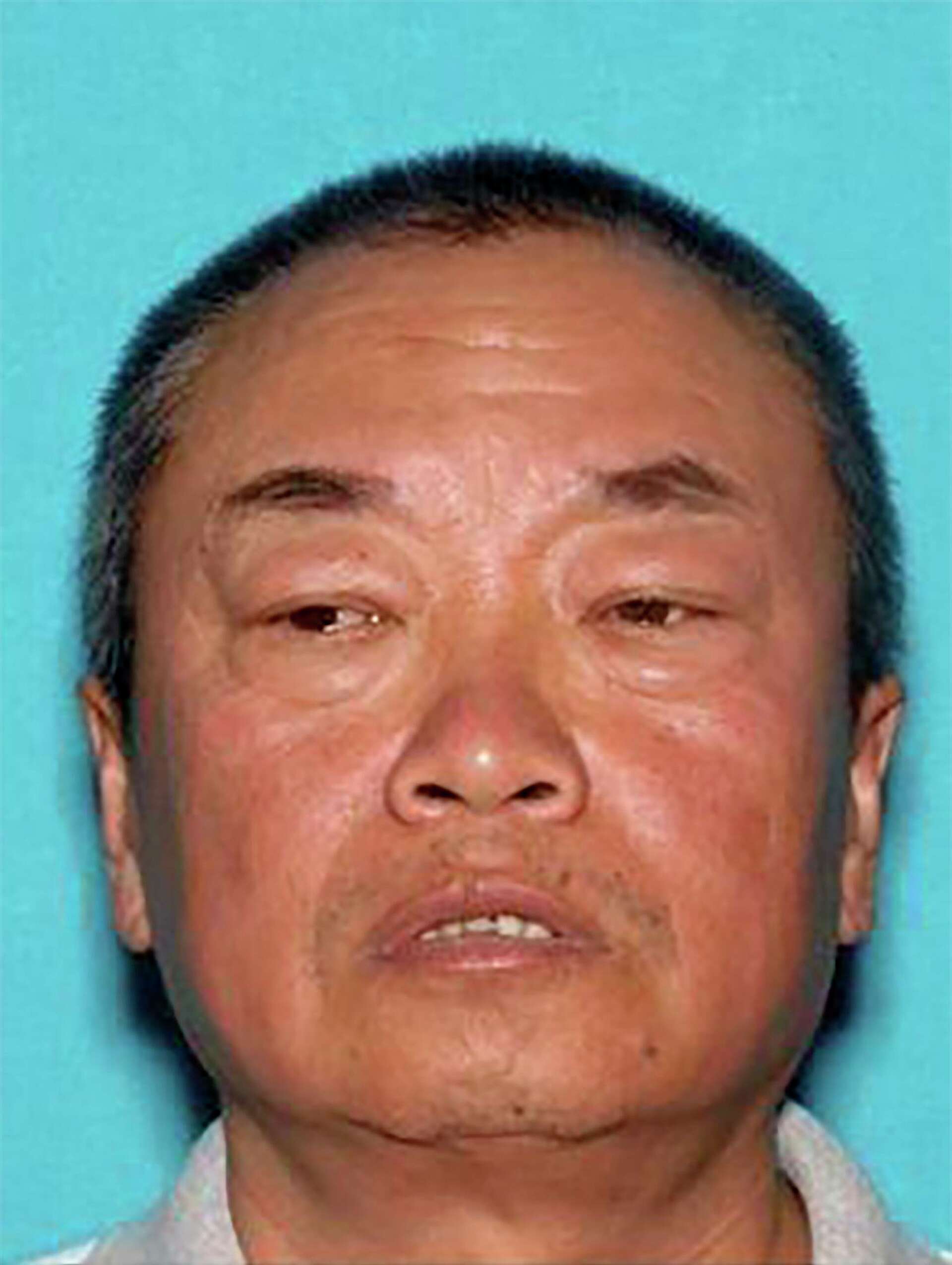
Maurice Clemmons and the 2009 Lakewood Police Officer Murders
Overview
Maurice Clemmons was responsible for the November 29, 2009, ambush murders of four Lakewood Police Department officers inside a coffee shop near Tacoma, Washington. The officers were seated together before beginning their shifts when Clemmons entered the business and opened fire without warning. The attack was deliberately directed at uniformed law-enforcement officers rather than being the result of a robbery, argument, or spontaneous confrontation.
The killings occurred at approximately 8:15 a.m. inside the Forza Coffee Company shop at 11401 Steele Street South in Parkland, an unincorporated community in Pierce County. Sergeant Mark Renninger and Officers Ronald Owens, Tina Griswold, and Greg Richards were using their department laptops and discussing their work when Clemmons approached them with a handgun. All four officers were wearing uniforms, protective vests, and duty weapons, but the sudden nature of the attack left them almost no opportunity to defend themselves.
The Victims
- Sergeant Mark Renninger, 39 — Killed on November 29, 2009, at the Forza Coffee Company shop in Parkland, Washington. Renninger was an experienced law-enforcement officer and a supervisor with the Lakewood Police Department.
- Officer Ronald Owens, 37 — Killed on November 29, 2009, at the Parkland coffee shop. Owens reportedly attempted to rise and respond as the shooting began but was fatally wounded.
- Officer Tina Griswold, 40 — Killed on November 29, 2009, while seated with her colleagues inside the coffee shop. She had served with the Lakewood Police Department since the agency was established.
- Officer Greg Richards, 42 — Killed on November 29, 2009, at the same location. Although mortally wounded, Richards drew his service weapon and shot Clemmons in the abdomen before dying.
Background of Maurice Clemmons
Maurice Clemmons was born on February 6, 1972, and spent much of his adult life moving through the criminal-justice system. His record began in Arkansas when he was a teenager and eventually included convictions involving burglary, robbery, theft, weapons, and other violent conduct. Multiple sentences imposed in Arkansas totaled more than a century of imprisonment, although the practical length of his incarceration was later reduced.
In 2000, Arkansas Governor Mike Huckabee commuted part of Clemmons’s lengthy prison sentence, making him eligible for consideration by the state parole board. The commutation did not itself free him, but the parole board subsequently approved his release. Clemmons continued to encounter legal problems after leaving prison and was returned to custody more than once for additional offenses and parole violations.
Clemmons eventually moved to Washington state. In the months before the Lakewood murders, he faced serious criminal accusations, including allegations that he assaulted a Pierce County sheriff’s deputy and sexually assaulted a child. He was jailed while those cases were pending but was released after a bail bond was posted on November 23, 2009, less than one week before the coffee-shop attack.
Events Before the Shooting
On the morning of November 29, Clemmons traveled to the Parkland area with Darcus Allen, a friend who was later accused of assisting him. Prosecutors alleged that Allen drove Clemmons past the coffee shop, where they observed marked Lakewood police vehicles in the parking lot. The vehicle then returned to the area and stopped nearby.
Allen remained with the vehicle while Clemmons walked toward the coffee shop. Clemmons was armed with a 9mm Glock 17 semiautomatic pistol and also possessed a revolver. Because of his felony record, he was legally prohibited from possessing firearms.
The four officers were not responding to a call and had no known prior contact with Clemmons that morning. They were conducting routine work in a public location frequently used by officers before their shifts. Customers and employees were also present, but Clemmons focused his attack specifically on the officers.
The Coffee-Shop Ambush
Clemmons entered the Forza Coffee shop at about 8:15 a.m. He briefly approached the counter before turning toward the table occupied by the four officers. He then drew his pistol and began shooting at close range.
Sergeant Renninger and Officer Griswold were reportedly shot first while they remained seated. Officer Owens attempted to react and reach for his weapon but was also fatally shot. Clemmons then turned his attention toward Officer Richards.
Richards was struck in the head but managed to draw his service pistol and fire at Clemmons. One of Richards’s bullets entered Clemmons’s abdomen, creating a serious wound that left blood and biological evidence along the gunman’s escape route. Richards died from his injuries, but his return fire helped investigators confirm that Clemmons had been wounded.
After killing the officers, Clemmons took Richards’s .40-caliber Glock service pistol and fled. He left the coffee shop without stealing money or attacking the other people inside. The circumstances demonstrated that the murders had been a planned assault against police officers rather than a conventional commercial robbery.
Identification of the Suspect
Investigators quickly recovered evidence linking Clemmons to the scene. Witness accounts, physical evidence, and information about his abdominal wound caused authorities to identify him publicly as the primary suspect later that day.
Police warned hospitals and medical facilities to watch for a man seeking treatment for a gunshot wound. Investigators believed Clemmons would require medical assistance, but he avoided hospitals. His wound was instead packed with cotton and gauze and covered with duct tape.
The shooting produced one of the largest manhunts in Washington state history. Officers from municipal police departments, county sheriff’s offices, the Washington State Patrol, federal agencies, and tactical units searched residences, vehicles, wooded areas, and neighborhoods across Pierce and King counties.
The Two-Day Manhunt
Authorities received thousands of tips as Clemmons moved among relatives, friends, and associates. Police searched properties in Tacoma, Seattle, Renton, and other communities. At one point, heavily armed officers surrounded a house in Seattle’s Leschi neighborhood after receiving information that Clemmons might be hiding inside. After a lengthy operation, police entered the residence and discovered that he was not there.
A reward that eventually reached approximately $145,000 was offered for information leading to Clemmons’s capture. Schools and businesses increased security, and residents throughout the region were warned not to approach him. Police considered Clemmons exceptionally dangerous because he was wounded, believed to be armed with Richards’s stolen pistol, and suspected of intentionally murdering four officers.
Several people later faced charges for allegedly providing Clemmons with transportation, shelter, medical assistance, money, or misleading information intended to help him escape. Some convictions arising from those allegations were later reversed or otherwise altered through appeals and additional court proceedings.
Death of Maurice Clemmons
At approximately 2:45 a.m. on December 1, 2009, Seattle Police Officer Benjamin Kelly encountered a stolen 1990 Acura Integra near 44th Place South and South Kenyon Street in Seattle’s Rainier Valley. The vehicle was unoccupied, its hood was raised, and its engine was running.
While Kelly was inside his patrol car checking the vehicle, he noticed a man approaching from behind. Kelly recognized the man as Clemmons from police bulletins and ordered him to stop and show his hands. According to the official account, Clemmons refused the commands, moved around the disabled vehicle, and reached toward his waist while attempting to flee.
Kelly fired several rounds, striking Clemmons. Clemmons collapsed near a residence and was pronounced dead at the scene. Police found Officer Richards’s stolen service pistol in Clemmons’s possession. They also discovered the improvised treatment covering the abdominal wound Richards had inflicted during the coffee-shop attack.
Investigation of Accomplices
Darcus Allen was accused of driving Clemmons to and from the Parkland coffee shop while knowing that Clemmons intended to kill police officers. Allen denied knowing Clemmons’s plan. His prosecution continued through several trials, appeals, and reversals before he ultimately pleaded guilty to conspiracy to commit second-degree murder.
Other friends and relatives were prosecuted for rendering criminal assistance. Authorities alleged that members of Clemmons’s network helped clean and dress his wound, provided shelter and transportation, disposed of evidence, and gave investigators false information. The complicated prosecutions lasted for years, and several convictions were overturned because of legal errors or prosecutorial misconduct.
Criminal-Justice Controversy
The murders generated national debate regarding sentencing, parole, bail, and the sharing of criminal-history information between states. Clemmons had accumulated a long record of violent and disruptive behavior, yet he repeatedly returned to the community through commutation, parole, the completion of shorter sentences, or release on bail.
Particular attention centered on the 2000 commutation of his Arkansas sentence. Although the governor’s action made Clemmons eligible for parole rather than directly ordering his release, critics argued that the decision contributed to his eventual freedom. Others emphasized that numerous later decisions by parole officials, judges, prosecutors, jail administrators, and bail-bond procedures also affected his status during the following nine years.
Questions were also raised about the amount of bail set in Washington while Clemmons faced serious pending charges. He had been released only six days before the murders after a bonding company secured his freedom. The case led officials to review how courts assessed defendants with extensive out-of-state criminal histories and how quickly records from other jurisdictions were made available.
Impact on the Lakewood Police Department
Renninger, Owens, Griswold, and Richards were the first Lakewood police officers killed in the line of duty since the department was created in 2004. Losing four members in one attack devastated the relatively young agency and removed a substantial portion of its experienced personnel.
Thousands of law-enforcement officers and community members attended memorial events for the victims. A public procession carried the officers’ remains to a memorial service at the Tacoma Dome on December 8, 2009. The service honored their careers, families, and actions during the attack, particularly Richards’s attempt to stop the gunman despite suffering a fatal wound.
The officers were later memorialized at the Lakewood Police Department and through regional and national law-enforcement memorials. Their deaths also influenced police discussions about officer safety in restaurants, coffee shops, and other public gathering places where uniformed personnel may be vulnerable to targeted attacks.
Legacy of the Case
The Lakewood murders remain one of the deadliest deliberate attacks against law-enforcement officers in Washington history. The victims were given no meaningful warning and were targeted solely because they were police officers. The attack demonstrated how a single armed offender could exploit an ordinary moment in which officers were seated, occupied with paperwork, and preparing for duty.
Maurice Clemmons died before he could be arrested, questioned, or tried for the four murders. Consequently, the exact development of his plan and the full extent of what his associates knew were never conclusively established through a murder trial. Evidence recovered from the scene, witness statements, his gunshot wound, possession of Richards’s weapon, and the circumstances of his flight nevertheless established him as the gunman.
The case is remembered primarily for the lives and service of Mark Renninger, Ronald Owens, Tina Griswold, and Greg Richards. Their murders on November 29, 2009, prompted sweeping investigations, years of related legal proceedings, and renewed scrutiny of parole and bail systems across state lines.