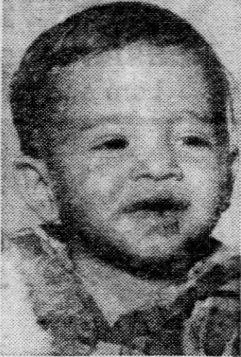
On Palm Sunday, April 15, 1984, a quiet home on Liberty Avenue in East New York turned into a scene so brutal that even seasoned officers struggled to describe it. Eddie Lopez, a 7-year-old Hispanic/Latino boy, was inside that Brooklyn house with relatives and neighborhood children when a gunman came in close, firing again and again at point-blank range.
When police arrived, they found the victims positioned as if life had been interrupted mid-breath—some seated or reclined as though watching television, another apparently resting in a bedroom—while a crying infant moved among the bodies, the only one left alive.
Investigators pieced together a motive that seemed to grow out of jealousy, drugs, and simmering grudges. The house was tied to Enrique Bermudez, described in reporting as a convicted cocaine dealer, and detectives learned the suspected gunman, Christopher Thomas, had been in and around that world—buying drugs there and owing Bermudez thousands of dollars. In the days after the killings, police ran down tip after tip, building what was described as a major task force, while witnesses recalled seeing Thomas near the home earlier that day. The case tightened when physical evidence and witness identification pointed to him, and authorities began treating him as the central suspect.
About a month and a half after the massacre, Thomas was arrested and accused of gunning down the ten victims. Accounts of the arrest described him as a Bronx man taken into custody as investigators closed in with surveillance, a lineup identification, and evidence they believed linked him to the weapons used. Police officials said he had wrongly believed Bermudez was involved with his estranged wife, and that this belief fueled what became one of the city’s most infamous mass killings.
The case moved to court, where prosecutors pursued murder charges, but the outcome shifted in a way that still angers many who remember the victims. A jury found Thomas guilty on counts tied to intentional killing, then reduced the result to first-degree manslaughter under the legal concept of “extreme emotional disturbance.” Reporting at the time described the charges he faced, the reduction, and the sentencing schedule, with the court treating the emotional-disturbance finding as the factor that turned a murder verdict into a manslaughter conviction.
Thomas ultimately served decades in prison, with later coverage explaining that state law capped how long he could be held and that time credits made him eligible for release earlier than the raw headline sentence suggested. In January 2018, he was released from a New York prison after serving nearly 34 years, a development that reopened old wounds for investigators and survivors’ families who believed the punishment could never match what was taken from that Brooklyn home.