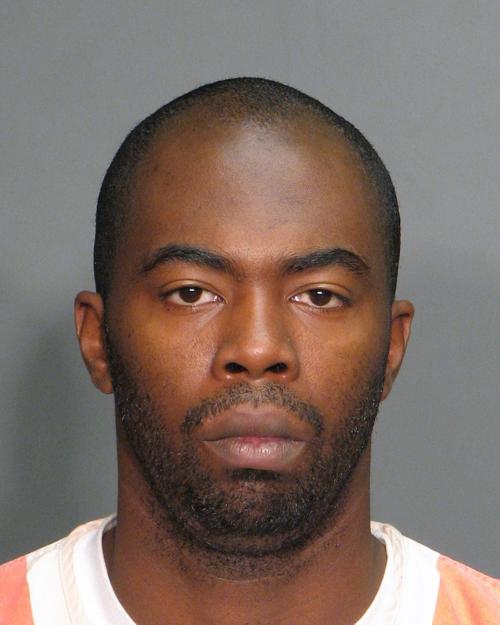
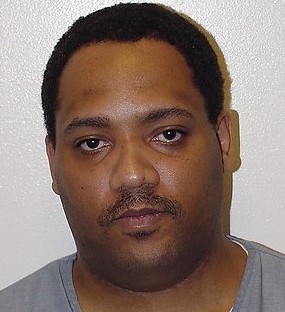
Samuel James Cooper Jr. – Raleigh Serial Killer
Overview
Samuel James Cooper Jr. is an American serial killer convicted of murdering five men in and around Raleigh, North Carolina, during a 17-month period between May 2006 and October 2007. His victims came from different backgrounds and were killed under different circumstances, but firearms evidence ultimately connected all five murders to Cooper. Several of the killings were committed during robberies or attempted robberies, while another victim appears to have been caught in a confrontation in which he was not the intended target.
Cooper's series of killings remained unsolved until an unrelated bank robbery in November 2007 gave investigators the evidence they needed. During Cooper's flight from police, authorities recovered a 9mm Ruger P89DC handgun. Firearms examiners subsequently determined that bullets and cartridge cases recovered from the five homicide investigations could be connected to that weapon. The discovery transformed several separate unsolved murders into a single investigation and ultimately led police to Cooper.
Criminal History Before the Murders
Cooper already had a significant history of violent crime before the killings began. He had been convicted for armed robberies committed during the 1990s and spent years in prison. While incarcerated, he participated in an escape in which inmates overpowered a supervisor and took control of a vehicle. Cooper later assaulted a law-enforcement officer during court proceedings and attempted to seize the officer's weapon. He was eventually returned to prison and was released in February 2006.
Only a few months after his release, the first murder later attributed to Cooper occurred. Over the next year and a half, men were shot at businesses, a private residence, and on a Raleigh street. At first, investigators had little reason to know that the crimes were connected. Ballistic comparisons would eventually provide the critical link.
The Murder of Ossama Haj-Hussein
On May 12, 2006, 43-year-old Ossama "Sam" Haj-Hussein was killed inside the In & Out Food Mart on Creech Road in Raleigh. Haj-Hussein was at his store during the morning hours when Cooper entered during a robbery. Prosecutors later described Haj-Hussein as having been eating breakfast and drinking coffee shortly before the attack.
Cooper shot Haj-Hussein twice in the head and facial area, with evidence indicating that at least one shot was fired from close range. The killing appeared to be connected with robbery rather than any personal dispute between the two men. Evidence recovered at the scene was preserved and later became extremely important when firearms specialists compared it with evidence from subsequent murders.
The Murder of LeRoy Jernigan
Less than a month later, on June 3, 2006, 41-year-old LeRoy Jernigan was working during the early morning hours at the Circus Family Restaurant at 1600 Wake Forest Road in Raleigh. Jernigan operated a cleaning business and was cleaning the restaurant when Cooper encountered him.
Cooper apparently believed Jernigan was the restaurant manager and therefore might have access to the business's money or safe. Jernigan was shot once in the head at close range. Cooper then left the scene. Investigators later discovered that ballistic evidence from Jernigan's murder was consistent with evidence recovered in the Haj-Hussein killing, providing one of the earliest indications that the two murders had been committed with the same firearm.
The Murder of Timothy Barnwell
On April 27, 2007, Cooper targeted 34-year-old Timothy Barnwell at Barnwell's apartment on Sunbow Falls Lane in north Raleigh. Cooper reportedly believed Barnwell was a major drug dealer and expected to find drugs or substantial amounts of money inside the apartment.
The attack became particularly prolonged. Barnwell was restrained with handcuffs, duct tape and other bindings while Cooper searched the apartment. Barnwell nevertheless managed to break away and attempted a desperate escape by going over the balcony of his second-floor apartment.
As Barnwell tried to escape, Cooper opened fire. Barnwell was shot five times and died from his injuries. The murder differed from the earlier business robberies because Cooper had deliberately entered Barnwell's home expecting to obtain drugs or money, restrained him and searched his belongings before the shooting.
The Murder of Ricky High
On October 12, 2007, 48-year-old Ricky High was shot on North Tarboro Road in Raleigh. High was homeless and supported himself by performing small jobs in the area around Saint Augustine's College. Cooper and High reportedly knew one another.
Evidence presented during Cooper's prosecution indicated that High was not necessarily the original target of the confrontation. Cooper became involved in an argument involving other men, and High was caught in the violence that followed. Cooper shot High several times, including wounds to his arm and back. High died from the gunshot wounds.
The killing was significant because it demonstrated that Cooper's violence was not limited to carefully planned robberies of businesses or residences. By October 2007, his willingness to use lethal force had extended to a street confrontation in which High became the fatal victim.
The Murder of Tariq Hussain
Only two days after High was killed, Cooper committed the final murder in the series. On October 14, 2007, 52-year-old Tariq Hussain was working inside Bobby's Grocery on Garner Road in Raleigh when Cooper entered the business.
Hussain attempted to defend himself and his store. Evidence showed that he had access to his own firearm and tried to protect himself during the confrontation. Cooper nevertheless shot Hussain twice, killing him inside the store. The attack was captured in part by the store's surveillance system and became another important piece of evidence in the eventual case against Cooper.
Confirmed Victims
- Ossama "Sam" Haj-Hussein, 43 – Killed May 12, 2006, inside the In & Out Food Mart on Creech Road in Raleigh, North Carolina. Cooper robbed the store and shot Haj-Hussein twice in the head and facial area.
- LeRoy Jernigan, 41 – Killed June 3, 2006, inside the Circus Family Restaurant at 1600 Wake Forest Road in Raleigh, North Carolina. Jernigan was cleaning the restaurant when Cooper, apparently believing he was the manager, shot him once in the head.
- Timothy Barnwell, 34 – Killed April 27, 2007, at his apartment on Sunbow Falls Lane in north Raleigh, North Carolina. Cooper restrained Barnwell and searched his apartment for drugs and money. Barnwell escaped onto or over his balcony but was shot five times.
- Ricky High, 48 – Killed October 12, 2007, on North Tarboro Road in Raleigh, North Carolina. High was shot multiple times during a confrontation involving Cooper and other men.
- Tariq Hussain, 52 – Killed October 14, 2007, inside Bobby's Grocery on Garner Road in Raleigh, North Carolina. Hussain attempted to defend himself and his business before Cooper shot him twice.
The Bank Robbery That Broke the Case
For months, the murders remained separate investigations. That changed on November 21, 2007, when Cooper robbed a Bank of America branch in Garner, North Carolina. Police pursued him after the robbery, and during his attempt to escape Cooper dropped a 9mm Ruger P89DC handgun.
The recovered pistol proved devastating to Cooper's ability to conceal his earlier crimes. Firearms specialists with the North Carolina State Bureau of Investigation examined the weapon and compared it with bullets, fired projectiles and cartridge cases collected during the homicide investigations. Testing connected the handgun to evidence from all five murders.
Investigators had already determined that evidence from the Haj-Hussein and Jernigan murders was related. Once Cooper's pistol was recovered, the larger pattern became apparent. A series of shootings that had occurred across Raleigh over more than a year could now be traced to a common weapon and, ultimately, to Cooper.
Confession and Murder Charges
After his arrest for the bank robbery, Raleigh homicide investigators began questioning Cooper about the unsolved killings. He initially denied responsibility. During subsequent interviews, however, Cooper confessed to the murders and discussed details of the crimes with investigators.
The confession strengthened a case that already included unusually powerful physical evidence. Investigators were not relying solely upon Cooper's statements: the recovered handgun and ballistic comparisons independently connected the separate murder scenes. Prosecutors therefore entered the murder trial with both Cooper's own statements and forensic firearms evidence tying the crimes together.
Cooper was indicted on five counts of first-degree murder as well as robbery with a dangerous weapon. Because of the number of killings, his violent criminal history and the circumstances surrounding the murders, prosecutors sought the death penalty.
The 2010 Murder Trial
Cooper's trial began in Wake County Superior Court in 2010. His attorneys did not seriously dispute that he had shot the five men. Instead, much of the defense focused on Cooper's mental condition and the extreme physical abuse he was said to have suffered during childhood.
Members of Cooper's family testified that his father subjected Cooper and other family members to severe and repeated violence. A forensic psychiatrist testified for the defense that Cooper had suffered psychological consequences from the abuse. Defense attorneys argued that those conditions affected his mental state and his ability to act with the premeditation and deliberation required for certain theories of first-degree murder.
Prosecutors rejected the argument that Cooper's background prevented him from understanding or deliberately committing his crimes. They emphasized his choices during the killings, his efforts to obtain money or property, the repeated use of deadly force and his actions afterward. They also presented the firearms evidence demonstrating that the same 9mm Ruger recovered after the Garner bank robbery had been connected to all five homicide investigations.
Conviction and Sentence
On April 6, 2010, a Wake County jury found Samuel James Cooper guilty of five counts of first-degree murder. He was also convicted of robbery with a dangerous weapon. The proceedings then moved into a separate sentencing phase because prosecutors were seeking execution.
Jurors heard extensive evidence concerning both the murders and Cooper's background before deciding his punishment. After approximately 15 hours of deliberations spread over three days, the jury declined to impose the death penalty. Cooper instead received life imprisonment without the possibility of parole for each of the five murders. He also received an additional prison sentence for the armed robbery conviction.
Cooper appealed his convictions, but the North Carolina Court of Appeals found no reversible error in the proceedings. The five first-degree murder convictions and life-without-parole sentences therefore remained in place.
Forensic Evidence and the Connection Between the Murders
The Cooper investigation became a notable example of how firearms evidence can connect crimes that initially appear unrelated. Haj-Hussein was a convenience-store owner, Jernigan was a cleaning contractor, Barnwell was attacked in his apartment, High was shot on a street, and Hussain was killed in another neighborhood grocery store. Without forensic comparison, there was no obvious victim profile tying all five men together.
Firearms examination supplied that connection. Investigators compared markings left on bullets and cartridge cases by the firearm that discharged them. Evidence from the Haj-Hussein and Jernigan murders was linked first, and later testing connected evidence from the remaining shootings to the Ruger handgun recovered after Cooper's November 2007 bank robbery.
The physical evidence was then reinforced by Cooper's confession. Together, the handgun, ballistic matches, witness testimony, crime-scene evidence and Cooper's own statements enabled prosecutors to reconstruct a 17-month sequence of killings that had previously appeared to consist of separate crimes.
Legacy of the Case
Samuel James Cooper's murders left five families grieving men who had been going about ordinary parts of their lives when they encountered him. Haj-Hussein and Hussain were working in their businesses. Jernigan was performing his cleaning job. Barnwell was inside his own home. High was living and working around Raleigh when he became caught in a violent confrontation.
The killings ended not because Cooper voluntarily stopped, but because an unrelated armed bank robbery placed both Cooper and the murder weapon in police custody. The handgun he abandoned while attempting to escape provided investigators with the forensic bridge between five homicide scenes and exposed the full extent of his crimes.
Cooper's April 2010 convictions formally established his responsibility for all five deaths. His case remains a striking example of a serial murder investigation solved through the combination of conventional police work, a suspect's confession and detailed firearms comparison. The five verified victims were Ossama Haj-Hussein, LeRoy Jernigan, Timothy Barnwell, Ricky High and Tariq Hussain, murdered between May 12, 2006, and October 14, 2007, in Raleigh, North Carolina.