The Alphabet Murderer: The Unsolved Double Initial Murders of Rochester
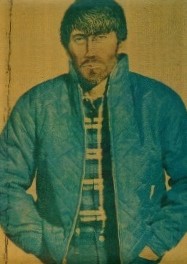
The name "Alphabet Murderer," also commonly called the "Double Initial Killer," refers to the unidentified person or persons suspected of murdering three young girls in the Rochester, New York, area between November 1971 and November 1973. The victims were Carmen Colón, Wanda Walkowicz and Michelle Maenza. Each girl was only ten or eleven years old, each had a first and last name beginning with the same letter, and each was abducted from Rochester before being sexually assaulted and strangled.
The case became especially notorious because the locations where the victims' bodies were recovered also appeared to continue the alliterative pattern: Carmen Colón was found in the Riga area near Churchville, Wanda Walkowicz was found in Webster, and Michelle Maenza was found in Macedon. This apparent pattern produced the "Alphabet Murders" nickname. However, it is important to distinguish the popular theory from the official status of the investigation. New York State Police have stated that the three homicides have never been officially proven to be connected. No person has ever been convicted of any of the three murders, and the possibility that more than one offender was responsible has never been eliminated.
Confirmed Victims Associated With the Alphabet Murders
- Carmen Colón — Age 10. Killed November 16, 1971; her body was recovered on November 18, 1971. Carmen disappeared from Rochester, New York, while on an errand to a pharmacy. Her body was discovered in a rural gully off Stearns Road in the Town of Riga, near Churchville in Monroe County. She had been sexually assaulted and manually strangled.
- Wanda Lee Walkowicz — Age 11. Killed April 2, 1973; her body was recovered on April 3, 1973. Wanda disappeared while returning home from a neighborhood delicatessen in Rochester. A New York State Trooper found her body the following morning near State Route 104 in Webster, New York. She had been sexually assaulted and strangled with a ligature.
- Michelle Maenza — Age 11. Killed November 26, 1973; her body was recovered on November 28, 1973. Michelle disappeared after leaving school in Rochester and was seen in the company of an unidentified man later that afternoon. Her body was found in a roadside ditch near Eddy Road in Macedon, Wayne County, New York. She had been sexually assaulted, beaten and strangled with a ligature.
The Murder of Carmen Colón
Ten-year-old Carmen Colón disappeared on November 16, 1971, after being sent to a pharmacy in Rochester's Bull's Head neighborhood. Carmen lived with her grandparents and was familiar with the area. She entered the pharmacy to collect a prescription for her family, but the prescription was not yet ready. Witnesses remembered Carmen leaving the store hurriedly. She was subsequently seen entering or approaching a vehicle near the pharmacy.
Not long afterward, motorists traveling on Interstate 490 encountered an alarming scene. A young girl matching Carmen's description was seen along the highway, partially undressed and apparently attempting to escape from a vehicle. She waved toward passing traffic as though seeking help while a vehicle maneuvered near her. Witness accounts later indicated that the child was caught or led back toward the vehicle. Despite the number of motorists who reportedly witnessed some portion of the incident, authorities were not immediately notified in time to save her.
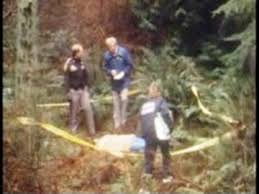
Two days later, on November 18, two teenagers riding bicycles discovered Carmen's body in a gully along a rural road in the Town of Riga, near Churchville. Her coat was located separately in a nearby culvert, while additional clothing was found later near the highway. The autopsy determined that Carmen had been sexually assaulted and manually strangled. She had also suffered injuries including fractures to her skull and a vertebra.
Carmen's murder created outrage throughout the Rochester area. Investigators questioned numerous people, established tip lines and publicized rewards. Large billboards were eventually erected asking the public for information about her killer. Despite an enormous amount of attention, the homicide remained unsolved.
The Murder of Wanda Walkowicz
Nearly seventeen months passed before another Rochester child disappeared under strikingly similar circumstances. On April 2, 1973, eleven-year-old Wanda Lee Walkowicz left her home to purchase groceries for her mother at the Hillside Delicatessen on Conkey Avenue. She reached the store and completed the errand at approximately 5:15 p.m. Witnesses subsequently saw Wanda walking toward home while struggling with a bag of groceries.
Several witnesses remembered a brown or light-colored automobile in the area. One account placed Wanda near the passenger side of a large brown vehicle, apparently speaking with its driver. Another witness later reported seeing a man forcing a red-haired girl into a light-colored automobile. Wanda never arrived home, and an extensive police search began that evening.
At approximately 10:15 the following morning, April 3, a New York State Trooper discovered Wanda's body near an access road and rest area off State Route 104 in Webster, east of Rochester. Her body was fully clothed and had apparently been deposited along the roadway. Investigators determined that she had been sexually assaulted and strangled from behind with a ligature. Injuries indicated that Wanda had resisted her attacker.
Forensic evidence recovered in Wanda's case later became particularly important. Biological evidence was preserved, eventually allowing investigators to conduct DNA comparisons decades after the murder. Investigators also found strands of white cat fur on her clothing even though her family did not own an animal matching that description. The significance of the cat hair increased after similar material was reported in connection with Michelle Maenza's murder.
The Murder of Michelle Maenza
Seven months after Wanda's death, eleven-year-old Michelle Maenza disappeared on November 26, 1973. Michelle had attended school that day and was last seen by classmates at approximately 3:20 p.m. She was reportedly headed toward a nearby shopping plaza where she hoped to retrieve a purse her mother had previously misplaced.
Within minutes, a witness saw a girl believed to be Michelle sitting in the passenger seat of a beige or tan automobile traveling through Rochester. The child appeared to be crying. Later that afternoon, another potentially crucial sighting occurred at a restaurant in Penfield, where a girl matching Michelle's description was reportedly seen with an adult man. The unidentified man was generally described as white, dark-haired, approximately twenty-five to thirty-five years old and around six feet tall.
At approximately 5:30 p.m., a motorist traveling along Route 350 near Walworth encountered a beige or tan vehicle that appeared to have a flat tire. A man was standing nearby with a girl whom the witness later believed was Michelle. When the motorist stopped to offer assistance, the stranger reportedly moved the girl behind him and positioned himself so the vehicle's license plate could not easily be seen. His behavior was sufficiently hostile that the witness left.
On November 28, Michelle's body was discovered face down in a ditch along a rural road near Eddy Road in Macedon, approximately fifteen miles from Rochester. She had suffered extensive blunt-force injuries, had been sexually assaulted and had been strangled from behind with a ligature. Investigators believed the strangulation may have occurred at or very near the location where she was found.
Evidence recovered from Michelle included biological material and a partial palm or wrist impression. White cat hairs were also reported on her clothing. An examination of her stomach contents showed that she had eaten a hamburger and onions not long before she died, lending support to the witness account placing a child resembling Michelle at a restaurant with an unidentified man shortly after the abduction.
The Pattern Behind the "Alphabet" Name
After Michelle's murder, similarities among the three crimes became impossible for the public and press to ignore. Carmen Colón had the initials C.C., Wanda Walkowicz had W.W., and Michelle Maenza had M.M. Their recovery locations appeared to echo those initials as well: Carmen was associated with the Churchville area, Wanda with Webster and Michelle with Macedon.
The victims shared other, more meaningful similarities. All were preteen girls from Rochester. Each disappeared while away from home and traveling alone during an ordinary daily activity. Each was sexually assaulted and strangled. Their bodies were deposited in rural or roadside locations accessible by automobile outside the central Rochester area. Witnesses in more than one case described suspicious brown, beige or light-colored vehicles.
There were also differences. Carmen was manually strangled, while Wanda and Michelle were strangled with ligatures. White cat hair became an important feature of the Walkowicz and Maenza evidence but is not reliably established as having been recovered from Carmen. These differences are among the reasons investigators have remained cautious about declaring that a single murderer unquestionably committed all three crimes.
Suspects and Persons Investigated
Investigators considered hundreds of possible suspects over the decades. One early focus in Carmen's individual case was her uncle, Miguel Colón. Investigators examined his movements, his automobile and his relationship with Carmen. Circumstantial details caused suspicion, but police never obtained physical evidence sufficient to charge him with her murder. He was never convicted in connection with Carmen's death, and suspicion surrounding him does not establish that he was responsible for the other two Alphabet murders.
Dennis Termini, a Rochester firefighter and serial sexual offender sometimes called the "Garage Rapist," also became a significant suspect. Termini had committed numerous sexual assaults in the Rochester area during approximately the same period, drove a vehicle broadly resembling descriptions given by witnesses, and lived near an area important to the Maenza investigation. He died by suicide in 1974 after a police pursuit following another attempted abduction. His remains were later exhumed so his DNA could be compared with preserved evidence from Wanda Walkowicz. The DNA did not match the biological evidence in Wanda's case, eliminating him as the source of that sample.
Kenneth Bianchi later attracted intense attention. Bianchi was a Rochester native who subsequently became one of the two men responsible for the Hillside Strangler murders in California. He lived in Rochester during the Alphabet Murder period and reportedly worked as an ice cream vendor in areas connected with some of the cases. Investigators examined him after his later murders became known. Bianchi denied involvement in the Rochester killings and was never charged with any of them.
Decades later, another convicted serial killer, Joseph Naso, appeared to present an extraordinary coincidence. Naso had ties to Rochester and was eventually convicted of murdering women in California whose first and last names shared the same initial. One of his California victims was even named Carmen Colon. Authorities investigated whether Naso could have committed the Rochester murders. DNA testing, however, established that Naso did not match the biological evidence recovered in Wanda Walkowicz's case. He has never been charged with the Rochester murders.
Forensic Evidence and the Continuing Investigation
The survival of biological evidence from Wanda's murder has allowed investigators to test suspects who could never have been scientifically evaluated in the 1970s. DNA technology did not exist when the girls were killed, and investigators at the time had to rely heavily on witness statements, physical evidence, vehicle descriptions, fingerprints, blood-group testing and traditional detective work.
The Walkowicz evidence has since been used to exclude prominent suspects, illustrating why preserved evidence remains crucial in cold cases. Michelle's case also produced physical evidence, including a partial palm or wrist impression and biological material, although no publicly identified offender has been conclusively matched to it. Investigators have repeatedly revisited the cases as forensic technology has improved.
The three investigations remain open. No arrest has established the identity of Carmen Colón's murderer, Wanda Walkowicz's murderer or Michelle Maenza's murderer. Likewise, no evidence presented publicly has proven beyond dispute that all three children were killed by the same individual.
An Unsolved Chapter in Rochester History
The Alphabet Murders left an enduring mark on Rochester. What began with Carmen Colón's disappearance in November 1971 developed into one of the region's most haunting mysteries after Wanda Walkowicz and Michelle Maenza were killed in 1973. Parents became fearful of allowing children to walk alone, investigators followed hundreds of leads, and generations of detectives continued reviewing evidence long after the original crime scenes had disappeared.
The unusual matching initials gave the case its memorable name, but the central facts remain the deaths of three children whose ordinary errands ended in abduction and murder. Carmen was ten years old. Wanda and Michelle were eleven. Each had a family waiting for her to return home, and none did.
More than half a century later, the identity of the Alphabet Murderer remains unknown. The possibility also remains that the crimes attributed to that name were committed by different offenders rather than one serial killer. Until forensic evidence or new information establishes otherwise, the murders of Carmen Colón, Wanda Walkowicz and Michelle Maenza remain three separate open homicides linked by a disturbing collection of similarities and one of the most enduring unanswered questions in Rochester criminal history.