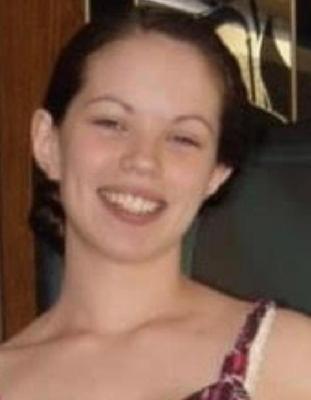
Was this 10 year old girl murdered killed by a serial killer in 1971? Carmen Colón, 10, female, Puerto Rican, set out on the afternoon of November 16, 1971, from her Rochester neighborhood on what was supposed to be a quick errand to a pharmacy on West Main Street. Inside, the prescription she’d been sent to pick up wasn’t ready, and the shopkeeper later recalled how urgently she turned to leave. Outside the storefront, witnesses reported seeing her get into a waiting car—an ordinary moment that, in hindsight, became the last calm point on the timeline.
Not long after, the story turned frantic and public. Motorists along Interstate 490 began calling in a sight that still reads like a nightmare: a child running along the highway shoulder, naked from the waist down, waving and trying to flag someone—anyone—down. Reports described a dark-colored compact car, often characterized as resembling a Ford Pinto hatchback, backing toward her as though trying to herd her back. At least one witness later said the child appeared to be led back to the vehicle, and the chance to intervene vanished with the car’s taillights.
Two days later, on November 18, teenagers riding bicycles discovered her body in a gully in the Town of Riga, near the village of Churchville and close to the interstate corridor where so many drivers had seen her desperate flight. Investigators found the scene scattered with troubling signposts: her coat in a culvert some distance away, and later, on November 30, her trousers near a service road in the same general area tied to the highway sightings. The autopsy concluded she had been sexually assaulted; it also documented severe injuries—including a skull fracture and a fractured vertebra—before death by manual strangulation, and noted extensive fingernail scratches on her body.
The killing ignited outrage across Rochester, sharpened by the fact that so many people had passed the child on the roadway without stopping. Rewards were raised as the weeks dragged on, and by early 1972 the campaign for help became impossible to ignore: large billboards appeared along major routes with her photo and a direct question asking who killed her, paired with a hotline and a growing reward. Police ran down leads and questioned multiple people, but no arrest was made for her murder.
Over time, her death became linked in the public imagination to two later unsolved child murders in the Rochester region that shared eerie “double-initial” coincidences—cases the media dubbed the Alphabet Murders. Authorities have said the cases have not been officially connected, even though all remain open and are often discussed together because of similarities in abduction and sexual assault. Carmen’s case, however, has also been described by investigators and writers as having notable differences from the later murders, including the nature of the injuries and strangulation.
As for suspects and accountability, investigators long focused on people in Carmen’s orbit, including a relative identified publicly as a principal suspect. Reporting has said her uncle, Miguel Colón, drew scrutiny in part because he reportedly bought a vehicle resembling descriptions associated with the highway incident and because the car was later found to have been aggressively cleaned; he was questioned but never charged. Later accounts reported that he left for Puerto Rico shortly after the killing, eventually returned, and remained unindicted; years afterward, in 1991, he died by suicide following a domestic dispute in which he shot and wounded family members. None of this produced a prosecution for Carmen’s murder, and no trial or conviction has resolved what happened on that short errand that ended in Riga.