Charles Edward Terry: Convicted Murderer and Suspected Serial Killer
Overview
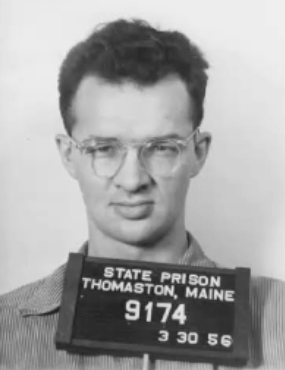
Charles Edward Terry was an American murderer, rapist and violent offender whose movements through Maine, Massachusetts, Louisiana and New York placed him near several unresolved killings of women. He was convicted of only one murder—the 1963 strangulation of Zenovia Clegg in Manhattan—but investigators later examined him as a possible serial killer responsible for additional deaths between 1951 and 1963.
Terry was born on May 26, 1930, in Waterville, Maine. He grew into an unusually tall man, reportedly approximately six feet five inches in height, and developed a lengthy criminal record involving theft, rape and severe assaults against women. His confirmed murder displayed features that investigators believed resembled other sexually motivated strangulations, including several killings associated with the unidentified or disputed perpetrators collectively known as the Boston Strangler.
Because most of the killings linked to Terry were never prosecuted, he should more accurately be described as a convicted murderer and suspected serial killer. His responsibility for the deaths of Shirley Coolen, Patricia Wing, Donna Kimmey or any Boston-area victim was never established in court.
Early Life and Military Service
Terry was raised in the Waterville and Winslow areas of Maine. People who remembered him from his youth later described him as a socially isolated boy who frequently stole and had difficulty following rules. He left Winslow High School before graduating and enlisted in the United States Marine Corps in 1947.
His military service ended in disgrace. While absent without leave, Terry stole a vehicle and was arrested. He was convicted and dishonorably discharged from the Marine Corps in 1949. His later accounts of his incarceration included allegations that he had been sexually assaulted by other prisoners, although those claims did not excuse the escalating violence he subsequently directed at women.
Rape and Violent Assaults
In April 1951, only a few months after his release from custody, Terry attacked two women during the same evening in Kennebec County, Maine. He raped one woman and attempted to sexually assault the other. Terry pleaded guilty to rape, while the attempted-rape allegation was dismissed as part of the proceedings. He received an eight-year prison sentence.
Terry was released in 1958. The following year, he brutally assaulted a Maine woman in her fifties. The attack fractured her jaw in two places and left her with a serious scalp wound. Terry pleaded guilty to assault and battery and was sentenced to an additional term of approximately eighteen months to three years.
During his confinement at the Maine State Prison, evaluators reportedly considered Terry intelligent but profoundly antisocial. He was also associated with sexually sadistic behavior. His pattern of targeting women, using extreme physical force and reacting violently to perceived rejection later became important to investigators reviewing unsolved murders.
Confirmed and Suspected Victims
- Shirley Coolen, 24 – May 26, 1951 – Brunswick, Maine: Coolen was found strangled with a scarf in a flower garden or flower bed in Brunswick. Her death occurred on Terry’s twenty-first birthday, shortly after the two sexual assaults for which he was later imprisoned. Investigators questioned Terry about the killing, but the available evidence was insufficient to charge him. Coolen’s murder remains officially unresolved, and Terry’s involvement was never proven.
- Patricia Wing, 29 – June 3, 1958 – Fairfield, Maine: Wing was killed after entering a vehicle with Augusta businessman Everett Savage Jr., with whom she reportedly had a relationship. Her body was left in a secluded wooded area near Fairfield. Savage was prosecuted in connection with the case but was not convicted of murder; he was instead convicted of assault. Later investigators and writers proposed that Terry may have encountered and killed Wing after his release from prison, but no conclusive physical evidence publicly established that theory.
- Donna Kimmey – December 17, 1962 – Kenner, Louisiana: Kimmey, an airline stewardess, was strangled in the New Orleans-area community of Kenner. Terry later acknowledged that he had been in New Orleans during December 1962. The timing, location and method of killing led investigators to consider him a possible suspect. He was never charged with Kimmey’s murder, and the available information does not establish that he was responsible.
- Zenovia Clegg, 62 – May 30, 1963 – Hotel Woodstock, Manhattan, New York: Clegg was strangled in her hotel room after meeting Terry near Sixth Avenue and West 43rd Street on the night of May 29. The two stopped for drinks before arriving at the Hotel Woodstock. During the early morning of May 30, Terry beat and strangled Clegg. He then sexually violated and deliberately arranged her body before fleeing. Terry confessed after his arrest and was convicted of her murder.
The Murder of Zenovia Clegg
Zenovia Clegg was an older woman who walked with a cane and had undergone treatment for cancer. She wore scarves around her neck, reportedly to conceal surgical scarring. At approximately 10:00 p.m. on May 29, 1963, she encountered Terry near Sixth Avenue and West 43rd Street in Manhattan and asked him to help her find her hotel.
Terry accompanied Clegg as they visited establishments and consumed alcoholic drinks. At approximately 1:30 a.m., they entered her room at the Hotel Woodstock in Midtown Manhattan. According to the prosecution evidence and Terry’s confession, the encounter became violent after Terry experienced sexual difficulty and believed Clegg had mocked or humiliated him.
Terry attacked Clegg, beating her and strangling her with a scarf. He tied the scarf around her neck in a conspicuous knot or bow. He then used a bottle to sexually violate her body and arranged objects around her in a calculated manner. The scene suggested that the killer had taken time to stage the victim rather than leaving immediately after the strangulation.
A hotel employee discovered Clegg’s body several days later. Investigators found evidence indicating that the crime involved both sexual aggression and deliberate staging. New York detective Thomas J. Cavanagh Jr. believed the unusual scene could reveal a repeat offender rather than a man committing his first serious attack.
Arrest and Confession
Detectives traced Terry through information gathered during the investigation and located him in a Greenwich Village bar on June 6, 1963. He was taken into custody and questioned about Clegg’s death. During the interrogation, Terry confessed and provided details concerning the hotel room and the positioning of the victim that investigators believed could have been known only by the killer.
Terry portrayed the murder as an explosion of anger following perceived humiliation. His explanation was consistent with his earlier history of sexual violence and his tendency to respond to frustration with extreme physical aggression. The confession provided prosecutors with direct evidence connecting him to the killing, unlike the circumstantial suspicions surrounding the other cases.
Conviction and Sentence
Terry was prosecuted in New York for first-degree murder. He was convicted and initially sentenced to death in the electric chair. Questions involving his mental condition and the legal treatment of his confession continued through later court proceedings.
His death sentence was eventually reduced to life imprisonment. Terry was confined within the New York prison system and ultimately held at Attica Correctional Facility. He continued to deny or avoid responsibility for the other deaths investigators attempted to connect to him.
Possible Connection to the Boston Strangler Murders
Detective Cavanagh was struck by similarities between Clegg’s murder and the series of female strangulations then terrorizing the Boston area. Several Boston victims had been strangled with articles of their own clothing, and some crime scenes contained carefully positioned bodies or objects. Those similarities caused Cavanagh to question whether Terry had committed murders beyond New York.
Terry admitted that he had traveled to Boston on weekends. Investigators later determined that some of his visits appeared to coincide with several Boston Strangler killings. Retired detectives also reported finding evidence that Terry had stayed in rooming houses situated near locations connected to some of the victims.
Boston investigators attempted to question Terry, but he refused to discuss the Massachusetts murders with them. Authorities never developed sufficient evidence to charge him with any Boston Strangler killing. Albert DeSalvo later confessed to the Boston murders, although serious doubts persisted over whether one offender committed the entire series. Modern evidence has strongly connected DeSalvo to at least the 1964 murder of Mary Sullivan, but it does not resolve every death historically attributed to the Boston Strangler.
The theory involving Terry therefore remains speculative. His presence in Boston, his history of strangulation and sexual violence, and the similarities between Clegg’s murder and certain Boston scenes made him a plausible subject of investigation. Those circumstances, however, are not the same as proof that he killed any of the Boston victims.
Investigative Difficulties
The effort to examine Terry as a multistate killer was hindered by the limitations of criminal investigation during the 1950s and 1960s. Police departments in different states did not share information as quickly or systematically as modern agencies. DNA profiling did not exist, computerized criminal databases were unavailable, and biological evidence was not always preserved in a manner that allowed later testing.
Terry also moved frequently and worked in temporary occupations, including jobs as a truck driver, painter and laborer. He spent time in Maine, New York, Boston and New Orleans, giving him access to several regions in which women were strangled. Reconstructing his exact whereabouts decades later proved difficult.
Many claims regarding Terry’s additional victims depend upon geographic proximity, similarities in the method of killing and the recollections of investigators. Without surviving forensic evidence, reliable witnesses or a complete confession, the suspected cases could not be transformed into prosecutable murder charges.
Death in Prison
Charles Edward Terry remained incarcerated for the murder of Zenovia Clegg for the remainder of his life. He developed lung cancer while in prison and died from a pulmonary embolism at Attica Correctional Facility on April 15, 1981. He was fifty years old.
Terry died without being prosecuted for any murder other than Clegg’s. His death ended the possibility of further interrogation and left investigators unable to determine whether his private admissions, travel history and violent behavior represented the activities of a serial killer or merely a collection of disturbing coincidences surrounding a convicted murderer.
Legacy
Charles Edward Terry occupies an uncertain place in American criminal history. The murder of Zenovia Clegg is confirmed by his confession, conviction and court record. His earlier rape and assaults demonstrate a well-established pattern of violence against women. The additional murders attributed to him, however, remain allegations rather than proven crimes.
The cases of Shirley Coolen, Patricia Wing and Donna Kimmey illustrate the danger of treating investigative theories as established fact. Each woman had her own life and circumstances, and each case contained evidence that required independent examination. Terry’s history made him a credible suspect, but suspicion alone did not determine who killed them.
Investigators who studied Terry believed Clegg’s highly staged murder was unlikely to have been his first lethal attack. They continued examining his movements long after his conviction and even after his death. Despite those efforts, no additional homicide was conclusively attributed to him. He is therefore remembered as a convicted murderer whose background and travels raised the possibility that he had been a serial killer operating across several states.