Byran Uyesugi and the 1999 Xerox Murders
Background
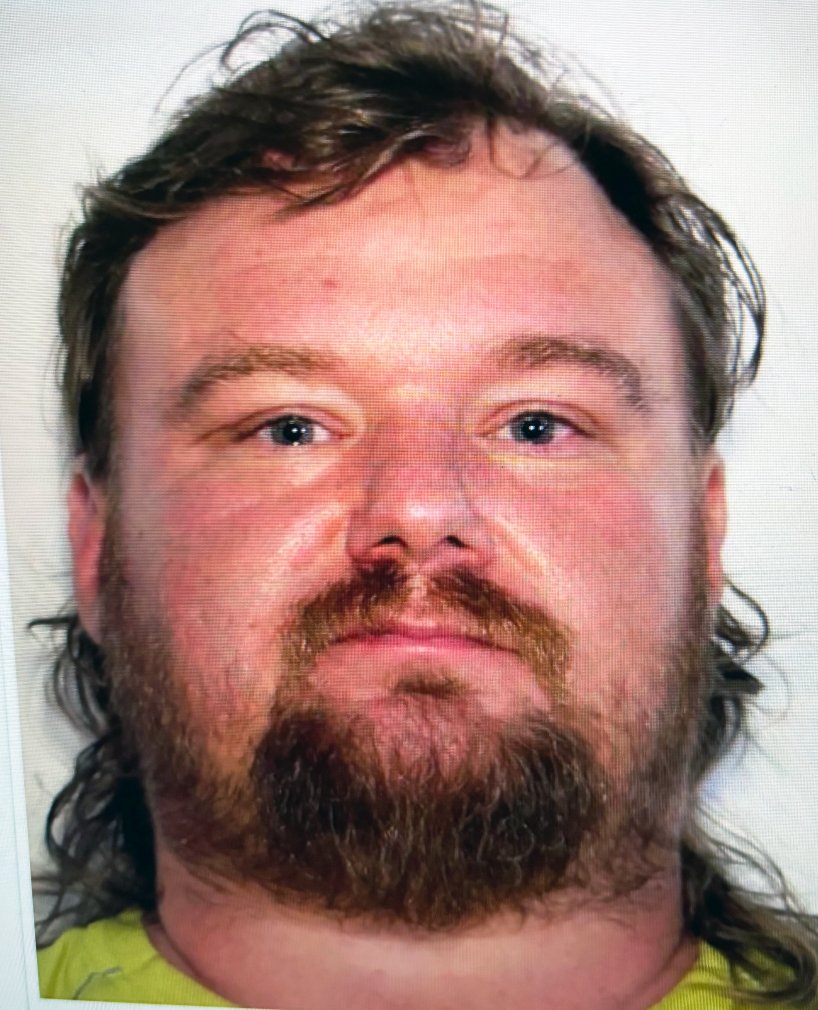
Byran Koji Uyesugi was a longtime Xerox service technician who carried out one of the deadliest workplace shootings in United States history. On November 2, 1999, Uyesugi entered a Xerox Corporation facility at 1200 North Nimitz Highway in Honolulu, Hawaii, and fatally shot seven men who worked with him. Six of the victims were fellow technicians, while one was his supervisor. Another employee escaped after Uyesugi fired in his direction.
Uyesugi was 40 years old at the time of the murders. Born in Honolulu in 1959, he grew up in the Nuuanu area and attended President Theodore Roosevelt High School, where he participated in Army Junior Reserve Officers' Training Corps activities and the school rifle team. He later studied electronics and began working for Xerox in 1984.
For years, Uyesugi had reportedly experienced serious conflicts with his co-workers. He accused other technicians of harassing him, spreading rumors, sabotaging equipment and interfering with his personal property. Several of these accusations were described during his trial as unsupported or delusional. Co-workers also reported that he had previously spoken about committing workplace violence if he were fired.
Escalating Problems at Xerox
Uyesugi primarily repaired an older type of Xerox copying machine. By 1999, the company was replacing that equipment with newer models and expected technicians to complete additional training. Uyesugi resisted learning to service the replacement machines, reportedly believing that he would be unable to understand the new technology and would eventually lose his job.
On November 1, 1999, Uyesugi's manager instructed him to report for training the following morning. Prosecutors later argued that this confrontation became the immediate trigger for the massacre. Uyesugi believed that refusing the training would result in his termination. Instead of reporting for instruction, he arrived armed and prepared to attack members of his work group.
His employment history had already included a serious warning sign. In 1993, Uyesugi damaged an elevator door during an angry workplace incident and was arrested for third-degree criminal property damage. He was directed to undergo a psychiatric evaluation and anger-management treatment. The incident also affected his ability to obtain additional firearm permits, although he had already accumulated a substantial collection of legally registered weapons.
The Xerox Shooting
At approximately 8:00 a.m. on Tuesday, November 2, 1999, employees were gathering for a work-group meeting on the second floor of the Xerox Engineering Systems building at 1200 North Nimitz Highway. Uyesugi entered the building carrying a 9-millimeter Glock 17 semiautomatic pistol.
Witnesses heard a series of loud gunshots and saw Uyesugi crouched with the pistol in his hand. Two employees were attacked in or near the meeting room. Uyesugi then moved through the workplace and shot five additional men. The victims had little or no opportunity to defend themselves or escape.
Uyesugi fired 28 rounds during the attack. Twenty-five of those bullets struck victims. Seven employees were killed. He also fired toward another co-worker who fled from the building and escaped without being wounded. The attempted shooting of the surviving employee later resulted in a separate attempted-murder conviction.
The massacre unfolded within minutes. Emergency calls brought Honolulu police officers, firefighters and medical personnel to the North Nimitz Highway building. Surviving Xerox employees were evacuated, while nearby streets and traffic lanes were closed. The seven victims were pronounced dead at the scene or after emergency personnel reached them.
Victims
- Christopher “Jason” Balatico, 33 — Killed on November 2, 1999, at the Xerox Engineering Systems building, 1200 North Nimitz Highway, Honolulu, Hawaii. Balatico was a Xerox technician and a graduate of Farrington High School. He had worked for Xerox for eight years and was remembered as energetic, humorous and devoted to his wife and two children.
- Ford Kanehira, 41 — Killed on November 2, 1999, at the Xerox Engineering Systems building in Honolulu. Kanehira lived in Kaneohe and worked with newer Xerox equipment. He was survived by his wife and young son and was remembered by friends and relatives as cheerful and good-natured.
- Ronald Kataoka, 50 — Killed on November 2, 1999, at the Xerox workplace on North Nimitz Highway. Kataoka lived in Mililani and had worked for Xerox for many years. He was the father of an 11-year-old daughter and was described as calm, friendly and consistently upbeat.
- Ronald Kawamae, 54 — Killed on November 2, 1999, at the Xerox Engineering Systems office in Honolulu. Kawamae had worked for Xerox for approximately 30 years. He lived in Makiki, had a son and grandson, and enjoyed socializing, karaoke and golf.
- Melvin Lee, 58 — Killed on November 2, 1999, at the Xerox building at 1200 North Nimitz Highway. Lee, a resident of Waipahu, was a field manager in customer service and had been employed by Xerox for nearly three decades. He was considering retirement and was remembered as soft-spoken, compassionate and nonconfrontational.
- Peter Mark, 46 — Killed on November 2, 1999, at the Xerox Engineering Systems facility in Honolulu. Mark had worked for Xerox for approximately 19 years. He was married and had two sons. He loved the ocean and had been an enthusiastic surfer before devoting more of his time to his family.
- John Sakamoto, 36 — Killed on November 2, 1999, at the Xerox workplace on North Nimitz Highway. Sakamoto had worked for Xerox for approximately 10 years. He was married and had a young son and daughter. He was an avid fisherman who had helped build a boat and occasionally supplemented his income through fishing.
Escape and Police Standoff
After the murders, Uyesugi left the Xerox building and fled in a company van. Police launched an extensive search throughout Honolulu. By midmorning, officers located him sitting inside the van near the Hawaii Nature Center in Makiki, in the hills above downtown Honolulu.
Uyesugi remained armed, and police surrounded the vehicle. The confrontation developed into a standoff lasting approximately five hours. During that period, Uyesugi remained inside the van, displayed his handgun, smoked cigarettes and read magazines while police negotiators attempted to persuade him to surrender.
The situation was especially dangerous because approximately 35 schoolchildren were attending an activity at the nearby Hawaii Nature Center. The children and staff members were forced to remain inside while armed officers secured the area. Roads were closed, residents were warned to remain indoors and tactical officers maintained positions around Uyesugi's vehicle.
At approximately 3:00 p.m. on November 2, 1999, Uyesugi surrendered without further violence. Officers took him into custody and recovered the handgun believed to have been used in the massacre. Searches connected to the investigation revealed that he owned a large collection of firearms, including pistols, revolvers, rifles and shotguns.
Criminal Charges
On November 9, 1999, a grand jury indicted Uyesugi for the seven killings and the attempted killing of the employee who escaped. He was charged with one count of first-degree murder, seven counts of second-degree murder and one count of attempted second-degree murder. Under Hawaii law, intentionally killing more than one person during the same incident supported the first-degree murder charge.
The seven individual second-degree murder counts were ultimately merged into the first-degree murder count. Uyesugi did not deny that he had fired the shots. The central question at trial was whether he was legally responsible for his conduct or whether mental illness prevented him from understanding or controlling his actions.
Insanity Defense and Trial
Uyesugi's trial began on May 15, 2000. He pleaded not guilty by reason of mental disease, disorder or defect. His attorneys argued that he suffered from severe psychological problems and genuinely believed that his co-workers were conspiring against him. Testimony described his claims that colleagues sabotaged equipment, spread rumors and even interfered with the fish he raised as a hobby.
Psychiatric experts disagreed over whether Uyesugi met Hawaii's legal standard for insanity. Some defense experts concluded that his delusions and mental illness prevented him from appreciating the wrongfulness of the murders or conforming his conduct to the law. Prosecution experts acknowledged evidence of schizophrenia but maintained that Uyesugi remained capable of planning his actions and understanding that killing his co-workers was wrong.
Prosecutors emphasized the preparation surrounding the attack, his decision to bring a loaded firearm to work, his selection of the victims and his flight from the building. They argued that these actions demonstrated planning, awareness and an attempt to avoid capture. His calm behavior during the later standoff was also presented as evidence that he retained control over his decisions.
Relatives of the victims testified about the men who had been killed, describing their marriages, children, careers, personalities and interests. The testimony emphasized that the victims were longtime employees, fathers, husbands, veterans, fishermen, golfers and active members of their communities whose lives had been abruptly taken during an ordinary workday.
Conviction and Sentence
On June 13, 2000, the jury rejected Uyesugi's insanity defense. He was found guilty of first-degree murder for intentionally killing seven people and guilty of attempted second-degree murder for firing at the employee who escaped.
On August 8, 2000, Circuit Judge Marie Milks sentenced Uyesugi to life in prison without the possibility of parole for the seven murders. He received an additional life sentence with the possibility of parole for attempted murder. The sentences were ordered to run consecutively rather than at the same time.
The Hawaii Paroling Authority later established a minimum term totaling 235 years before Uyesugi could become eligible for release on the attempted-murder sentence. The term was one of the longest ever imposed on a prisoner in Hawaii and ensured that he would remain incarcerated for the rest of his life.
Appeals and Civil Litigation
Uyesugi appealed his convictions, arguing that errors had occurred during jury instructions, testimony about the victims and the presentation of evidence concerning his firearm collection. On December 26, 2002, the Supreme Court of Hawaii upheld the convictions and rejected his principal claims.
Families of the seven murdered employees later pursued civil litigation against Xerox and the medical facility that had previously evaluated Uyesugi. The families contended that warning signs of his instability and threats had not been handled adequately. In 2005, the lawsuit ended in a confidential settlement.
Aftermath and Legacy
The Xerox murders were widely described as the deadliest workplace shooting in Hawaii's history. The attack devastated the victims' families and shocked a state that had rarely experienced mass violence of this scale. Xerox eventually left the North Nimitz Highway facility where the killings occurred.
The case also produced renewed scrutiny of workplace threats, psychiatric evaluations and firearm-permit procedures. Uyesugi had displayed years of anger, paranoia and hostility before the murders, including reported threats against co-workers. The massacre became an example of the catastrophic consequences that can follow when violent statements, deteriorating behavior and workplace conflicts are not effectively addressed.
Although the trial focused heavily on Uyesugi's mental condition, the jury determined that his illness did not legally excuse his actions. The evidence showed that he armed himself, targeted members of his work group, fled the crime scene and remained capable of surrendering when surrounded by police. His convictions permanently established his responsibility for the deaths of Christopher “Jason” Balatico, Ford Kanehira, Ronald Kataoka, Ronald Kawamae, Melvin Lee, Peter Mark and John Sakamoto.