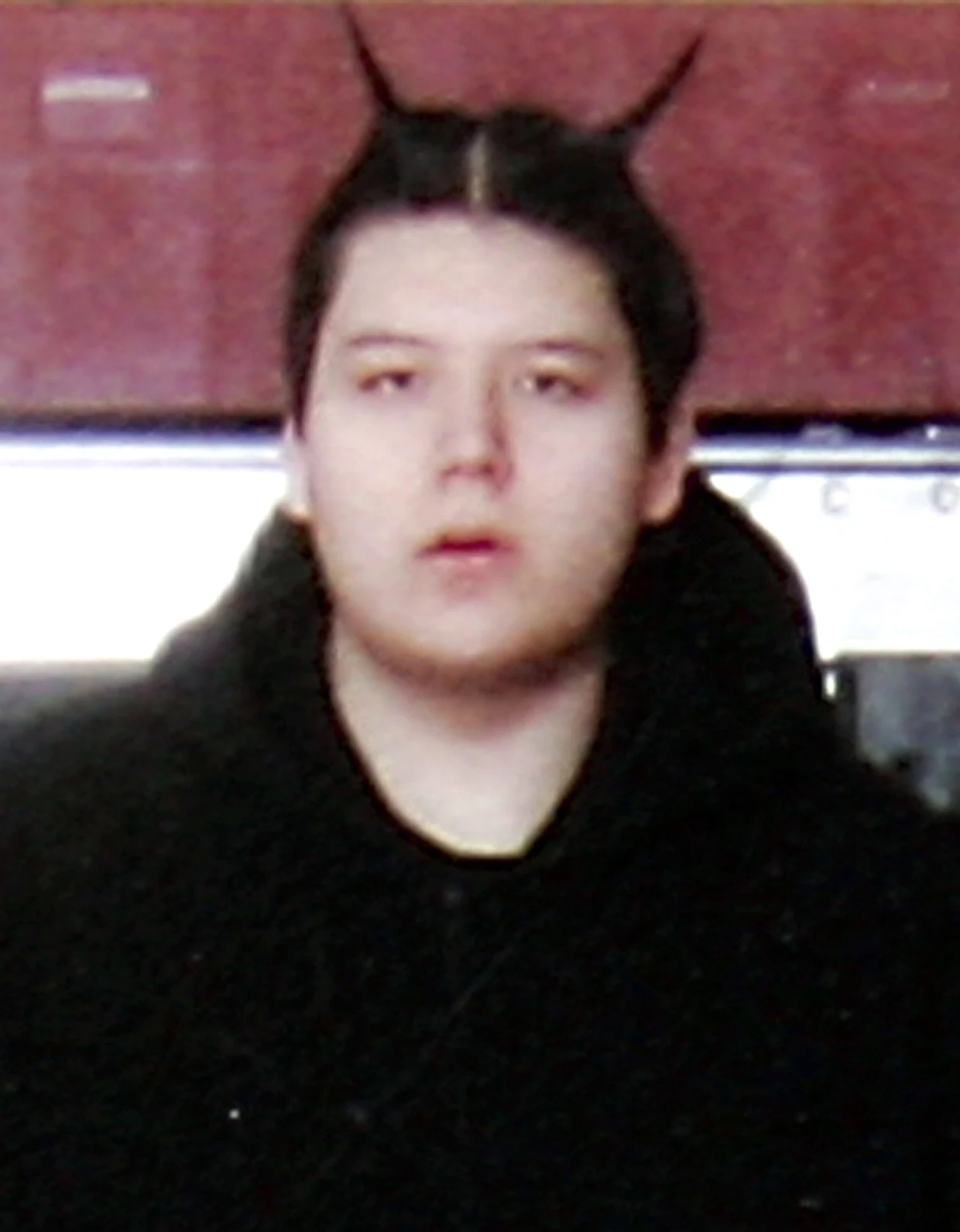
Nikolas Cruz and the 2018 Parkland School Massacre
Background
Nikolas Jacob Cruz was 19 years old when he carried out a mass shooting at Marjory Stoneman Douglas High School in Parkland, Florida, on February 14, 2018. Cruz had previously attended the school but was no longer enrolled when he returned to the campus armed with a semiautomatic rifle. In less than seven minutes, he murdered 17 students and employees and wounded 17 other people.
Cruz had experienced behavioral and disciplinary problems for years. School records, law-enforcement contacts and later court testimony documented disturbing statements, violent fixations, threats and repeated mental-health concerns. He had been transferred between schools and ultimately expelled from Marjory Stoneman Douglas High School. People who knew him described troubling behavior involving weapons and cruelty toward animals, although accounts of individual incidents varied.
Authorities had received warnings before the massacre. In September 2017, a comment posted under Cruz's name on YouTube stated that he intended to become a professional school shooter. The comment was reported to the FBI, but investigators were unable to identify the person who posted it. On January 5, 2018, less than six weeks before the attack, another caller contacted the FBI and warned that Cruz possessed firearms, was behaving erratically and might conduct a school shooting. The information was not forwarded to the FBI's Miami field office for further investigation.
The Attack on February 14, 2018
On the afternoon of Wednesday, February 14, 2018, Cruz traveled by ride-share vehicle to Marjory Stoneman Douglas High School at 5901 Pine Island Road in Parkland. He carried a rifle and loaded magazines concealed inside a rifle bag. He arrived shortly before classes were scheduled to end and entered Building 12, a three-story classroom building commonly called the freshman building.
At approximately 2:21 p.m., Cruz entered a stairwell, removed a Smith & Wesson M&P15 Sport II rifle from the bag and began moving through the building. He opened fire through classroom doors and into hallways on the first floor. Students and teachers attempted to shelter inside classrooms, hide behind furniture or flee from the sound of gunfire.
Cruz then climbed to the second and third floors. On the third floor, he fired at students and employees trapped in the hallway as they attempted to evacuate. A fire alarm had activated during the attack, adding to the confusion because students initially believed they were participating in another emergency procedure.
The shooting ended at approximately 2:27 p.m. Cruz abandoned his rifle, vest and ammunition inside the building. He left the campus by blending into groups of fleeing students. The entire attack lasted only a few minutes, but it left 17 people dead and 17 others wounded.
The Victims
Fourteen students and three members of the school staff were murdered on February 14, 2018. All were attacked at Marjory Stoneman Douglas High School in Parkland, Florida. Some died inside Building 12, while others died outside the building, during transportation or after reaching a hospital.
- Alyssa Alhadeff, 14 — A freshman and competitive soccer player who was killed inside Marjory Stoneman Douglas High School in Parkland on February 14, 2018.
- Scott Beigel, 35 — A geography teacher and cross-country coach who was killed after helping students enter the safety of his classroom on February 14, 2018.
- Martin Duque Anguiano, 14 — A freshman who was killed inside the school on February 14, 2018.
- Nicholas Dworet, 17 — A senior and accomplished competitive swimmer who had committed to attend the University of Indianapolis. He was killed on February 14, 2018.
- Aaron Feis, 37 — An assistant football coach and school security monitor who responded to the shooting and attempted to protect students. He died from his wounds on February 14, 2018.
- Jaime Guttenberg, 14 — A freshman and dancer who was killed while attempting to escape from Building 12 on February 14, 2018.
- Christopher Hixon, 49 — The school's athletic director, wrestling coach and military veteran. He was killed after moving toward the danger in an effort to help students on February 14, 2018.
- Luke Hoyer, 15 — A freshman who was killed inside the school on February 14, 2018.
- Cara Loughran, 14 — A freshman who was killed during the attack on February 14, 2018.
- Gina Montalto, 14 — A freshman, artist and member of the school's marching band who died after being shot on February 14, 2018.
- Joaquin Oliver, 17 — A senior known to friends as “Guac” who was killed on the third floor of Building 12 on February 14, 2018.
- Alaina Petty, 14 — A freshman, Junior ROTC member and community volunteer who was killed on February 14, 2018.
- Meadow Pollack, 18 — A senior who had planned to attend Lynn University. She was killed on the third floor while attempting to protect another student on February 14, 2018.
- Helena Ramsay, 17 — A senior who was killed inside the school on February 14, 2018.
- Alex Schachter, 14 — A freshman and member of the school marching band who was killed while seated inside a classroom on February 14, 2018.
- Carmen Schentrup, 16 — A senior, National Merit Scholarship semifinalist and accomplished student who was killed on February 14, 2018.
- Peter Wang, 15 — A freshman and Junior ROTC cadet who was killed while helping other students escape on February 14, 2018.
Escape and Arrest
After leaving the school, Cruz walked to a nearby Walmart and entered a Subway restaurant. He later went to a McDonald's before continuing through the surrounding neighborhood. Police officers searching the area received descriptions of the suspected shooter and reviewed information from witnesses and school security recordings.
At approximately 3:40 p.m., Coral Springs Police Officer Michael Leonard saw Cruz walking along Wyndham Lakes Drive in Coral Springs. The officer ordered him to the ground and arrested him without gunfire. Cruz was taken to a hospital for medical evaluation and then transferred to the Broward County Jail.
During questioning, Cruz admitted carrying out the shooting. Investigators recovered the rifle and other equipment he had discarded inside Building 12. Records, digital evidence and witness accounts established that he had planned the attack and had acquired the rifle legally in Florida in February 2017, when he was 18 years old.
Criminal Charges and Guilty Pleas
On March 7, 2018, a Broward County grand jury indicted Cruz on 17 counts of premeditated first-degree murder and 17 counts of attempted first-degree murder. Prosecutors announced that they would seek the death penalty. His defense attorneys repeatedly indicated that Cruz was willing to plead guilty in exchange for a sentence of life imprisonment without parole, but prosecutors continued pursuing a death sentence.
On October 20, 2021, Cruz pleaded guilty to all 34 charges. In court, he admitted responsibility for murdering 17 people and attempting to murder 17 others. Because the guilty pleas resolved the question of whether he committed the crimes, the remaining trial focused on whether he should be executed or sentenced to life in prison.
The Penalty Trial
The penalty trial began on July 18, 2022, in Broward County Circuit Court. Prosecutors presented evidence about Cruz's planning, his internet activity, his statements and the sequence of the attack. Jurors were taken to the preserved crime scene inside Building 12, where classrooms and hallways had remained largely unchanged since the day of the massacre.
Family members described the lives of the victims and the permanent damage caused by their deaths. The prosecution argued that the murders were calculated, cruel and committed in a manner that created an enormous risk of death to many people.
The defense presented testimony about Cruz's childhood, developmental problems, mental health and evidence that his birth mother had abused alcohol and drugs while pregnant with him. Defense attorneys argued that fetal alcohol exposure and neurological impairments substantially affected his behavior and judgment. Prosecutors maintained that these circumstances did not excuse the extensive planning and deliberate actions involved in the massacre.
On October 13, 2022, the jury found that aggravating circumstances had been proven for each murder. However, the jurors did not unanimously recommend death. Under the Florida law that applied to the case at the time, a unanimous recommendation was required before the judge could impose a death sentence. The lack of unanimity resulted in sentences of life imprisonment without the possibility of parole.
Sentencing
On November 2, 2022, Circuit Judge Elizabeth Scherer formally sentenced Cruz to 34 consecutive life terms without the possibility of parole. He received one life sentence for each of the 17 murders and one for each of the 17 attempted murders.
Before the sentences were imposed, relatives of those murdered and wounded addressed Cruz in court. They described lost children, siblings, parents, friends, futures and family milestones. Many criticized the jury's inability to reach unanimous death recommendations, while others emphasized that Cruz would spend the remainder of his life in prison.
Failures Examined After the Massacre
The shooting prompted extensive investigations into the actions of school officials, mental-health professionals, the FBI and the Broward County Sheriff's Office. Investigators examined why earlier reports concerning Cruz did not result in a coordinated intervention and why multiple agencies possessed pieces of information that were never assembled into a complete assessment of the danger he posed.
The response of armed school resource deputy Scot Peterson also became a focus of public scrutiny. Peterson arrived outside Building 12 but did not enter while the shooting continued. He was later charged with child neglect, culpable negligence and perjury. In June 2023, a jury acquitted him of all charges.
A state commission concluded that failures in communication, training, emergency procedures and law-enforcement response contributed to the scale of the disaster. The commission recommended stronger campus security, improved threat-assessment practices, expanded emergency training and clearer expectations for officers responding to active shooters.
Aftermath and Legacy
The Parkland massacre produced a nationwide movement led in large part by surviving students. Students organized demonstrations, spoke publicly about gun violence and helped create March for Our Lives. Large protests were held throughout the United States on March 24, 2018.
Florida lawmakers passed the Marjory Stoneman Douglas High School Public Safety Act in March 2018. Among other provisions, the law raised the minimum age for purchasing rifles in Florida from 18 to 21, imposed a waiting period and established procedures allowing courts to temporarily restrict firearm access for people found to present a serious danger.
Building 12 remained sealed for years because it was evidence in Cruz's criminal case and related proceedings. After jurors and other authorized parties completed their examinations of the scene, demolition of the building began in June 2024.
Nikolas Cruz remains incarcerated under 34 consecutive life sentences without parole. The murders committed on February 14, 2018, devastated the Parkland community and permanently altered the families of the 17 people killed and the many survivors who witnessed or endured the attack. The victims are remembered through memorials, charitable foundations, scholarship programs, school-safety initiatives and continuing efforts to prevent future acts of mass violence.