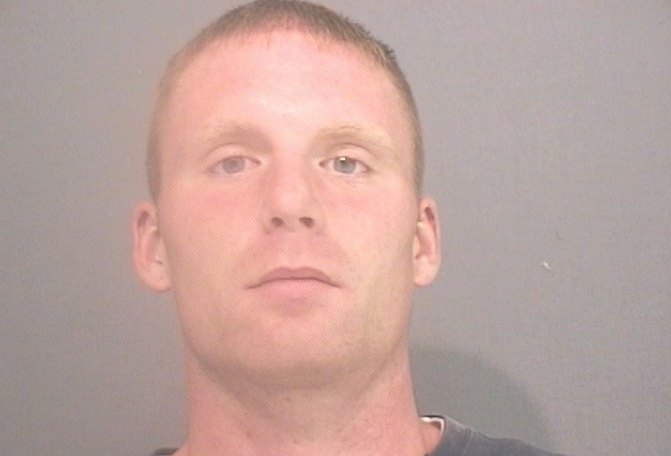
Lee Leeds and the 2008 Black Road Auto Mass Murder
Overview
On March 18, 2008, Lee Isaac Bedwell Leeds carried out a mass shooting at Black Road Auto, an automobile salvage yard operated by his family in Santa Maria, California. Leeds, who was 31 years old at the time, shot and killed four men inside the property, including his father, Robert Leeds. The other victims were Golden “Dave” Duboise, Ricardo Cardenas Leal, and Terry Edward Majan.
The killings occurred at approximately 4:00 p.m. at the salvage yard on Black Road in northern Santa Maria. All four victims suffered fatal gunshot wounds and died at the business. Leeds was taken into custody shortly after the attack. He admitted responsibility for the shootings, but his severe mental illness became the central issue during the prolonged criminal proceedings that followed.
The Black Road Auto Salvage Yard
Black Road Auto was an automobile dismantling and salvage business located at approximately 1625 Black Road in Santa Maria, within Santa Barbara County. The property contained vehicles, automobile parts, work areas, and other structures associated with a commercial salvage operation. Leeds was familiar with the location because the business belonged to his family and was operated by his father.
On the afternoon of March 18, Leeds arrived at the salvage yard armed with a firearm. Once on the property, he moved through the business and shot the four men. Investigators and prosecutors later characterized the killings as a deliberate series of shootings rather than a single uncontrolled discharge of a weapon. The victims were found in different areas of the property, indicating that the violence unfolded across the salvage yard over a short period.
The Murders
Robert Leeds, the gunman’s father and the owner of Black Road Auto, was among those killed. Reports concerning his full name have varied, with some records identifying him as Robert Lewis Leeds and others referring to him as Richard Leeds. Court and sentencing coverage commonly identified him as Robert Leeds. He was 66 years old.
Golden Eli David “Dave” Duboise, whose surname was also reported as Dubois, was killed at the same location. Duboise was approximately 45 years old and was described in reports as a customer, associate, or person connected with the salvage yard.
Ricardo Cardenas Leal, commonly identified in court coverage as Ricardo Leal, was 33 years old. Terry Edward Majan was also killed during the attack. Majan’s age was reported as either 37 or 38 in different records.
Authorities determined that the four men were intentionally shot by Leeds. No evidence established that the three victims other than Leeds’s father posed an immediate physical threat to him. Although Leeds later claimed that he believed the men were involved in a plan to kill him, prosecutors maintained that his actions showed planning, awareness, and an understanding of what he was doing.
Confirmed Victims
- Robert Lewis “Bob” Leeds, 66 — Lee Leeds’s father and the owner of Black Road Auto. He was shot and killed on March 18, 2008, at the salvage yard on Black Road in Santa Maria, California. Some reports identified him as Richard Leeds.
- Golden Eli David “Dave” Duboise, 45 — Also identified in some reports as Dave Dubois. He was shot and killed on March 18, 2008, at Black Road Auto in Santa Maria, California.
- Ricardo Cardenas Leal, 33 — Commonly identified as Ricardo Leal. He was shot and killed on March 18, 2008, at Black Road Auto in Santa Maria, California.
- Terry Edward Majan, approximately 37 or 38 — He was shot and killed on March 18, 2008, at Black Road Auto in Santa Maria, California. Published accounts differ slightly regarding his age.
Arrest and Initial Investigation
Law-enforcement officers responded to the salvage yard after receiving reports of gunfire and multiple victims. Leeds was arrested shortly after the killings. Investigators recovered the firearm associated with the attack and began interviewing witnesses, examining the crime scene, and reconstructing the order in which the victims were shot.
The investigation established that Leeds knew the victims and was familiar with the property. The fact that one victim was his father immediately raised questions about a possible family dispute. As authorities examined Leeds’s history, however, they discovered extensive evidence that he had experienced severe psychiatric problems and paranoid beliefs.
Leeds’s Delusions and Mental Illness
Leeds was diagnosed with paranoid schizophrenia. He claimed that he believed his father and the other men were associated with the Mexican Mafia and were preparing to murder him. According to statements later discussed in court, Leeds believed that he was acting to prevent his own death.
His attorneys argued that these beliefs were not ordinary excuses created after the crime. They contended that Leeds genuinely experienced paranoid delusions and could not correctly understand the reality of the situation. The defense maintained that his schizophrenia prevented him from appreciating that killing the men was legally and morally wrong.
Prosecutors did not dispute that Leeds suffered from a serious mental disorder. Instead, they argued that mental illness by itself did not establish legal insanity. Under California law, the important question was whether Leeds understood the nature of his actions and knew that those actions were wrong when he committed the murders.
Prosecutors pointed to Leeds’s conduct before, during, and after the shooting as evidence that he retained an awareness of his actions. They argued that the manner in which he moved through the salvage yard, targeted the victims, and responded after the killings demonstrated that he understood what he was doing despite his paranoid beliefs.
The Murder of Leeds’s Mother
The Black Road Auto killings occurred against the background of another violent death within Leeds’s family. His mother, Sharon Ostman, had been murdered in San Luis Obispo in 2005. The separate prosecution connected with her death remained active when Leeds killed the four men in Santa Maria.
On March 18, 2008, the same day as the salvage-yard shooting, a judge reportedly ruled that the defendant accused of killing Ostman would stand trial. The emotional effect of his mother’s death and the ongoing criminal case was examined as part of the broader history of Leeds’s deteriorating mental condition. However, the previous murder did not provide a legal justification for the four killings at Black Road Auto.
Found Incompetent to Stand Trial
Following his arrest, Leeds was evaluated to determine whether he was mentally competent to participate in his defense. Competency is different from legal sanity. Competency concerns a defendant’s mental condition during court proceedings and whether the person can understand the charges, communicate with attorneys, and assist in preparing a defense.
Leeds was initially found incompetent to stand trial. He was committed to Patton State Hospital in San Bernardino County, where he received psychiatric treatment. Court records indicated that he participated in treatment programs and mock legal proceedings intended to help him understand courtroom roles and the criminal process.
His hospitalization delayed the murder case for several years. Doctors and forensic mental-health specialists continued evaluating him as his condition changed with treatment. In April 2011, a judge determined that Leeds’s mental condition had improved enough for him to understand the proceedings and assist his attorneys. He was therefore declared competent to face prosecution.
Guilty Pleas and Sanity Trial
Leeds eventually pleaded guilty to four counts of first-degree murder. The guilty pleas established that he had intentionally killed Robert Leeds, Dave Duboise, Ricardo Leal, and Terry Majan. They did not resolve whether he was legally sane when he committed the crimes.
Because Leeds also entered an insanity claim, a jury was required to determine whether he understood the wrongfulness of his conduct on March 18, 2008. The sanity phase lasted approximately six weeks. Jurors heard testimony about schizophrenia, delusions, Leeds’s behavior, his statements, and his belief that the victims intended to kill him.
The defense argued that Leeds’s perception of reality had been overwhelmed by psychosis. In his mind, the defense contended, the shootings were acts of self-preservation against men he believed were preparing to murder him. Prosecutors responded that Leeds’s beliefs, even if delusional, did not prevent him from understanding that shooting four people was wrong.
After approximately three and a half days of deliberations, the jury found that Leeds had been legally sane at the time of the murders. That finding meant he would be sentenced to prison rather than committed indefinitely to a state psychiatric hospital as a person found not guilty by reason of insanity.
Sentencing
On July 19, 2012, Leeds appeared in Santa Barbara County Superior Court in Santa Maria for sentencing. Family members of the four victims addressed the court and described the lasting emotional damage caused by the murders. Their statements explained how the sudden loss of four men had affected spouses, children, relatives, friends, and the surrounding community.
Leeds also spoke during the hearing. He continued to express his belief that his father and the other victims had planned to kill him. His statements demonstrated that the paranoid ideas associated with the crime remained important to his understanding of what had happened.
The court imposed four consecutive life sentences totaling 100 years, along with a term of life imprisonment without the possibility of parole. The sentence effectively ensured that Leeds would spend the remainder of his life in custody.
Appeal and New Sanity Trial Order
Leeds appealed portions of the judgment. On September 28, 2015, California’s Second District Court of Appeal ruled that the jury had received improper instructions concerning how it should evaluate Leeds’s claim that he perceived himself to be acting in self-defense.
The appellate court explained that jurors considering legal sanity had to examine the situation as Leeds perceived it through his schizophrenia. The original jury had been instructed about self-defense but was prevented from fully applying that doctrine to Leeds’s delusional perception of reality when deciding whether he understood that killing his father was wrong.
The court ordered a new sanity trial limited to the murder of Leeds’s father. It did not overturn the sanity findings connected with Dave Duboise, Ricardo Leal, or Terry Majan. The appellate judges concluded that there was no comparable evidence showing that Leeds believed those three men posed an immediate threat when he shot them.
The decision did not declare Leeds innocent, erase his guilty pleas, or dispute that he killed all four victims. It addressed only the legal procedure used to determine his sanity in relation to his father’s death. The convictions and findings concerning the other three murders remained in effect.
Impact of the Black Road Auto Murders
The quadruple homicide deeply affected Santa Maria and the families of the victims. A familiar local business became the scene of four sudden deaths, and the case remained in the courts for years because of the complicated questions surrounding Leeds’s psychiatric condition.
The proceedings illustrated the legal distinction between mental illness, competency, and insanity. Leeds unquestionably suffered from paranoid schizophrenia, but the courts still had to determine whether his condition prevented him from understanding that his actions were wrong. The case demonstrated how a person can be severely mentally ill while still being held criminally responsible under the law.
For the victims’ families, the legal arguments did not change the central fact that four men went to Black Road Auto on March 18, 2008, and never returned home. Robert Leeds, Dave Duboise, Ricardo Leal, and Terry Majan became the victims of one of the deadliest mass shootings in the history of Santa Maria. Their deaths remained the foundation of a case shaped by family violence, delusional fear, psychiatric treatment, and years of courtroom proceedings.