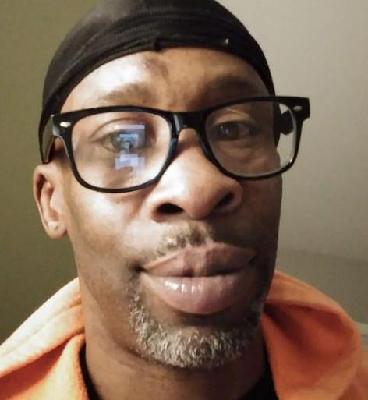
Hanson Dean Smith, a 47-year-old man from Indianapolis, Indiana, died on June 19, 2015, after being shot while sitting in his vehicle near the intersection of 21st Street and Olney on the city’s east side. Police were dispatched on reports of shots fired and, at the Olney Street location, an officer was approached by a woman who had found Smith inside a car and believed he was dead.
The officer saw him bleeding, and although he was still alive when police reached him, he died before officers could get lifesaving equipment to him.
In the account later laid out in court records, Smith was known around the neighborhood as the “Phone Guy,” someone who bought and resold cell phones and often carried substantial cash. On that evening, he had at least $12,499 with him. Tafari Clay and Eron Bonner stopped at a friend’s house and told another man there that they were going to “hit a lick” on the “Phone Guy,” a phrase understood as a plan to rob him. Soon after, they left to meet Smith; Bonner got into Smith’s car while Clay waited outside.
The shooting erupted in a way that produced two scenes only blocks apart. As officers headed to a separate shots-fired call on the 1900 block of Adams Street, they were flagged down by Clay and Bonner. Bonner had been shot in the face and was bleeding, claiming they had been chased and shot at, and investigators later connected the Adams Street and Olney Street scenes with a blood trail that led back toward where Smith was found. Blood evidence from the car placed Bonner on the passenger side and Smith on the driver’s side, matching the story that Bonner had been inside the vehicle while Clay was outside.
An autopsy determined Smith had been shot three times—twice in the abdomen and once in the forearm—injuries that caused massive internal bleeding. The wounds showed no stippling, indicating the shots were fired from more than a couple of feet away, and the appellate court later noted evidence supporting the conclusion that Clay, positioned outside the car, could have been the shooter who delivered the fatal rounds. Investigators also recovered bullets and casings indicating at least two firearms were involved, and firearms analysis connected the weapons to Clay and Bonner, including links to ballistics from another shooting earlier in June 2015 in which Clay had admitted possessing one of the guns and identified the other as Bonner’s.
The prosecution that followed focused on Clay’s role in the robbery plan and killing. Court records show the State filed charges on June 14, 2016, including murder and felony murder, along with a robbery-related count that was later amended ahead of trial. In August 2018, a jury heard the case and found Clay guilty, and at sentencing on September 5, 2018, the trial court vacated the felony-murder count on double-jeopardy grounds but imposed a 63-year sentence for murder along with a 14-year sentence for attempted robbery resulting in bodily injury, ordered to run concurrently—an aggregate sentence of 63 years.
In later proceedings, Clay argued the sentence was too severe, but the Indiana Court of Appeals affirmed it in a memorandum decision dated May 29, 2019, pointing to evidence of planning and deception—what the trial court described as an almost lure-like setup—in which Smith was drawn into a meeting that turned into an attempted robbery and killing. A contemporaneous news report tied the case to a purported cell phone deal that escalated into a fight, framing the encounter as one where Smith met Clay to purchase a phone before the violence erupted.