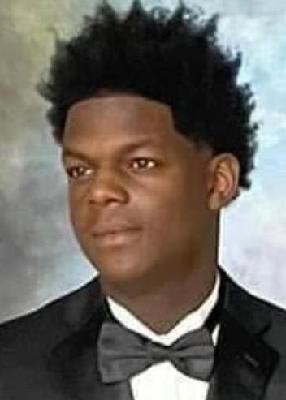
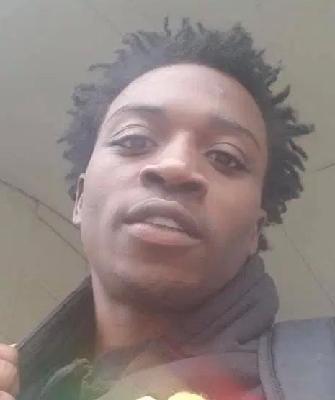
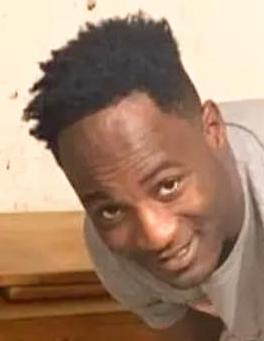
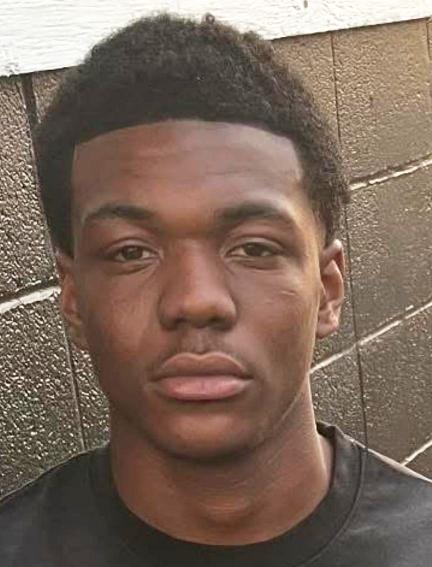
Walter Keon Mobley was a 29-year-old Black/African American man from Leland, Mississippi, a young father whose life was cut short by gunfire on the night of January 19, 2018. That Friday evening, police were called to the West Bend Apartments in Leland, where officers found him shot to death around 10 p.m., in what would be recorded as the city’s first homicide of the year. News and memorial notices later described how deeply his death shook those around him; he was remembered as a beloved father of one, and his family and friends came to believe that he had been killed in a tragic case of mistaken identity rather than as the intended target of the attack.
In the days that followed, the killing at the apartment complex lingered over the small Delta community. Online memorials listed Mobley among the many victims of gun violence in the United States, inviting mourners to light virtual candles and share photographs in his honor, underscoring how suddenly an ordinary night in Leland had turned into permanent absence for his child and loved ones. The Leland Police Department publicly asked residents to support and pray for Mobley’s family as they “seek justice on their journey to stop the violence,” a sign that the case remained very much alive in the public consciousness and that investigators were still working to hold someone accountable.
That search for accountability eventually focused on a local man named Hakeem Wilson. On March 19, 2018, about two months after the shooting, Wilson was arrested in nearby Greenville by the Leland Police Department with assistance from the Washington County Sheriff’s Department. According to an announcement shared by the department, he was taken into custody without incident and charged in the alleged murder of Walter Keon Mobley, stemming from the January 19 shooting at the West Bend Apartments that had left Mobley dead. The statement noted that the investigation was still ongoing and that no bond had been set, indicating the seriousness with which authorities were treating both the case and the suspect they believed responsible.
Court records show that Wilson remained in custody in the Washington County Regional Correctional Facility for years after his arrest, as the case moved slowly through the system. In a federal habeas corpus filing, he challenged his pretrial detention, noting that he had been held since his March 19, 2018 arrest on one count of murder and three counts of attempted murder related to the shooting. By mid-2021, Washington County prosecutors informed the federal court that a state grand jury had returned a three-count indictment against him: one count of first-degree murder with a firearm enhancement, one count of attempted murder with a firearm enhancement, and one count of possession of a firearm by a convicted felon. The indictment listed an offense date of January 19, 2018, matching the night Mobley was killed, and set in motion the formal state proceedings against Wilson in connection with that shooting.
Publicly accessible corrections records indicate that the long pretrial period was eventually followed by serious felony convictions. Mississippi Department of Corrections data shows that in September 2022, Wilson was convicted in Washington County on two counts of manslaughter and one count of conspiracy to commit a crime, receiving three 20-year sentences and entering state prison the following month, with a tentative release date in 2036. The available summaries of those convictions do not spell out in open detail which specific victims or incidents each count corresponds to, but taken together with the years-long detention and the murder and attempted-murder charges arising from the January 2018 shooting, they mark the culmination of a protracted legal effort to address the violence that claimed Mobley’s life. Even as the criminal case ground its way through indictments, motions, and ultimately convictions, the tributes from family, friends, and local law enforcement continued to frame Walter Keon Mobley not as a statistic but as a son, a father, and a man whose death left a void in Leland that no sentence could fully repair.