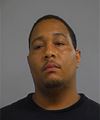
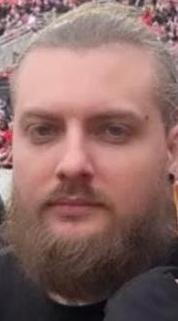
Tyron LeRay Jones, a 28-year-old Black man from Louisville, Kentucky, spent much of his life in the Beecher Terrace housing complex, trying to raise his children in a neighborhood he knew could be dangerous. On Saturday, July 4, 2015, the holiday that was supposed to be filled with fireworks and family instead became the day his life ended. That evening, behind his home in the 400 block of South 12th Street, he was shot and later died at University of Louisville Hospital, where records list his
death on that date at age twenty-eight.
In the hours before the gunfire, Jones had been focused on his family. Relatives later recalled that he was getting ready to celebrate the Fourth of July by lighting firecrackers for his children, a small gesture meant to give them a bit of joy in a place he knew was often violent. He was a father of four, including a 1-year-old daughter he had once spoken about in a 2014 interview, explaining that he did not want her to grow up in the same atmosphere of danger that he had known in Beecher Terrace. His fiancée, Tiandra Bass, and his broader family described him as someone who wanted to provide for his children and protect them, even as he struggled with the reality of the streets around their home.
As evening settled in, a confrontation broke out near the back of his residence. According to his sister, Kyiesha, Jones stepped in to try to stop a fight, placing himself between anger and escalation. She later said that he was shot after turning his back, calling the act cowardly and pleading publicly for the shooter to take responsibility. Neighbors and family members heard the chaos and saw the aftermath as Jones collapsed from a gunshot wound. Rather than wait for an ambulance, someone placed him in a private vehicle and rushed him to the hospital. Around 7:30 p.m., University of Louisville Hospital notified police that he had arrived suffering from a gunshot wound; he was pronounced dead in the emergency room roughly half an hour later, the attempts to save him unable to reverse what had happened on South 12th Street.
His killing was one of several acts of violence in Louisville over that Fourth of July weekend, in which multiple people were shot and three died. City officials, already grappling with a rising homicide count that year, pointed to Jones’s death and the other shootings as part of a grim surge that was pushing murder numbers far above the previous year. In the days immediately following the shooting, police said they were still piecing together what had led to the gunfire in Beecher Terrace. Family accounts painted Jones as a man trying to calm others down when he was killed, though investigators were initially cautious about confirming those details while the case remained open. Even so, a makeshift memorial soon grew in the alley behind his home, as friends, neighbors, and relatives gathered to honor him, leave tributes, and confront the cruel fact that the man who had worried so much about his children’s safety had been unable to escape the violence himself.
Within a few days, detectives identified a suspect. On July 6, 2015, Louisville Metro Police’s Homicide Unit arrested 26-year-old Kenneth Leon Pope. According to an arrest report, Pope told investigators he had shot Jones after a dispute in the 400 block of South 12th Street, the same stretch of pavement behind Jones’s home where his family said the argument had unfolded. Police said Pope disposed of the weapon afterward, leading to a charge of tampering with physical evidence in addition to a murder charge. He was booked into the Jefferson County jail and held on a $500,000 bond. Court appearances followed: reports described him facing a judge, being indicted in connection with the July 4 killing at Beecher Terrace, and remaining in custody as the case moved slowly through the system.
Two years later, the legal chapter reached a measure of closure. In July 2017, Pope entered a plea deal in the 2015 shooting, admitting in court that he had shot Jones on South 12th Street. He was sentenced to 25 years in prison, a punishment that formally acknowledged his role in the killing after years of grief, hearings, and waiting for Jones’s loved ones. News of the sentence did not lessen their loss: the man they called “Speedy,” remembered in obituary notices and online memorials as Tyron LeRay Jones of Louisville, remained gone, leaving behind four children, a fiancée, and a family that had tried to shield him and his children from the very violence that ultimately claimed his life.