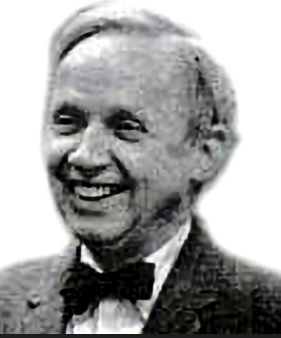
Henry C. Robinette Jr., a 52-year-old white male Wells Fargo armored guard, began the morning of November 18, 1991, on what should have been a routine money pickup in Northwest Washington, D.C. Shortly after 11 a.m., he arrived at the Hamburger Hamlet restaurant at 5225 Wisconsin Avenue NW in the Friendship Heights area to collect the weekend receipts, part of the armored car service the company provided to the busy commercial strip along the D.C.–Maryland line.
Inside the restaurant he met with an employee, received the prepared bags of cash and checks, and then headed back toward the waiting armored truck, where another guard remained in place as required by company procedure.
As he stepped out of the restaurant carrying the deposits, the ordinary rhythm of the pickup shattered. At approximately 11:04 a.m., two men approached him on the sidewalk. Witnesses later described them as Black males, one appearing to be in his late teens and the other in his late twenties. Without warning, they opened fire, shooting him multiple times in the course of an armed robbery. In the chaos that followed, the assailants grabbed the money bags, which contained thousands of dollars in cash and other receipts, along with his service revolver. They also escaped with cash and traveler's checks associated with the restaurant's weekend business before fleeing the scene, leaving him mortally wounded outside the front of the Hamburger Hamlet.
Police and emergency responders converged on Wisconsin Avenue as calls came in about the shooting of an armored car guard in broad daylight. Despite efforts to save him, the injuries proved fatal, and the incident was immediately treated as a homicide. The Metropolitan Police Department's Homicide Branch took the lead, with the location and timing of the attack—late morning in a busy commercial corridor, near the District's border—suggesting that the robbers had carefully chosen a moment when a large amount of money would be in transit but the street might still allow them a quick escape. Investigators interviewed witnesses at the restaurant, the neighboring businesses, and those who had seen the armored truck parked outside, trying to piece together the exact movements of both the victim and the two gunmen in the moments before and after the shooting.
As days turned into years, the case remained stubbornly unresolved. The FBI's Washington Field Office joined forces with the Metropolitan Police Department, issuing a formal “seeking information” notice and producing a poster that circulated publicly and online. The notice described the killing, emphasized that the two attackers were still unknown, and underscored that they had shot him several times before escaping with money and traveler's checks, turning a targeted robbery into a deadly ambush on a working guard in full uniform. To encourage tips, the FBI offered a reward of up to $25,000 for information leading to the arrest and conviction of those responsible, a figure that, in coordination with D.C. authorities, was later increased to $50,000 as investigators renewed public appeals more than three decades after the shooting.
Despite the detailed descriptions of the two suspects and the busy urban setting, no one has ever been arrested for the crime. Detectives have noted that witnesses did see the gunmen and were able to provide basic information about their appearance and approximate ages, but the identities of the men behind the attack have never been confirmed. Over the years, the case has been revisited by cold case investigators who continue to believe that someone with knowledge of the robbery and homicide has yet to come forward. The FBI and Metropolitan Police Department stress that even seemingly small recollections about that morning in November 1991—unusual activity near the restaurant, comments heard afterward, changes in behavior or sudden access to cash—could finally point to the men who carried out the shooting.
For his family, the crime is not just an unsolved case file but a wound that has never fully healed. Public interviews with his son describe a man who worked tirelessly, even holding multiple jobs, to support his loved ones, and who on that particular day was following a routine route that should have ended with him returning safely to the armored truck. The family has spoken of how the loss reshaped their lives and how, decades later, they still long for the day when those responsible are identified and brought to justice. In recent years, renewed media attention to the case has highlighted their hope that someone's conscience will finally compel them to share what they know, turning a long-standing cold case into a solvable crime and giving his relatives the closure they have sought since that morning outside the Hamburger Hamlet.