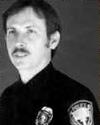
Francis Hays Wilmoth, age 38, was a White male who served as chief of police for the Coalton Police Department in Randolph County, West Virginia. Coalton had been incorporated in 1895 under the name Womelsdorf, which explains why contemporary accounts usually placed the killing at Womelsdorf rather than Coalton. Law-enforcement memorial records list Wilmoth’s end of watch as Tuesday, July 22, 1902, and identify gunfire as the cause of death. There is, however, a significant date discrepancy in the surviving record: a report by West Virginia Governor Albert B. White, published in state public documents in 1903, placed the fatal confrontation at about two or three o’clock on the morning of July 24.
The governor’s account gives the fullest description of how the trouble began.
Several workers had arrived from Washington, D.C., about a week earlier to work on the Coal and Coke Railroad, and Wilmoth was summoned because members of the group were reportedly involved in disorderly conduct. He encountered three individuals together and placed one, identified in this portion of the report as Harry Lancaster, under arrest. The other two fled. Wilmoth then started toward the local lockup with Lancaster walking slightly ahead of him. During that walk, two individuals approached from behind and approximately six shots were fired. Wilmoth was killed, while Lancaster was struck in the arm. The shooters escaped. An inquest conducted afterward did not identify a killer; its finding was that Wilmoth had been killed by unknown parties. Later law-enforcement memorial accounts summarize the attack somewhat differently, describing Wilmoth as being in the process of arresting two suspects when a third suspect fired on him from an ambush position. A newspaper account published within weeks of the killing also described the attack as an ambush occurring while Lancaster was being arrested. Whatever the precise positioning of the suspects, the accounts consistently place Wilmoth’s death in the course of an arrest.
The killing was followed almost immediately by a search through the area. Late that day, Rudolph Clements and William Carroll were found in woods near Womelsdorf and jailed. The governor’s account is explicit that neither had been identified as one of Wilmoth’s assailants. Once confined, the two reportedly quarreled and were said to have accused one another of involvement, but those accusations were never tested in court. During the night, an armed crowd estimated at roughly 300 people overwhelmed the protection around the jail. Clements was removed and hanged while protesting his innocence. The crowd then returned to the jail and shot Carroll to death. Both are recorded in historical lynching records as having been killed at Womelsdorf in connection with the violence of July 1902. Their deaths meant that neither could ever be formally tried, convicted, acquitted, or questioned further under normal court procedures concerning Wilmoth’s killing.
Lancaster, meanwhile, had escaped and became the object of an intensive manhunt. Governor White sent the state attorney general to the area and offered a $200 reward for Lancaster’s arrest, in addition to seeking the arrest of people responsible for the mob killings. The search itself produced further violence; an uninvolved resident named Teters was wounded in the arm while a crowd was hunting for Lancaster, and disorder continued in the vicinity for several days. On August 7, a contemporary West Virginia newspaper dispatch reported that Henry Lancaster had finally been captured near Montrose after a difficult pursuit through the mountains. Bloodhounds had repeatedly been used and withdrawn from the trail, and at one point searchers had apparently given up hope of finding him. According to the report, a group of about 20 people ultimately made the capture. The same dispatch characterized Lancaster as Wilmoth’s killer, said that a substantial reward had been offered for him dead or alive, reported that he had previously served prison terms, and stated that there was concern he might be lynched if taken to Elkins. By August 9, a claim had been submitted for the governor’s $200 arrest reward.
Even Lancaster’s first name is inconsistent in the surviving accounts. The governor’s narrative initially calls the arrested prisoner Harry Lancaster, but the same report later calls the fugitive Henry Lancaster when discussing the reward and his subsequent arrest. Contemporary newspapers also used Henry. More importantly, Lancaster’s capture did not settle the question of who actually fired the fatal shots. By August 13, while jailed at Parsons in connection with Wilmoth’s murder, Lancaster was reported as saying that Clements and Carroll had been wrongly blamed. He instead named James Black as Wilmoth’s murderer and maintained that Wilmoth had been shot from ambush while placing Lancaster under arrest. That claim substantially conflicted with the earlier newspaper report that had flatly identified Lancaster himself as the killer, while fitting more closely with the inquest’s original conclusion that the actual assailant or assailants were unknown.
The legal trail becomes uncertain after Lancaster’s arrest. Governor White’s report states that Lancaster had been arrested and was shortly to face trial, if his trial had not already begun by the time the report was prepared. The surviving online material located for this case does not establish a verdict, conviction, acquittal, or sentence for Lancaster, nor does it document an arrest or prosecution of James Black for Wilmoth’s killing. The result is a case in which several names became attached to the murder but no clearly documented conviction emerges from the available record: Clements and Carroll were arrested without being identified as the shooters and were killed before trial; Lancaster was arrested after an extensive manhunt but subsequently accused James Black; Black was named by Lancaster but no located record shows that accusation leading to an arrest; and the original inquest had formally left Wilmoth’s killers unidentified.