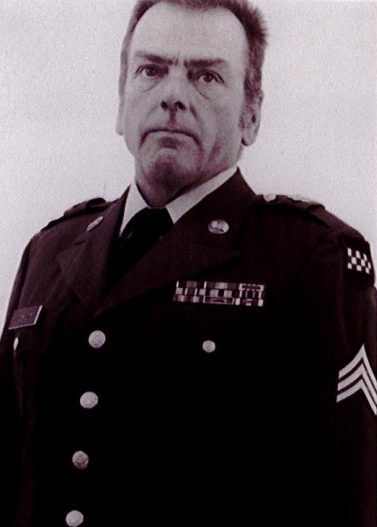
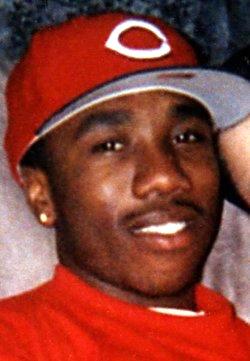
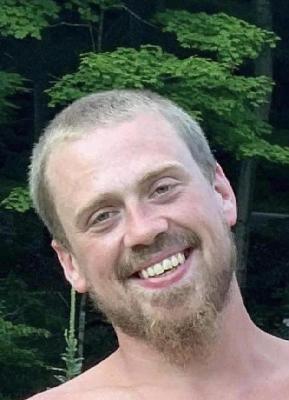
Herbert Totten, whose first name appeared as “Hobert” in some of the contemporary Pocahontas Times reports and as “Herbert” in later coverage, was a 19-year-old White male whose life ended violently on April 6, 1924, at Deer Creek near Cass, West Virginia. The events grew out of a troubled marriage between Totten’s sister, Hallie Totten McCoy, and her husband, Tiny McCoy. Hallie had left the couple’s home at Durbin and returned to her parents, William and Mrs. William L. Totten, at Deer Creek. McCoy had been trying to persuade her to return to him and had reportedly been forbidden from coming to the Totten home. On that Sunday, however, he came down from Hosterman looking for Hallie and found her at the nearby home of Laven Wolfe. Totten and his mother soon joined her there, bringing the family members together at the place where the confrontation would turn deadly.
McCoy tried again to convince Hallie to leave with him, but she refused.
An argument followed until Wolfe managed to calm the dispute. McCoy then appeared to be preparing to leave and asked Hallie to come to the doorway to tell him goodbye. As she came out, McCoy produced an automatic pistol and shot her above the ear, killing her almost immediately. Mrs. Totten came to the doorway after her daughter was shot, and McCoy fired at her as well, striking her in the head. Totten then moved against McCoy and attempted to grapple with him. McCoy fired twice at Totten; one bullet caused a wound to his breast, while another passed through his mouth. The newspaper reported that Hallie, her mother and Totten all died almost instantly.
The violence might have continued. Laven Wolfe and Calvin Neighbors attempted to disarm McCoy after the three shootings, and McCoy tried to fire at them, but the pistol jammed. McCoy then turned the gun on himself and shot himself in the forehead. The bullet traveled upward and fractured his skull, but the wound was not considered immediately fatal. He fled the scene, made his way to the Greenbrier River, swam across it and continued toward Sitlington. There, Charles P. Adams and others stopped and held him until law-enforcement officers arrived. McCoy survived his self-inflicted wound and was treated at Marlinton Hospital. Contemporary follow-up reporting said he was subsequently removed from the hospital and placed in the Marlinton jail, establishing that the identified gunman was taken into custody rather than remaining at large. The surviving historical accounts identify McCoy alone as the assailant and do not describe a second suspect or accomplice.
The case proceeded rapidly toward prosecution. A grand jury was summoned for the June term of court, and McCoy was indicted three separate times for murder in connection with the deaths of his wife, his mother-in-law and his brother-in-law. When his trial began, jury selection itself proved substantial enough that thirty additional prospective jurors had to be summoned. The prosecution ultimately tried him on the indictment accusing him of murdering Hallie. After the evidence was presented and the trial concluded, the jury deliberated only a short time before finding McCoy guilty of murder in the first degree. Crucially, the verdict contained no recommendation for life imprisonment, leaving the death penalty available. Judge Sharp pronounced a sentence of death and fixed September 12, 1924, as the execution date. Before McCoy was transferred from the county jail to the state penitentiary, he gave the newspaper a written confession in which he acknowledged responsibility for murdering his wife, his brother-in-law and his mother-in-law, expressed remorse and said he believed he had received religious forgiveness.
There was no later acquittal, dismissal or reversal that spared McCoy. By September, reports from Moundsville said he had made a full confession and did not expect executive clemency. On September 12, 1924, the sentence was carried out at the West Virginia State Penitentiary in Moundsville. McCoy walked to the gallows, was restrained and masked, and was dropped through the trap at approximately 4:56 that afternoon. Prison physicians monitored him afterward and determined that death had occurred at approximately 5:07. His remains were prepared for burial and sent toward Keister in Greenbrier County, where relatives were to oversee the burial arrangements. The execution closed the criminal case against the only suspect identified in the contemporary accounts: McCoy had been apprehended shortly after the killings, indicted for all three deaths, convicted of first-degree murder in the prosecution arising from his wife’s killing, sentenced to death and ultimately hanged for the crime.