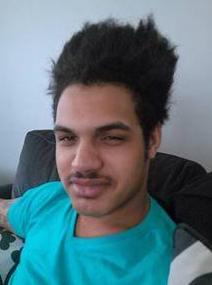
Robert “Squeeze” Veltri was a 21-year-old Black/African American man whose life ended in gunfire on June 23, 2010, on Charleston’s West Side. The shooting unfolded during the afternoon inside a West Side residence and involved Robert and his younger brother, Antonio Veltri. Charleston police identified Charles Christopher Poore, a Charleston resident in his early twenties, as the suspected gunman. According to contemporary reporting, Poore entered the home and opened fire on the brothers.
Robert was struck in the head, suffering a fatal gunshot wound, while Antonio was shot in the arm and survived.
The violence left Robert’s family dealing with two crises at once: the death of one brother and the injuries suffered by the other. Robert’s death was recorded as a fatal shooting in Charleston on June 23, and later memorial information identified him by the nickname “Squeeze.” The killing occurred during a period when Charleston’s West Side had experienced several shootings in a relatively short span of time, adding Robert’s death to an already troubling wave of gun violence in the neighborhood.
Police quickly focused their investigation on Poore rather than treating the killing as an unidentified-suspect homicide. Investigators announced that they intended to charge him with first-degree murder in connection with Robert’s death and malicious wounding for the shooting of Antonio. Poore was himself receiving treatment at Charleston Area Medical Center’s General Hospital following the incident, and officers said that his arrest would take place after he was released from the hospital. Contemporary reports therefore identified Poore publicly as the accused shooter almost immediately after the killing and described the anticipated charges before he was taken into custody.
The surviving online reporting available for the case is much clearer about the immediate police response than about what ultimately happened in court. It establishes that authorities accused Charles Christopher Poore of shooting both brothers and announced plans for first-degree murder and malicious-wounding charges, but the publicly indexed sources located for this synopsis do not reliably document a later trial, guilty plea, conviction, acquittal, dismissal, or sentence arising specifically from Robert Veltri’s killing. Because several unrelated defendants named Charles or Christopher Poore appear in court records from other jurisdictions and other cases, those proceedings cannot safely be attributed to the man accused in this Charleston homicide without additional corroborating records. What can be established from contemporary accounts is that Robert was killed by a gunshot to the head, his brother survived a gunshot wound, and Charleston police named Charles Christopher Poore as the suspect they intended to arrest and prosecute for the shootings.