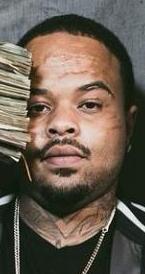
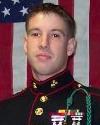
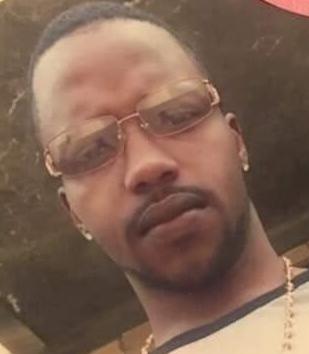
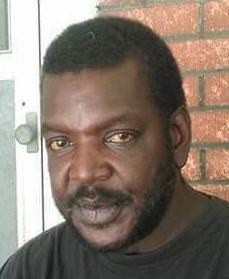
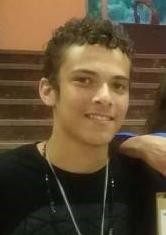
Eddie Ray Duncan, a 32-year-old White male, was a patrolman with the Charleston Police Department when a routine effort to investigate a disturbance turned deadly during the early morning hours of June 26, 1981. Duncan had served with the department for approximately three years and was patrolling Charleston when officers received information about trouble that had begun at Spyro's Lounge. The incident would end with Duncan and veteran Charleston Police Lieutenant Delbert Junior Roush Sr.
both fatally shot and a citywide search underway for the man accused of killing them.
Shortly after 2:00 a.m., Antoine B. Hickman became involved in an argument with a woman inside Spyro's Lounge in Charleston. After the confrontation moved outside, witnesses saw people running and screaming near the bar. One witness alerted Charleston police officers who were at a restaurant nearby and reported seeing Hickman leave the area in a yellow Cadillac being driven by Allen Mackie. Duncan and Roush, who were traveling in separate police vehicles, were given information about the Cadillac and the man believed to have been involved in the disturbance.
Duncan located the Cadillac and began following it with his emergency lights activated. After traveling several blocks, Mackie pulled over on U.S. 60 near the Interstate 64 area. Mackie got out and went toward the rear of the Cadillac, where he met Duncan. Roush arrived shortly afterward in an unmarked vehicle. When questioned, Mackie explained that he had not been involved in the trouble at the lounge but indicated that his passenger, Hickman, might have been. Roush went to the passenger side and instructed Hickman to get out of the vehicle, but Hickman refused. Duncan then joined Roush and also told Hickman to step out of the car.
What happened next unfolded within seconds. Mackie later testified that he heard several gunshots and ran from the scene. Contemporary reports said Duncan was struck under the arm and in the back, with one of the bullets passing through his heart. Roush was also shot. Both officers were taken for emergency medical treatment, but efforts to save them were unsuccessful. Investigators believed the weapon used was a. 38-caliber snub-nosed revolver. Mackie eventually returned to the scene, climbed into one of the police vehicles and used the radio to report that two officers had been shot.
The shooting immediately triggered an intensive search for Hickman. Based largely on information provided by Mackie, authorities obtained two arrest warrants at approximately 5:30 that morning. Police and other law-enforcement personnel searched Charleston while members of Hickman's family became involved in efforts to persuade him to surrender. His mother and brother appeared on television urging him to turn himself in. Later that day, investigators received information that Hickman was ready to be taken into custody. Shortly after 6:00 p.m., Kanawha County prosecutor's investigator Edward Leonard went to an agreed-upon location in Charleston and took Hickman into custody. He was formally arrested on two murder charges and appeared before a magistrate that night.
During questioning, Hickman was repeatedly advised of his constitutional rights and signed waiver forms. According to testimony later detailed by the Supreme Court of Appeals of West Virginia, Hickman orally confessed to killing the two officers. He told investigators that he had pills in his possession and did not want to be caught with them. His account was that when an officer ordered him from the Cadillac and shined a flashlight toward him, he opened fire, then turned the gun on the other officer. Hickman also admitted firing at Mackie as Mackie fled, although Mackie was not struck. Hickman subsequently gave another oral confession to Charleston police officer Patrick Legg and provided a statement that was recorded by a stenographer, although after consulting with an attorney later that night he declined to sign the typed version of the statement.
Hickman was prosecuted for both killings. Because of concerns about obtaining a fair trial in Kanawha County, the court granted a change of venue and the case was tried in Mercer County. A jury convicted Hickman of two counts of first-degree murder for the deaths of Duncan and Roush. The convictions resulted in two consecutive life sentences without mercy, meaning the sentences carried no possibility of parole under the judgments imposed by the court.
Hickman appealed his convictions to the Supreme Court of Appeals of West Virginia. Among the major issues raised on appeal was whether his confessions should have been admitted into evidence. His attorneys argued that members of his family had contacted an attorney before his arrest and challenged whether Hickman's waiver of counsel during interrogation had been valid. The defense also maintained that Hickman had been sufficiently intoxicated at the time of the shootings that he could not have formed the premeditated intent necessary for first-degree murder. The appellate court reviewed the circumstances surrounding the interrogation, the Miranda warnings and waivers, the evidence concerning intoxication, and the trial proceedings.
On December 12, 1985, the Supreme Court of Appeals of West Virginia rejected Hickman's arguments and affirmed the convictions. The court concluded that no reversible errors had occurred and left both first-degree murder convictions and the consecutive life-without-mercy sentences intact. Charleston Police Department records continue to identify Duncan's death as a line-of-duty gunfire death and note that the person responsible was arrested and convicted.
Duncan's killing was especially devastating to the Charleston Police Department because he and Roush became the first Charleston officers killed in the line of duty in nearly 33 years. Duncan left behind a wife, a son and two daughters. What began as an investigation of a relatively minor disturbance at a Charleston lounge became a double police homicide, followed within hours by Hickman's arrest and ultimately by two first-degree murder convictions that survived appellate review.