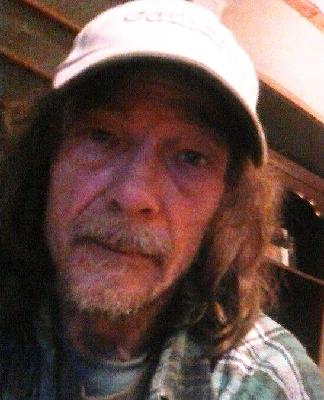
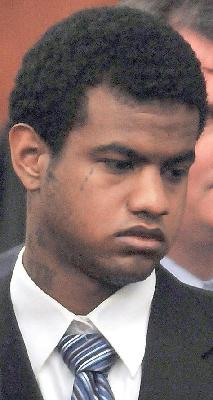
Neal Martin Falls, a 45-year-old White/Caucasian man from Springfield, Oregon, died on July 18, 2015, after a violent encounter inside an apartment on Sixth Street in Charleston, West Virginia. Falls had contacted an escort named Heather Saul through the online classified site Backpage and arranged to meet her at her home. When she let him inside, the meeting immediately turned into an attack.
Saul later told investigators that Falls produced a 9mm handgun, threatened her life and demanded that she submit to him. According to her account, he asked her whether she wanted to “live or die” and then began choking and overpowering her.
The struggle moved through the apartment as Saul fought to breathe and tried to defend herself. She managed to grab a rake, forcing Falls to momentarily put down his handgun so that he could wrestle the rake away from her. That brief opening changed the outcome of the attack. Saul grabbed Falls's gun and fired behind her while he was still struggling with her. The single shot struck Falls in the head and killed him. Saul escaped from the apartment and sought help outside, where a neighbor contacted 911. Police later documented significant injuries to Saul, including strangulation marks as well as a separated shoulder and fractured vertebrae, reinforcing investigators' conclusion that she had been fighting for her life.
Charleston police treated the shooting as self-defense rather than a criminal homicide by Saul. Authorities said the evidence at the scene and her account showed that Falls had been the aggressor and that she had used his own weapon to stop the attack. The Kanawha County Prosecuting Attorney's Office publicly stated that Saul would not face charges because West Virginia law permitted her to use deadly force when she reasonably believed she faced serious injury or death. Charleston investigators subsequently considered their local case closed because Falls had died while committing the attack. There was therefore no arrest, criminal prosecution, trial or conviction arising from Saul's shooting of Falls.
What detectives discovered after Falls's death transformed what initially appeared to be a self-defense shooting into a much larger investigation. Falls had arrived without the money investigators would have expected him to carry if he genuinely intended to pay for an escort appointment. Instead, police discovered four sets of handcuffs and numerous handcuff keys, and a search of his Subaru Forester revealed an assortment of equipment that detectives described as resembling a “serial killer kit.” The vehicle contained knives and other cutting instruments, axes, a machete, a shovel, a sledgehammer, bleach, trash bags and body armor. Investigators believed many of those objects could have been used to restrain a person, kill or dismember a victim, transport remains and clean a crime scene afterward.
Police also found a handwritten list containing identifying or contact information for other women who advertised escort services online. Contemporary reports differed over whether the list contained six names or approximately ten, but Charleston investigators said they were able to locate the women and determined they were alive. The discovery nevertheless increased concern that Saul might not have been Falls's only intended target. Chief of Detectives Steve Cooper said the circumstances convinced him that Falls had probably committed similar crimes before and that Saul may have prevented additional attacks by killing him.
Investigators then began reconstructing Falls's movements around the country. Although he had numerous contacts with police over the years and had been checked by authorities in multiple states, no significant violent criminal record immediately emerged. He had worked in security and had lived for years in Henderson, Nevada, in the Las Vegas area, including during a period when several women involved in the sex trade disappeared. Falls also worked as a security guard at Hoover Dam. His residence in southern Nevada during those disappearances, combined with the equipment found in his vehicle and the manner in which some victims' remains had been discarded, prompted Nevada investigators to examine him as a possible suspect.
Among the Nevada-area cases examined were the killings or disappearances of several young women who had been involved in sex work. Misty Saens disappeared in 2003 and partial remains were recovered near Red Rock Canyon. Jodi Brewer disappeared later that year and her torso was found near the Nevada-California border. Lindsay Harris disappeared in 2005; portions of her remains were eventually identified after being discovered more than 1,600 miles away near Interstate 55 in Illinois. Investigators also examined the disappearance of Jessie Foster, who vanished from the Las Vegas area in 2006. Police had already suspected that some of the Nevada cases could be connected before Falls's death, and the fact that he had lived nearby during the relevant years made him a person investigators wanted to scrutinize closely.
Falls was also examined for a possible connection to a cluster of deaths and disappearances involving women around Chillicothe, Ohio. The southern Ohio cases had already generated fears that a serial offender could be operating in the region, and Chillicothe was less than two hours from Charleston. Investigators from Ohio looked into Falls's history after learning what Charleston police had found. However, authorities said at the time that they had found no evidence placing Falls in Chillicothe or directly connecting him to those cases. One of the deaths in that group, that of Timberly Claytor, also resulted in the indictment of another man, Jason McCrary, demonstrating why investigators cautioned against assuming Falls was responsible for every unsolved death being compared with him.
Charleston police sought assistance from the FBI and circulated information about Falls to law-enforcement agencies around the country. His DNA profile was prepared for comparison through CODIS and investigators offered crime-scene information, witness accounts and other evidence to agencies handling unsolved killings or disappearances in places where Falls had lived or traveled. The FBI ultimately maintained records concerning the investigation, reflecting the nationwide effort to examine his history.
Despite the intense suspicion surrounding Falls, contemporary investigators repeatedly emphasized that suspicion was not proof. His movements overlapped geographically and chronologically with several unsolved cases, and the equipment in his vehicle strongly suggested that Saul's attack had been planned rather than spontaneous. Even so, officials initially reported that no physical or forensic evidence had directly connected him to the Nevada, Illinois or Ohio killings under review. Publicly available information has continued to describe Falls as a suspected serial killer rather than as the proven perpetrator of those murders.
The only violent attack conclusively attributed to Falls in the immediate investigation was the one that ended his life. He went to Saul's Charleston apartment armed and equipped to restrain her, threatened her and strangled her, but she managed to take control of his handgun and kill him before he could finish the assault. Police concluded that Saul had acted lawfully to save herself, so the person responsible for Falls's death was neither prosecuted nor convicted. Falls's death instead opened an interstate investigation into whether the attack in Charleston had exposed a previously unidentified serial predator whose full history may never be known.