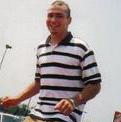
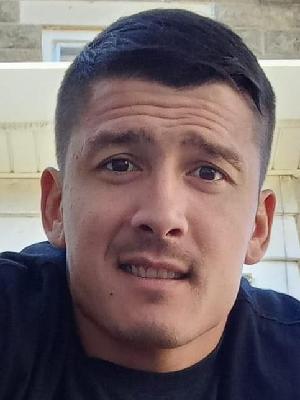
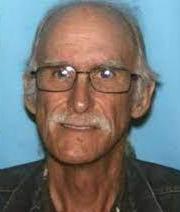
Delbert Junior Roush Sr., a 61-year-old White/Caucasian man, was a longtime lieutenant with the Charleston Police Department when he was shot and killed in the early morning hours of June 26, 1981. Roush had served the department for approximately 33 years, making him one of its veteran officers. What began as a relatively routine response to a disturbance at a Charleston bar ended with Roush and fellow Charleston Patrolman Eddie Ray Duncan both fatally wounded.
Shortly after 2:00 a.m., Antoine B. Hickman had been involved in an argument with a woman inside Spyro's Lounge in Charleston. After the dispute, Hickman and several other patrons went outside, where witnesses saw people running and screaming. One witness went to Charleston police officers who were at a restaurant down the street and reported the disturbance.
The witness also saw Hickman leave the group and enter a yellow Cadillac being driven by Allen Mackie.
Duncan subsequently spotted the Cadillac and followed it for several blocks with his emergency lights activated. Mackie pulled over along U.S. Route 60 near the Interstate 64 entrance and got out of the Cadillac to meet Duncan. Roush arrived shortly afterward in an unmarked police vehicle. Although Roush was reportedly on his lunch break, he had gone to the scene to back Duncan during the stop.
When the officers questioned Mackie about what had happened at Spyro's Lounge, Mackie explained that he had not been involved in the disturbance but that his passenger, Hickman, might have been. Roush went to the passenger side of the Cadillac and instructed Hickman to get out. Hickman refused. Duncan then joined Roush and also instructed Hickman to leave the vehicle.
Within moments, gunfire erupted. Mackie later testified that he heard several shots and ran from the scene. Roush was struck by a gunshot in the chest, with contemporary reports describing the wound as being beneath his left rib cage. Duncan was also shot multiple times, including wounds beneath the arm and in the back, with one bullet passing through his heart. Authorities at the time believed a. 38-caliber snub-nosed revolver had been used.
After the shooting, Mackie eventually returned to the scene. Finding the two officers down, he got into one of the police vehicles and used the radio to notify police headquarters that two officers had been shot. Both Roush and Duncan were taken for emergency medical treatment, but efforts to save them failed. The deaths were especially significant for the Charleston Police Department because the two were reported to have been the first Charleston officers killed in the line of duty in nearly 33 years.
Investigators quickly identified Hickman as the suspect. At approximately 5:30 that morning, authorities obtained two arrest warrants based largely on information supplied by Mackie, and a widespread search began. Hickman's family became involved in efforts to persuade him to surrender. His mother and brother appeared in a recorded television broadcast urging him to contact them and give himself up rather than risk another violent confrontation with police.
Later that evening, investigators received information that Hickman was prepared to surrender. Shortly after 6:00 p.m., a man identified in court records as Kenny Jones contacted Edward Leonard, an investigator with the Kanawha County prosecutor's office, and told him Hickman was with him and willing to be taken into custody. Leonard went to an agreed-upon location in Charleston and took Hickman into custody. Contemporary reporting said the arrest occurred only several blocks from where Roush and Duncan had been killed.
Hickman was formally arrested for the two murders and arraigned on two murder counts. During the subsequent interrogation process, investigators repeatedly advised him of his constitutional rights. Court records show that he signed several Miranda waiver forms and gave investigators two oral confessions as well as a statement that was recorded in written form, although he later declined to sign the completed written statement after consulting with an attorney.
According to testimony concerning those confessions, Hickman said he had pills in his possession and did not want police to discover them. He described an officer ordering him from the Cadillac and shining a flashlight toward him before he opened fire. Hickman said he shot that officer and then turned his weapon on the other officer. He also admitted firing toward Mackie as Mackie fled from the scene, but Mackie was not struck.
The prosecution of Hickman ultimately proceeded outside Kanawha County. Because the defense successfully requested a change of venue, the trial was held in Mercer County. A jury convicted Hickman of two counts of first-degree murder for the killings of Roush and Duncan. He received two consecutive life sentences without mercy.
Hickman challenged his convictions on appeal, arguing in part that his confessions should not have been admitted. The defense raised questions about whether he had effectively waived his right to an attorney and whether intoxication from alcohol and drugs affected the voluntariness of his statements. Hickman also contended that he had been so intoxicated at the time of the shootings that he could not have formed the deliberation and premeditation required for first-degree murder. Witnesses for the defense testified that he had consumed alcohol and used marijuana and PCP before the killings, while prosecution psychiatric witnesses concluded that he had not been so impaired that he was incapable of forming the necessary intent.
The Supreme Court of Appeals of West Virginia rejected those arguments. The court found that Hickman had repeatedly been informed of his rights, had signed written waivers, and had been told that his family had contacted an attorney for him before he chose to speak with investigators. Regarding intoxication, the court concluded that conflicting testimony about Hickman's condition presented a question for the jury rather than a basis for overturning the verdict. On December 12, 1985, the state's highest court affirmed the convictions and sentences.
Roush's death ended more than three decades of service with the Charleston Police Department. He was survived by his wife, a daughter and three sons. The department continues to recognize Lieutenant Delbert Junior Roush Sr. and Patrolman Eddie Ray Duncan as officers killed in the line of duty on June 26, 1981, while the man convicted of killing them received two consecutive life-without-mercy sentences for the double murder.