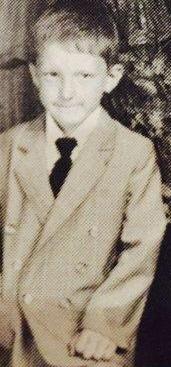
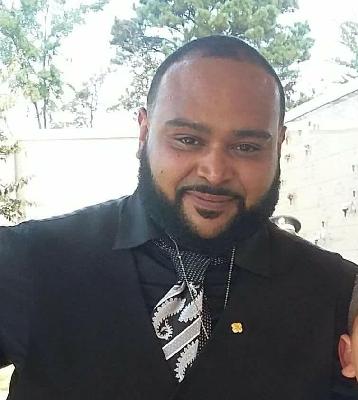
Ronald Lee “Ronnie” Kultgen, 53, was a White/Caucasian male whose disappearance in northwest Arkansas in the spring of 2015 eventually became a homicide investigation. Funeral-home information listed Kultgen as a Pea Ridge resident and said he had passed away in April 2015, while law-enforcement reporting described him as being from Garfield and said he was last seen there on April 15. He had been born September 10, 1961, in Great Bend, Kansas.
The available reporting therefore does not establish August 29 as the date he was killed; August 29, 2015, was the date investigators found his remains after searching in Madison County for weeks.
The search for Kultgen began as a missing-person investigation in Benton County. Investigators from the Benton County Sheriff’s Office, Madison County Sheriff’s Office and Arkansas State Police ultimately followed information into rural Madison County. On August 29, searchers located human remains, which authorities subsequently identified as Kultgen through medical records. Within days, officials publicly described the death as a homicide and said they had identified a suspect. The investigation had moved from the question of where Kultgen had gone to what had happened to him after he was last seen in April.
The investigation soon centered on Cody Wise, who was 26 at the time. Arkansas State Police, assisted by the Benton County Sheriff’s Office, arrested Wise on September 4, 2015, in connection with Kultgen’s death, and he was charged with capital murder. Contemporary reporting said Wise was also being held on unrelated drug charges. According to the arrest report described by local news outlets, investigators alleged that Wise had shot Kultgen in the head and buried his body near Clifty, an unincorporated community in Madison County. Prosecutor Matt Durrett said the Benton County missing-person investigation had led authorities to the Madison County location where the body was discovered and where investigators came to believe the killing had occurred.
The allegation against Wise was supported in part by an account attributed to an eyewitness. According to the arrest report, the witness told investigators that Wise said he killed Kultgen because Kultgen had stolen $2,000 from him. That allegation supplied prosecutors with a possible motive as well as a narrative of the shooting and burial, but it remained an accusation that the state would ultimately have to prove beyond a reasonable doubt. Wise faced capital murder, an extraordinarily serious charge that exposed him to the most severe penalties available under Arkansas law.
Nearly three years later, the case went before a jury in Madison County in September 2018. Prosecutors called witnesses including Wise’s former girlfriend, a former coworker and a Benton County detective, and jurors were shown photographs from the location where Kultgen’s remains had been found. Wise’s former girlfriend testified that she and Wise had both been high on methamphetamine around the time Kultgen was killed. The trial also exposed the drug activity surrounding the people involved in the case, an issue that became important when Wise gave his own account of the last period in which Kultgen was known to be alive.
Wise took the witness stand in his own defense and denied killing Kultgen. He testified that he had purchased methamphetamine from Kultgen and had driven with him while taking Wise’s former girlfriend to a nearby location. According to Wise’s testimony, he, Kultgen and one of Wise’s cousins then smoked methamphetamine together. Wise attempted to tell jurors that his cousin later said he had made a serious mistake and intended to burn his clothes and Kultgen’s wallet. Prosecutors objected, however, because the cousin was not testifying and could not be questioned about the alleged statement. The judge sustained the objection and prevented Wise from presenting that portion of the story to the jury. The cousin had invoked the Fifth Amendment earlier in the proceedings and declined to testify. The reporting does not identify that cousin as someone who was charged with Kultgen’s killing, and Wise’s attempted account was not admitted as proof that the cousin committed the crime.
The jury’s deliberations stretched across two days. Jurors spent about seven hours deliberating on the first day without reaching a decision, then returned the following morning and continued considering the evidence. During the process, Wise’s defense also sought a mistrial after transcript material that was not supposed to be in the jury room was discovered there. The judge declined to declare a mistrial, and the proceedings continued toward a verdict. In total, reporting described the jury as having deliberated for nearly twelve hours, an indication that the evidence and competing versions of events were examined at length.
The jury ultimately found Cody Wise not guilty of murdering Kultgen. When the verdict was announced in late September 2018, Wise reportedly dropped to his knees and cried before leaving the courthouse a free person. The prosecutor publicly expressed disappointment with the outcome but also said the jury had taken its responsibility seriously and had carefully considered the evidence. The acquittal meant that Wise was not convicted of Kultgen’s homicide despite the arrest-report allegations that had led to the capital murder prosecution three years earlier.
Kultgen’s case therefore ended very differently from the way it appeared shortly after his remains were recovered near Clifty. Investigators had located his body, developed a theory that he had been shot and buried, identified an alleged financial motive, arrested Wise and brought a capital murder case to trial. But the prosecution did not persuade the jury beyond a reasonable doubt, and Wise was acquitted. The publicly available reporting reviewed for the case does not document another person being arrested, convicted or sentenced for Kultgen’s killing, leaving his death without a murder conviction despite the extensive investigation and eventual trial.