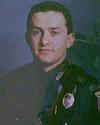
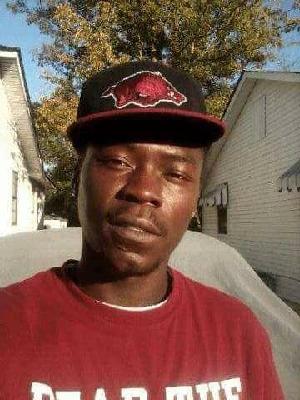
Dennis Zent was a 58-year-old man who grew up in Houston, Texas and later sought a quieter life in the hills of Newton County, Arkansas. Obituary and memorial notices describe him as born on March 6, 1957 in Houston and eventually laid to rest back in Texas after his death in Arkansas in July 2015, with burial at Klein Memorial Park in Pinehurst and a memorial service held at the end of that summer.
His daughters, his siblings, and extended family are listed among those left behind, and the tone of the tributes around his obituary suggests someone whose loss left a deep and complicated ache, sharpened by the circumstances in which he vanished and was later found.
In early December 2014, that quiet life abruptly fractured. The Newton County Sheriff’s Office reported that Zent had been reported missing and that deputies were sent to perform a welfare check at his home near Pelsor on December 4. The responding deputy, according to the sheriff’s press release, found his house unsecured, his animal still tied out, and no sign of Zent anywhere on the property. The sheriff publicly asked the community for help, sharing his physical description and urging anyone with information to come forward. To the outside world it read as a straightforward missing-person alert. To his family, the way those first hours and days unfolded would become the beginning of a much longer struggle for answers. His daughter later explained that, despite how the press release was worded, she was not the one who requested the welfare check and in fact only learned that something was wrong when her aunt called to tell her her father was missing, a discrepancy that left her uneasy about how accurately events were being recorded and relayed.
Winter turned to spring and then to summer with no public resolution. Then, in mid-July 2015, a hunter in the Lurton area of Newton County discovered human remains. A press statement from the sheriff’s office noted that the scene drew in multiple agencies — Newton County deputies, Arkansas State Police, the National Park Service, officers from Flippin, and a canine search team from Kansas City — all working together to recover the scattered remains from the rugged terrain. The sheriff said they believed they knew who the remains belonged to but would not release a name until the Arkansas State Crime Lab could confirm the identity. In the obituaries that followed, July 2015 appears as the month in which Zent “departed this life,” the point at which the man who had been a missing person for months was finally acknowledged in public records as deceased, his body at last heading home to Texas for burial.
Even that basic fact — when he died — is fuzzy in the paper trail, with different memorial sources giving different specific dates in July. That uncertainty mirrors the larger gaps that remain. According to his daughter, the death certificate lists his cause of death simply as “unknown,” a direct result of how few remains were recovered and how little could be conclusively proven from them. In her view, that absence of answers is not because nothing happened to him, but because so much of the physical evidence was lost or destroyed. She believes her father was murdered, dismembered to conceal the crime, and that what was ultimately found represented only part of his remains, with the rest thrown over the edge of a cliff on land adjoining his property. The landscape around his home — steep, forested, and threaded with drop-offs and hollows — makes such an act grimly plausible and exceedingly difficult to ever fully document.
For his daughter, understanding what happened to her father has meant trying to understand not only a single night or encounter but the wider place in which it occurred. She speaks of the culture, history, and corruption of the area where he was killed, of stories that go back years, and of the sense that the forces shaping his fate run deeper than even she can see. Over time she gathered a thick mental file of what people told her: numerous individuals shared information about a particular person widely suspected, in local talk, of being responsible for Zent’s death. She is careful not to collapse rumor into proof, but those conversations have left her with a chilling picture of someone she believes had both motive and opportunity, and whose name surfaced again and again when people felt safe enough to speak. Still, despite these whispered narratives, no one has been publicly charged. In the official statements and obituary notices, there is no mention of an arrest, no named suspect, no declared cause-of-death — only the facts of his disappearance, of human remains found in the Newton County hills, and of a family left to mourn.
Her search for clarity eventually led her into the maze of records and bureaucracy. Years after his death she filed a Freedom of Information Act request to obtain whatever investigative material she could. She was told at first by the local sheriff’s office that the file was on someone’s desk, then directed to send her request to the Arkansas State Police instead. When the state finally responded, what came back was thin: a small set of documents and videos that raised as many questions as they answered, and that she has since struggled even to access again. The experience left her feeling stonewalled, as if the trail to the truth about her father’s final hours had been buried not only by time and terrain but by institutional reluctance to open the case files fully to family scrutiny.
Technically, she says, the case remains cold rather than closed, an open file that has never been resolved. A decade on, the story of Dennis Zent’s death is not a neatly finished one: it is the story of a man who left Houston for the solitude of the Arkansas mountains, disappeared from his home one early winter day, and was later found only in fragments; of official notices that describe him as missing and then gone, without ever explaining how; and of a daughter who still has to steel herself to talk about it, carrying within her a painful, unresolved conviction that someone took her father’s life and walked away untouched.