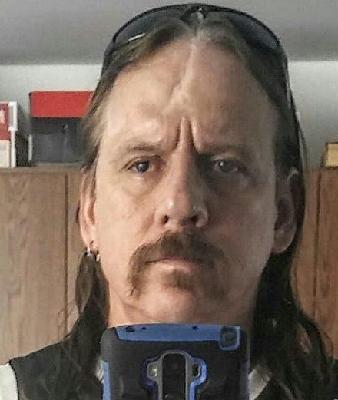
Gabriel Escalante, a 40-year-old male whose race or ethnicity is not clearly identified in public records, was a lifelong Tucson resident and a well-known hair stylist who friends and family knew as “Gabe.” He was born in Tucson on November 8, 1976, and is remembered in obituaries as someone who made the people in his chair feel special, loved, and heard.
Those close to him describe an uplifting smile, contagious laugh, and a jokester’s sense of humor, as well as a deep love of the outdoors and adrenaline-filled adventures. He was devoted to his family, including his daughter Mariah, his parents Rosa and Jaime, his siblings, and a wide circle of friends, and he was often seen with his Chihuahuas “Monster,” “Bristol,” and “Baby Girl.” Even in the moments before he died, relatives recalled his reported final words as reassuring, asking that loved ones be told not to worry and that “it’s going to be okay.”
In the early morning of July 26, 2017, Tucson police were called to the 8700 block of East Almond Street on the city’s southeast side after reports of a possible shooting. When officers arrived, they found Escalante lying on the ground outside near his home while neighbors attempted to render aid. He had obvious gunshot wounds and, despite the efforts of those on scene and responding medical personnel, he was pronounced dead there. Detectives quickly determined that the shooting was not random: investigators concluded that Escalante and the people who shot him knew one another and had just been involved in a fight or altercation close to his residence. Witnesses reported that multiple suspects fled the area in the immediate aftermath, leaving neighbors to try to help him until officers and paramedics arrived.
Later court records and appellate opinions in the case, which use pseudonyms rather than Escalante’s real name, describe a chain of events that began with a small-scale heroin transaction gone wrong earlier in July 2017. According to those documents, a woman identified as the victim’s fiancée attempted to buy $20 of heroin from a man named Jeffrey Ferri; when the drugs were not delivered, she and the victim went to Ferri’s residence and, with the permission of a roommate, took a Bluetooth speaker as “collateral” until either the heroin or the money was returned. That night, Ferri, Jordan Christopher Ewer, and others drove to the victim’s home to retrieve the speaker. A confrontation broke out in the street in front of the house, during which the victim struck their car with a rock and punched one of the occupants through a window, prompting Ewer to brandish a handgun. The group then left the area, but a few hours later Ewer returned with two companions, and another confrontation erupted. The court’s factual summary explains that both sides began throwing rocks and that, as Ewer and his companions backed away, the victim and his fiancée followed. Ewer then fired several shots in the victim’s direction, one round striking him in the back; paramedics who responded to the home pronounced the victim dead at the scene. Although those legal documents refer to the victim by a different first name, gun-violence incident data and local reporting link that case to Escalante’s killing in Tucson on July 26, 2017.
Within a day of the shooting, Tucson Police announced that they had identified and arrested a primary suspect. On July 27, 2017, officers took 21-year-old Jordan C. Ewer into custody for his role in Escalante’s death and booked him into the Pima County Jail on one count of second-degree murder. A second man believed to have been involved was located but was not charged at that time, and detectives continued trying to find a third individual they wanted to question about the incident. Data compiled by the Gun Violence Archive similarly lists Ewer as the subject-suspect in the case, noting that he was arrested and uninjured, with Escalante recorded as the sole fatal victim. Publicly available reports do not show additional arrests resulting in charges against the other men, and Ewer remained the only person formally accused of homicide in connection with the shooting.
The case moved slowly through the courts over the following years. After a jury trial in Pima County Superior Court, Ewer was convicted of second-degree murder involving a firearm, as well as disorderly conduct involving a firearm and discharging a firearm within city limits, and he received concurrent prison terms, the longest set at thirteen years. On appeal, however, the Arizona Court of Appeals vacated those convictions, finding that the trial judge had improperly modified the standard self-defense jury instructions to allow the jury to consider whether the victim’s actions were justified, rather than focusing solely on whether Ewer reasonably believed force was necessary. In 2023, the Arizona Supreme Court took up the case and held that under Arizona’s self-defense statute, the word “person” in the justification law applies only to a criminal defendant, not to both defendant and victim, agreeing that the instruction had been legally incorrect. The high court reversed the trial court’s judgment and remanded the matter for further proceedings consistent with its opinion and the appellate court’s directive to grant a new trial. As of the latest publicly accessible court and news records, the long-running litigation centers on these legal questions about self-defense instructions and does not clearly document a final, post-remand outcome, leaving Escalante’s family and community with the knowledge that his case shaped statewide law even as they continue to live with the loss described so vividly in his obituary and memorials.