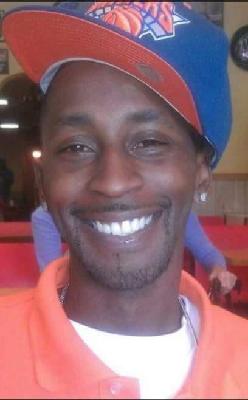
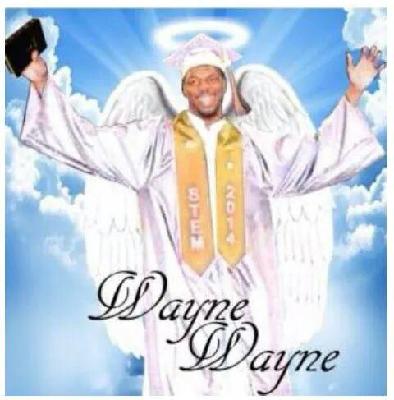
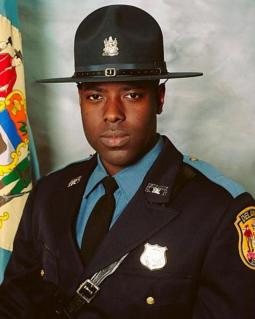
Aloysisus Taylor, a 41-year-old Black/African American man from Wilmington, Delaware, was fatally shot on the morning of November 27, 2015, while at work at a car wash on Pulaski Highway in Bear. At approximately 8:40 a.m., Taylor was seated in the driver's seat of a vehicle in the rear parking area of the American Car Wash at 1921 Pulaski Highway when a co-worker, Bobby L. Taylor of New Castle, approached the vehicle. Despite sharing the same last name, police and later court records emphasized that the two were not related. Investigators determined that Bobby Taylor produced a handgun and fired a single shot through the open vehicle window, striking Aloysisus in the torso. Bobby Taylor then fled from the property on foot.
New Castle County paramedics treated Aloysisus at the scene before rushing him to Christiana Hospital. His injuries proved fatal, and he died after arriving at the hospital. Later court records provided additional details about the moments surrounding the shooting, describing how Aloysisus had been using his Ford Taurus to help the car wash manager move an immobilized vehicle shortly before Bobby approached him. Witnesses who were at the business saw Bobby near the vehicle and heard the shot, and one co-worker went to Aloysisus immediately afterward. No firearm was found on or near Aloysisus when police and emergency personnel responded.
Detectives quickly focused on Bobby Taylor after conducting multiple interviews with people at the car wash. Police obtained warrants accusing him of first-degree murder, possession of a firearm during the commission of a felony, and possession of a firearm by a person previously convicted of a felony. Authorities warned that he should be considered armed and dangerous. The search stretched on for more than a year. Court records later described Bobby as returning to his apartment after the shooting and disposing of unused bullets, then moving between motels and friends' residences while avoiding authorities. After remaining in Delaware for several months, he traveled south and eventually settled in the Chattanooga, Tennessee, area.
The search ended on March 5, 2017, when Chattanooga police responded to a disturbance at a residence. A person there reported having been assaulted by Bobby Taylor. Officers located him a short distance away and arrested him without incident. Chattanooga authorities charged him with aggravated assault and held him in the Hamilton County Jail while arrangements were made to return him to Delaware to face prosecution in the car wash killing. His capture came roughly sixteen months after the shooting.
When the homicide case eventually reached trial, Bobby Taylor admitted that he had fired the fatal shot but asserted that he acted in self-defense. He testified that two nights before the killing he had nearly been shot while walking along a street. According to his account, Aloysisus made a threatening statement at the car wash that caused Bobby to believe he had been involved in that earlier incident. Bobby further claimed that Aloysisus moved toward the center console of the car as though reaching for a semiautomatic handgun, prompting Bobby to draw his own weapon and fire first. Investigators, however, had found no gun on or near Aloysisus. Items recovered near the scene included a cigarette pack, lighter and cellphone, and the location and movement of the cellphone later became an issue raised by the defense in post-conviction litigation.
The prosecution encountered a significant procedural complication when an earlier trial ended in a mistrial arising from the prosecutor's cross-examination of Bobby Taylor. The defense subsequently sought dismissal of the indictment on double-jeopardy grounds. The Superior Court refused to dismiss the case, concluding that there was insufficient evidence that the prosecution had intentionally attempted to provoke the mistrial. That ruling allowed the State to try Bobby again.
Following a three-day jury trial in September 2019, Bobby Taylor was convicted of second-degree murder, a lesser offense included within the original first-degree murder charge, as well as possession of a firearm during the commission of a felony. In a separate abbreviated bench proceeding, a judge also found him guilty of possession of a firearm by a person prohibited. His prohibited-person status resulted from an earlier felony assault conviction that legally barred him from possessing a firearm. He was subsequently sentenced to serve 30 years in prison.
Bobby Taylor continued challenging the case after his conviction. The Delaware Supreme Court affirmed the judgment in March 2021. He later pursued post-conviction relief, arguing in part that his attorneys should have requested a jury instruction concerning the uncertainty over how Aloysisus's cellphone moved from the vehicle area to the pavement where it was photographed and collected. The Superior Court rejected that claim in August 2023, finding that the defense attorneys' handling of the evidence issue did not justify overturning the conviction. Bobby appealed again, but in June 2024 the Delaware Supreme Court affirmed the denial of post-conviction relief. As a result, the homicide that began with the shooting at the Bear car wash ultimately concluded with Bobby Taylor's murder and firearm convictions and a lengthy prison sentence remaining in place.