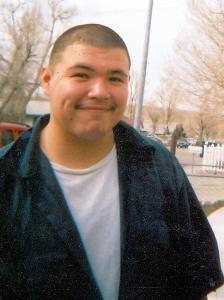
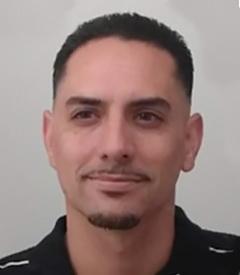
In the early hours of March 25, 2023, on the Wind River Indian Reservation in Wyoming, the quiet around a small single-wide trailer just south of Riverton was broken only by the soft movements of people waking before dawn. Inside, Derek Redstar Pappan was up with a woman who shared his home, shuffling sleepily from bedroom to living room as they hunted for a misplaced phone charger.
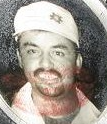
Pappan, a 44-year-old Northern Arapaho man, had deep roots on the reservation and in Fremont County; federal court records identify him as an enrolled tribal member and a resident of Wind River, and earlier biographical notices describe a life that began in March 1979 and unfolded between Santa Fe, St. Stephens, and the wider Wyoming community his family called home.
As the pair bent over mattresses and furniture in the dim trailer light sometime around 5:30 a.m., the ordinary, almost domestic moment turned abruptly violent. According to the woman's later statement to investigators, the front door opened and their neighbor, 34-year-old Francis James Acebo Jr., stepped inside without warning. He crossed the small room immediately; before Pappan could straighten up, Acebo came up behind him and fired a single shot into the back of his head. There was no argument, no shouted threat recorded in the official accounts—just the report of the gun and the sudden collapse of the man who moments earlier had been searching the floor for his charger.
The killing shocked the small cluster of homes on that stretch south of Riverton. The shooter's actions afterward suggested that the attack, though instantaneous, weighed heavily on him. Court documents later summarized by reporters describe how another individual, upon hearing Acebo had shot someone, picked him up near his residence close to the crime scene. Instead of fleeing the area or disappearing into the back country, Acebo asked to be taken to see his children so he could say goodbye. The driver brought him there, then dropped him at a home on Airport Road west of town. For five days the reservation and Riverton community lived with the knowledge that a neighbor had been executed in his own home; then Acebo turned himself in to law enforcement, beginning the formal federal case that would follow.
From the outset, the investigation was handled as a serious federal homicide. Because the crime occurred on the Wind River Indian Reservation and involved Native victims and residents, federal jurisdiction attached, and special agents from the Bureau of Indian Affairs and the FBI took the lead. Within weeks of the shooting, a federal grand jury indicted Francis James Acebo Jr. on a charge of first-degree murder and on a separate count of using, carrying, and discharging a firearm during and in relation to a crime of violence, resulting in death. When he was brought into federal court in Casper on May 26, 2023, before U.S. District Judge Michael Shickich, Acebo stood and entered a plea of not guilty. The complaint that underpinned the indictment laid out the woman's account of the killing in stark terms: she and Pappan had been looking for the charger when Acebo came through the door and “immediately” shot him in the back of the head.
As the months stretched into the following year, the case grew more complex. Trial dates were scheduled and then continued, with federal filings citing the “complex” nature of the investigation and the need for what the court called an “ends of justice” continuance—essentially, a formal acknowledgement that both the public and the defendant would be better served by taking more time to prepare than by rushing to trial. When the jury was finally empaneled in Cheyenne in February 2024, fourteen people were selected to sit in judgment of Acebo. Over the course of a week, from February 12 through the evening of February 16, prosecutors with the U.S. Attorney's Office presented evidence about that early-morning intrusion: the trajectory of the bullet, the accounts of those inside the trailer, and the behavior of the defendant before and after the shooting. The same woman who had searched for the phone charger with Pappan was central to the narrative, telling investigators—and, through their testimony, the jury—about the sudden entrance, the brief moment when Pappan leaned over the mattress, and the gunshot that followed.
Alongside the cold forensic details, a more troubling portrait of the shooter emerged. Later coverage of both the trial and sentencing recounted testimony and argument that Acebo had been in the grip of serious drug addiction—specifically opioids—and that in the days and hours leading up to the killing, he appeared deeply paranoid. Witnesses spoke of “crazy eyes” and of a man convinced he was being watched by drones and spied on through his own cellphone. At some point, Acebo himself suggested he believed he was acting in self-defense and trying to protect his family, though U.S. District Judge Alan B. Johnson, who presided over the trial, would later say that even after hearing all the evidence, the true motive for the killing remained unclear. What the record did show, however, was that Acebo had forced his way into another man's home and fired a shot into the back of that man's head as he bent over in his own living room.
On February 20, 2024, the jury returned its verdict: Francis James Acebo was guilty of first-degree murder and of using, carrying, and discharging a firearm during and in relation to a crime of violence. A Department of Justice press release and subsequent local coverage underscored the weight of those convictions; under federal law, first-degree murder carries a mandatory life sentence, and the firearm count exposed him to an additional decade or more in prison and substantial fines. The federal government had framed the case as a straightforward but brutal home intrusion and execution, and the jury's decision reflected that view. With the verdict entered, the case moved inexorably toward sentencing, set initially for May 2024.
The sentencing hearing took place on May 16, 2024, in U.S. District Court in Cheyenne. It opened not with legal argument but with the raw grief of Pappan's family. His mother, Evelyn Brown, stood before the court and spoke through tears about the son she called her gentle protector—the one who had brought her hugs and healing, who had been a source of happiness and, in her words, “a warrior at heart.” She told the judge and the man who had killed her child that their hearts would “never be the same,” and she expressed both sorrow and anger at the hole his death had torn in their lives, even recalling how she had once cooked meals for Acebo's family.
Judge Johnson, weighing the verdict and the mandatory nature of federal homicide penalties, spoke pointedly about the role of addiction in the crime. He noted that Acebo's drug problem had been “too much to overcome” and acknowledged that the motive still eluded him even after the full trial record. He also described the state of the trailer where Pappan had been living—no heat, no running water, blankets stuffed into gaps around the doorframes—details that underscored the poverty and hardship surrounding the killing. Then he imposed sentence: two mandatory life terms, one for first-degree murder and one for causing death with a firearm during a crime of violence, along with an additional ten years for a related firearm offense. The court ordered Acebo to pay $7,132.89 in restitution to cover funeral expenses, as well as special assessment fees. Local reporting later clarified that the two life sentences would run concurrently, with the ten-year term stacked on top, ensuring that Acebo will spend the rest of his life in federal prison unless his planned appeal somehow succeeds.
For the Wind River community, the legal conclusion did not resolve the loss. Pappan left behind three children and an extended family that had already endured years of struggle, as hinted at in his earlier appearances in the federal system and the stories shared at his funeral and in memorial tributes. In the weeks after his death, notices in local media announced a rosary at Eagle Hall, a wake at a relative's home on Goes In Lodge Road, and a funeral mass at St. Stephen's Catholic Church, followed by burial at Warren Cemetery—traditional gatherings through which family and friends tried to honor his life and escort him to rest. Candle-lighting pages and memorial entries online describe him in brief but affectionate terms, as genuine and protective, someone whose absence left a void that a courtroom sentence could not fill.