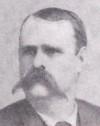
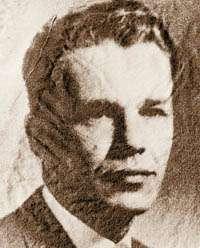
Nicholas Michael Velazquez, a 38-year-old White male, had built a life that seemed to stretch far beyond the quiet streets of Douglas, Wyoming. Born on November 12, 1984, in Pordenone, Italy, he grew up under the wide Wyoming sky with his parents, Ken and Christine Guenther, and his brothers, Matthew and Jonathon, quickly becoming the energetic middle son who could be counted on for mischief, laughter, and loyalty.
He excelled on the wrestling mat at Douglas High School, earning a state championship and a reputation for tenacity that would later carry into his military career. After graduation, he followed the example of his grandfather and enlisted in the U.S. Army in 2005, pushing himself through the grueling Special Forces Qualification Course and earning the coveted Green Beret in 2007. Over the years, he served with the 5th Special Forces Group and later with the 19th Special Forces Group deploying multiple times to Iraq, Afghanistan, Thailand, and Korea, collecting a long list of awards and badges that spoke to courage under fire and a life lived in service.
By the fall of 2023, Velazquez had returned to the town where he was raised, surrounded by family, friends, and a community that knew him as both hometown wrestler and decorated veteran. On the night of September 13, 2023, he went to the home of his cousin, 43-year-old Douglas resident Mark Coleman Helms, at a residence on Charles Street just outside the center of town. The plan, according to later court records, was simple and familiar: the two cousins talked and drank together through the evening, with Velazquez bringing whiskey and beer while Helms’ wife stayed mostly in their bedroom. What unfolded inside that house would never fully be explained in a way that satisfied the people who loved Nicholas. Sometime late that night, a single shot rang out. When Converse County Sheriff’s Lt. Benjamin Peech arrived at 8 Charles Street in response to a report of a man who had been shot, he found Velazquez lying on his back in the hallway outside the master bedroom, dead from a single gunshot wound to the chest.
Helms’ account of the shooting shifted and fractured almost as soon as deputies began asking what had happened. He told investigators that his memory had “blacked out” at some point during the night, and that the next thing he remembered was performing CPR on his cousin on the hallway floor. He recalled his wife shouting something about “Nick,” and later admitted that he had fired the gun, yet claimed he was scared and did not know who he was shooting at when he pulled the trigger. Helms’ wife told authorities that she had been in bed when her husband came into the room in a panic, saying something about killing someone before running around the bed to grab a rifle. In the days that followed, the Converse County Sheriff’s Office announced that the death was being treated as a homicide. Helms, identified as a resident of Douglas, was arrested, charged with first-degree murder in the shooting of his cousin, and held on a $500,000 cash-only bond. The sheriff’s office reassured the public that the killing was an isolated incident and that there was no ongoing danger to the community.
As the case moved into Converse County District Court, Helms’ defense began to take shape around his mental health and long military history. In November 2023, he entered a dual plea: not guilty, and not guilty by reason of mental illness, arguing that he had not been mentally capable of understanding the wrongfulness of his actions or conforming his conduct to the law the night his cousin died. A district court judge ordered Helms to undergo an in-patient evaluation at the Wyoming State Hospital, directing examiners to determine whether he suffered from a mental illness or deficiency at the time of the shooting and whether that condition might have impaired his capacity. The question of Helms’ mental state—and the weight of his claimed post-traumatic stress disorder from years of military service and deployments—would become the central struggle of the courtroom drama that followed.
A year later, in October 2024, the case went to trial before a Converse County jury. Prosecutors laid out a narrative of a night of heavy drinking that devolved into deadly violence, focusing on Helms’ own contradictory statements and the physical reality of a single rifle shot to the chest of a man who had come as a guest. The jury was given three options: convict Helms of first-degree murder, second-degree murder, or involuntary manslaughter. First-degree murder would have required a finding of premeditation; manslaughter, a lesser level of intent. After roughly three and a half hours of deliberation, the jurors rejected both extremes and found Helms guilty of second-degree murder, concluding that he had killed Velazquez purposefully and maliciously, but without the preplanned intent required for first-degree murder. With that verdict, the case shifted from the question of guilt to the question of how long Helms would spend in prison for killing his cousin.
Sentencing came in February 2025, in a courtroom heavy with the presence of family, fellow soldiers, and friends who had known Nicholas in war and in peace. Converse County District Court Judge F. Scott Peasley imposed a prison term of 48 to 62 years, giving Helms 516 days of credit for time already served in jail and ordering him to pay $7,000 in restitution. During the hearing, Helms’ defense again pointed to his PTSD and long Army career, arguing that specialized trauma treatment outside prison might better address his condition, but the jury’s earlier rejection of the mental-illness defense still hung over the case. On the other side of the aisle, those who had served beside Velazquez painted a vivid picture of the man whose life had been cut short—of countless missions in Iraq and Afghanistan, of a soldier who would volunteer for the most dangerous position in a convoy to protect a friend, and of a legacy of courage they believed deserved the harshest possible sentence. Their words underscored a lingering sense of betrayal: that a man who had survived battlefields overseas was killed not by an enemy combatant, but in the hallway of a family home in Wyoming, by someone he had trusted. With Helms’ conviction and lengthy sentence, the case is formally resolved in the courts, but the loss of Nicholas Michael Velazquez continues to echo through the town he called home and among the people whose lives were shaped by his service and friendship.